How I Came Across the Viral Matchmaking Drama
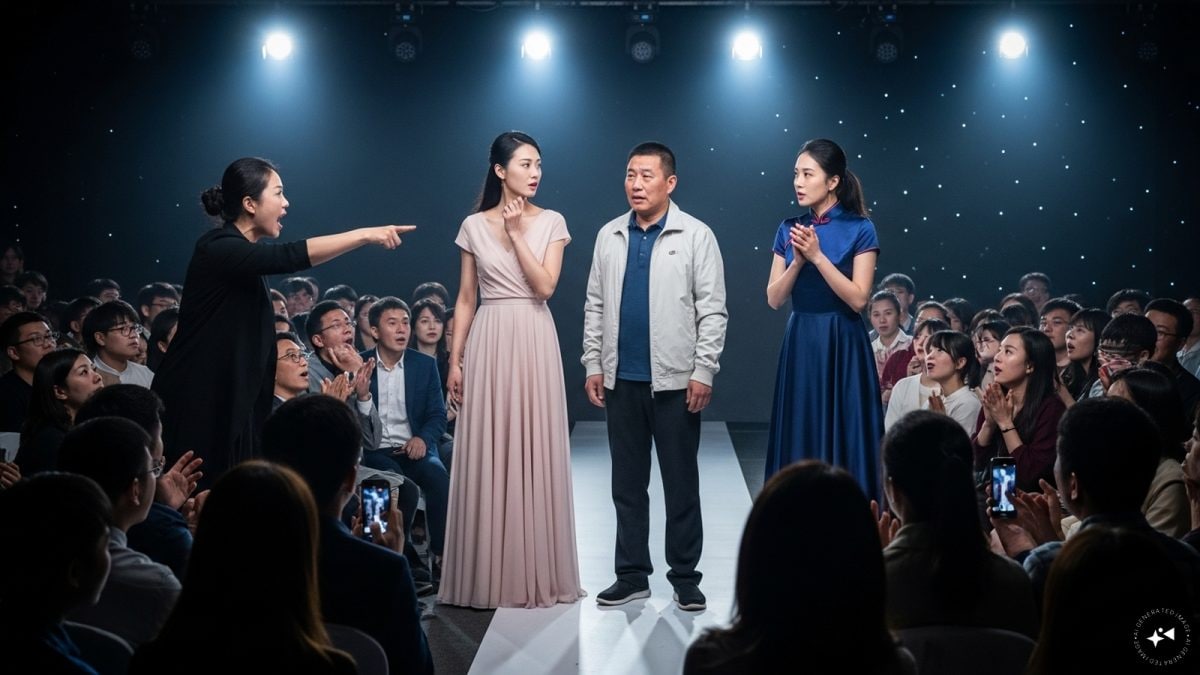
Honestly, I was just scrolling through my phone on a lazy Sunday, looking for something to pass the time, when a short video clip caught my eye. It showed a bustling hall in a Chinese city, with a banner that read “Auntie Wang’s Matchmaking”. The crowd was lively, people were cheering, and a man in his early fifties was stepping up to the microphone. I thought, “Ah, another reality‑show style event, maybe similar to those talent hunts we see on Indian TV.” Little did I know that this clip would soon become the talk of the internet, not just in China but also among my friends who love a bit of drama on social media.
The Setting: Auntie Wang’s Matchmaking in Bengbu
The event was being held in Bengbu, a city in Anhui province that I’ve never visited but have heard of because of its famous “huangshan” scenery. “Auntie Wang”, whose real name is Zhao Mei, is a well‑known host who turns the whole affair into an interactive spectacle. Participants are invited to stand on stage and describe their ideal partner, and anyone in the audience who feels they match that description can step forward. It’s a bit like those “shadi.com” live shows you sometimes see on Indian TV, but with a Chinese twist – the crowd participation is massive, the cheer‑cheer is loud, and the whole thing gets shared on platforms like Douyin and Weibo. The atmosphere was buzzing, and people seemed genuinely hopeful about finding love.
Meet the ‘Single’ Gentleman
Then the camera focused on a man who introduced himself as single. He claimed he had divorced back in 2012 and had two children – a son and a daughter. He said he was 51 years old, worked as an ordinary employee, and used to be successful in Shanghai. He even mentioned that he had come to the event with a particular woman in mind. I could hear the faint crackle of the microphone, and his tone was calm but confident, almost like a seasoned salesman pitching a product. In many ways, his description reminded me of the kind of middle‑aged men we see on Indian matrimonial sites – they list their past, their kids, their career, and then hope the right person will appear.
He also hinted that he was open to meeting more than one person, saying something along the lines of “I am willing to know both women”. That little line set the stage for what happened next – a situation that felt like a scene straight out of a TV drama, except it was happening live in front of a real audience.
The Unexpected Twist: Two Women Step Forward
Shortly after his introduction, a woman from the audience raised her hand and walked up to the stage, apparently attracted to the description he gave. She seemed genuine, a little nervous, and when she stood beside him, the host, Auntie Wang, smiled and made a light‑hearted comment about a possible love triangle. The host’s comment was meant to be playful, like a TV anchor teasing the audience, but the mood shifted quickly.
Before the host could even finish her sentence, a third person – another woman from the crowd – shouted that she was the man’s wife. The claim was bold and sudden, and the audience fell silent. The man, clearly startled, denied the allegation, shouting, “I do not want her. I am not married to her.” It was a moment of pure chaos – I could almost feel the tension through my phone screen.
Host’s Sharp Intervention
Auntie Wang, whose presence commands respect on this platform, quickly stepped in. She reprimanded the man, reminding him that the event’s rule was that only single individuals could be on stage. “Your wife just went to the bathroom, and you rushed up here. You cannot sit still for even a moment,” she said, her voice a blend of sternness and disbelief. The host’s words were scold‑like, similar to a school teacher scolding a mischievous student during a school function.
Her comment about the wife supposedly being in the bathroom added a layer of irony – it was exactly the excuse the man seemed to use to justify his presence. The host’s reaction felt like the moment when a family elder in an Indian community quickly puts a stop to any dishonesty at a gathering, making it clear that the rules are not to be bent.
The Return of the Wife and the Physical Confrontation
According to a witness who later spoke to Guizhou Radio and Television, the drama didn’t end there. The alleged wife returned to the venue, probably after the bathroom break she had apparently taken, and confronted the man directly on stage. A heated argument broke out, escalating into a physical altercation. The witness mentioned that she scratched his face during the scuffle and that she called the police, accusing him of deception.
Even though the video didn’t capture the entire brawl, the snippets showed a flurry of hands and raised voices. It reminded me of the occasional scene in Indian movies where a family dispute erupts at a wedding hall, with the bride’s brother stepping in and a scuffle ensues, only that this was happening in front of a live audience who were there for the prospect of love, not a fight.
Online Backlash and Social Media Storm
Once the video clip went viral, Chinese netizens exploded with comments. Many compared the incident to an absurd drama. One user wrote, “Even scriptwriters would not dare write a plot like this.” Another said, “I thought I was watching some absurd short drama, but it turns out reality is even more dramatic.” The comments were a mixture of disbelief, amusement, and condemnation.
A few users shifted their focus to the woman who had stepped onto the stage with the man. They felt sorry for her, noting that she was likely looking for a reliable partner and had unintentionally become a third party in an existing marriage. Their empathy reminded me of how, in India, we often discuss the plight of women who get caught in the crossfire of marital disputes, especially in public settings.
Personal Reflections on the Whole Episode
Watching this whole thing, I couldn’t help but think about the cultural parallels between China’s matchmaking shows and the matchmaking traditions we have back home. In many Indian towns, we have “swayamvar”‑style gatherings where families sit together to discuss potential matches. The idea of publicly declaring oneself single or eligible is not new, but the way this man tried to manipulate the setup felt like a modern twist to age‑old “cheating” stories.
What struck me most was the speed at which the truth surfaced – the wife’s sudden appearance, the host’s swift admonishment, and the police call. It reminded me of how, in Indian joint families, secrets rarely stay hidden for long, especially when they threaten the family’s reputation.
Why This Matters: Honesty in Public Dating Spaces
Beyond the gossip and the viral laughs, there’s a deeper question that this incident raises: how important is honesty in public matchmaking platforms? Whether it’s a TV‑show stage in Bengbu or a matrimonial website in Delhi, the trust of participants and the audience hinges on honesty. When someone pretends to be single while married, they not only breach the rules but also hurt legitimate seekers of companionship.
In India, similar incidents have sometimes made headlines – couples caught cheating during arranged marriage processes, leading to public outcry. This Chinese episode adds another chapter to the global conversation about ethics in matchmaking.
Takeaways for Anyone Seeking Love Through Public Platforms
If you ever consider joining a matchmaking event, here are a few lessons I drew from this whole saga:
- Be truthful about your marital status. It may seem easy to fudge details, but the truth has a way of emerging.
- Respect the rules set by the organizers. Auntie Wang’s insistence on single participants is there to protect everyone’s interests.
- Remember that the audience is watching, and any misstep can become an internet meme within minutes.
- Know that the emotional fallout can affect not just you, but also innocent parties – like the woman who stepped forward hoping for a fresh start.
These points feel applicable whether you’re in Bengbu, in Bangalore, or any other city where people gather to find love.
Final Thoughts
In the end, the whole episode was a reminder that real life can be stranger than any screenplay. A man trying to impress two women while hiding his marital status, a host reminding him of the rules, a wife storming in to set things straight, and an internet audience that turned the whole drama into a meme – it’s a package that could easily be a weekly TV episode, yet it unfolded live in front of ordinary people hoping for a new beginning.
For me, it was a mix of shock, a dash of amusement, and a pinch of empathy for the woman who got unintentionally entangled in a love triangle she never asked for. It also reinforced my belief that honesty truly is the best policy, especially in matters of the heart.