AIFF to postpone elections after FIFA grants clear approval, report says
FIFA has communicated that FIFA raises no objection to AIFF moving its election timetable, allowing AIFF to complete required constitutional adjustments under the National Sports Governance Act.
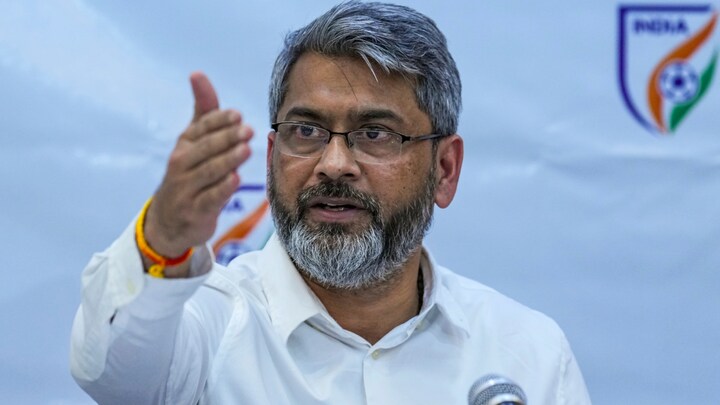
FIFA’s formal consent to AIFF’s extended election timeline
FIFA has relayed to AIFF that FIFA expresses no objection to AIFF shifting its electoral calendar from the originally scheduled period to a later slot in the upcoming year. This concession, reported by a leading national newspaper, provides AIFF with a breathing space to fully synchronize its governing document with the stipulations set out in the National Sports Governance Act and the accompanying regulatory framework.
Kalyan Chaubey, who assumed the role of AIFF President following an election conducted in early 2022, originally embarked on a four‑year term. While the natural expectation was for an electoral event to occur before the conclusion of that term, the advent of the National Sports Governance Act compelled AIFF to request additional time to ensure every procedural amendment could be undertaken meticulously.
AIFF has emphasized that allowing the current administration to remain in place until the revised election date will safeguard the uninterrupted progression of football activities across the nation. By maintaining stable leadership, AIFF aims to avoid any governance vacuum that could affect leagues, clubs, and grassroots programs.
One‑time extension authorized by the Ministry of Youth Affairs and Sports
In a formal communication, M Satyanarayan, Deputy Secretary General of AIFF, outlined the position of the Ministry of Youth Affairs and Sports. The ministry issued a notice acknowledging that structural transformations required of all national sports bodies to achieve full compliance with the National Sports Governance Act are fundamentally extensive. Consequently, the ministry sanctioned a singular, one‑time extension for those bodies whose electoral cycles fall within the current calendar, permitting them to finalize their next elections by the concluding day of the year.
This policy decision is intended to foster uniformity across the sporting sector, ensuring that each organization can allocate the necessary resources to amend constitutions, revise bylaws, and implement governance reforms without the pressure of imminent electoral deadlines.
Public poll on the probability of constitutional alignment
The article features a poll that invites readers to gauge the likelihood that AIFF will achieve full constitutional conformity with the National Sports Governance Act by the newly set election deadline. The poll options range from "Very likely" to "Not sure" and display current voter counts.
- AVery likely
0
- BSomewhat likely
0
- CUnlikely
1
- DNot sure
0
These figures illustrate the current sentiment among the audience, highlighting a modest level of confidence that AIFF will meet the legislative requirements within the allotted timeframe.
FIFA’s endorsement and call for continuous coordination
FIFA has formally endorsed AIFF’s adjusted schedule and underscored the necessity of ongoing dialogue throughout the amendment process. Emile Doms, Member Associations Governance Services Manager at FIFA, addressed AIFF with a request to keep both FIFA and the Asian Football Confederation (AFC) apprised of each step taken to revise the AIFF constitution. Emile Doms specifically asked for a document that outlines the principal amendments, the procedural milestones, and tentative timelines required for full compliance with the National Sports Governance Act.
This collaborative approach is designed to ensure that AIFF’s transformation aligns with global governance standards while respecting the unique regulatory environment established by the National Sports Governance Act.
Implementation timeline for state and district football bodies
In tandem with the national constitutional overhaul, AIFF has instructed its affiliated state and district football associations to adopt the same set of amendments by a specified mid‑year checkpoint. This directive aims to guarantee consistent governance practices across all tiers of football administration throughout the country, fostering a unified framework that supports both elite and grassroots development.
By synchronizing the amendment schedule for subordinate bodies, AIFF seeks to eliminate disparities in operational procedures, thereby enhancing transparency, accountability, and overall effectiveness of football governance at every level.
Implications for Indian football moving forward
The decision to delay elections, coupled with FIFA’s approbation, positions AIFF to undertake a comprehensive review of its governing structures without the immediate pressure of an electoral cycle. This strategic pause enables AIFF to concentrate on aligning statutes, redefining roles, and instituting checks and balances that are consistent with the principles of the National Sports Governance Act.
Stakeholders anticipate that a constitution fully compliant with the new legislation will facilitate smoother interactions with governmental agencies, enhance eligibility for funding, and reinforce the credibility of AIFF on the international stage. Moreover, a robust governance model is expected to create a more stable environment for clubs, players, and fans, fostering sustained growth of the sport nationwide.
In the broader context, AIFF’s approach may serve as a benchmark for other national sports federations navigating similar legislative reforms. The collaborative dialogue between AIFF, FIFA, AFC, and the Ministry of Youth Affairs and Sports highlights a constructive pathway for aligning domestic sports governance with global standards while respecting sovereign regulatory frameworks.