While robots prepare the ground, NASA is simultaneously pushing toward its next crewed milestone: Artemis III, currently targeted for 2027.
NASA’s Artemis II mission has come to a close with the Orion spacecraft successfully splashing down in the Pacific Ocean off the coast of California but for the agency’s lunar programme, it is only the beginning.
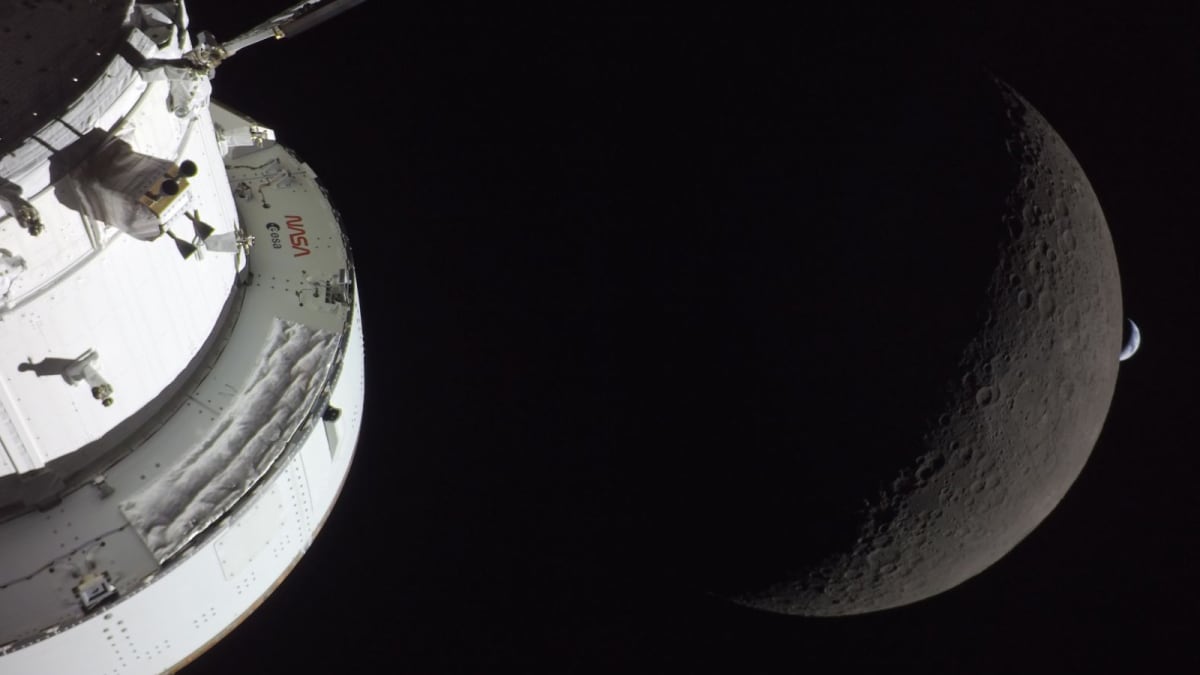
Commander Reid Wiseman, Christina Koch, Victor Glover and Jeremy Hansen spent more than a week circling the Moon, travelling farther from Earth than any humans in history. They flew beyond the Moon’s far side, captured rare views of its hidden terrain and tested critical systems needed for future lunar landings. It was the second step in NASA’s Artemis programme. The question now is: what comes next?
NASA’s Wave Of Robotic Missions
Before astronauts set foot on the Moon again, a fleet of robotic spacecraft will go first. NASA and its commercial partners are planning multiple uncrewed lunar landings under the agency’s Commercial Lunar Payload Services programme, which contracts private companies to deliver science instruments and technology demonstrators to the lunar surface.
Among the nearest on the horizon is Astrobotic’s Griffin‑1 lander, which could launch as early as July 2026. It will be followed by landers developed by Blue Origin, Firefly Aerospace and Intuitive Machines, carrying instruments to study lunar soil, radiation and potential resources including water ice.
Honestly, the whole idea of sending robots ahead feels a bit like when we send our younger siblings to the market first to check if the vegetables are fresh – they scout, they report back, and then we decide the next move. In most cases, the data they bring back will help NASA decide where exactly to build a landing pad for Artemis III, whether it’s near permanently shadowed craters that might hide water ice or on a relatively flat plain that’s easy for rovers.
Artemis III – Back On The Moon
While robots prepare the ground, NASA is simultaneously pushing toward its next crewed milestone: Artemis III, currently targeted for 2027. The mission will mark humanity’s first return to the lunar surface since Apollo 17 in 1972. Astronauts will travel aboard the Orion spacecraft and rendezvous in lunar orbit with a commercial lander‑developed with partners including SpaceX and Blue Origin‑before a crew of two descends to the Moon’s south pole region.
Artemis III will also debut next‑generation spacesuits developed by Axiom Space, purpose‑built for lunar surface operations. These suits are lighter, more flexible and have better temperature control – think of them as the high‑tech version of the traditional Indian kurta‑pyjama, designed to keep you comfortable in extreme conditions.
From an Indian perspective, the south pole is fascinating because it might harbour water ice that could be turned into drinking water or rocket fuel. Imagine future Indian scientists setting up a small outpost there, maybe even using the ice to support a Green‑house experiment – that’s the kind of vision that Artemis III starts to unlock.
Building A Permanent Presence
Beyond Artemis III, the ambitions scale up sharply. Artemis IV and Artemis V are expected to begin assembling infrastructure both in lunar orbit and on the surface, laying the groundwork for what NASA describes as a sustained lunar presence‑effectively a Moon base, built incrementally through a combination of crewed and robotic missions.
Artemis IV will likely see the first delivery of a small habitat module, possibly a lunar‑surface version of the International Space Station’s node, while Artemis V may bring the first in‑situ resource extraction tools. The plan is to use the water ice discovered by earlier robotic missions, split it into hydrogen and oxygen, and then produce fuel for the next round of landings – a sort of circular economy but on the Moon.
In most cases, these steps will be taken slowly, because space projects rarely go as fast as we wish. You know, it’s a bit like waiting for the monsoon to arrive – you keep checking the sky, you prepare your fields, but you also know the clouds may take their own time. That patience is built into the schedule for Artemis IV and Artemis V.
What It Means For People Here On Earth
For a lot of us in India, hearing about Artemis feels distant, but the trickle‑down effects are surprisingly close to home. The technologies developed for the Orion spacecraft, the new spacesuits, or the lunar‑surface power systems could find their way into Indian railways, remote village electrification, or even our own space agency’s Gaganyaan programme.
Take the example of radiation shielding research for Orion. If engineers can create lightweight, effective shields for deep‑space travel, those same materials could protect nuclear power plants back here, making them safer for communities living nearby.
Also, the collaboration model – NASA contracting private companies like Blue Origin and SpaceX – mirrors how India’s ISRO is now partnering with startups for satellite launches. It encourages a vibrant ecosystem where even small Indian firms could one day bid to deliver scientific payloads to the Moon alongside Astrobotic or Intuitive Machines.
So, while we may still be watching the launch footage on TV, the ripple effects could eventually land on a school rooftop in Delhi, powering a classroom with a small solar‑lunar hybrid system.
Personal Reflections On The Journey So Far
Honestly, when I first saw the live feed of Orion splashing down, I felt a strange mix of pride and nervous excitement, much like the feeling you get when a relative finally returns from a long pilgrimage. The crew – Commander Reid Wiseman, Christina Koch, Victor Glover and Jeremy Hansen – had become a part of our daily conversations, even in the bustling streets of Mumbai where people stopped their traffic just to catch a glimpse of the news.
It reminded me how small our planet really is. The fact that a spacecraft could loop around the Moon, go behind it, and come back to Earth, all while we were busy dealing with traffic jams and chai breaks, was mind‑blowing. It made me think of the countless engineers back in Bengaluru who had worked nights to run those simulations – their faces probably looked as tired as ours after a long day at the office, yet their work made this moment possible.
And the robots? Watching the images of the lunar far side feels like flipping through a photo album of a place nobody has ever set foot on. The robotic precursor missions are like the scouts that go ahead in a cricket match, checking the pitch, making sure it’s safe for the batsmen – in this case, the astronauts of Artemis III.
Looking Ahead – The Next Decade
When we talk about Artemis IV and Artemis V, we’re really looking at a decade‑long vision. The idea is to move from short‑term visits to a long‑term settlement, where scientists, engineers and maybe even tourists could spend weeks or months living on the lunar surface.
In most cases, the habitat modules will be built using 3‑D printing techniques that use lunar regolith as raw material – think of how we print plastic toys at home, but on a massive scale and with moon dust. If successful, this technology could also be applied to building affordable housing in Indian cities, using locally sourced materials.
Moreover, the proposed power stations on Artemis V, possibly nuclear fission reactors that operate autonomously, could offer a template for remote power generation in the Himalayas or the Thar desert, where extending the grid is difficult.
All of this sounds ambitious, sure, but if the past few decades have taught us anything, it’s that when countries put their mind to a goal – whether it was lifting a satellite into orbit or sending a rover to Mars – they eventually get there, sometimes in a way we never imagined.
Conclusion – The Moon Is Just The Beginning
So, with Artemis II complete, NASA’s next big focus is clearly Artemis III and the whole suite of missions that will follow. The robotic wave is already rolling, the crewed missions are being mapped out, and the dream of a permanent lunar outpost is moving from science‑fiction to a concrete roadmap.
For us in India, it’s an exciting time to watch, learn, and perhaps eventually take part. Whether through scientific collaboration, technology transfer, or simply the inspiration that comes from seeing humans venture farther than ever before, the Moon programme is shaping up to be a catalyst for many future possibilities.
And as we keep waiting for the next launch, we’ll probably be sipping our chai, checking the news on the mobile, and dreaming about what the next chapter holds – maybe even a day when an Indian astronaut walks on the lunar south pole, waving back at our little blue planet.