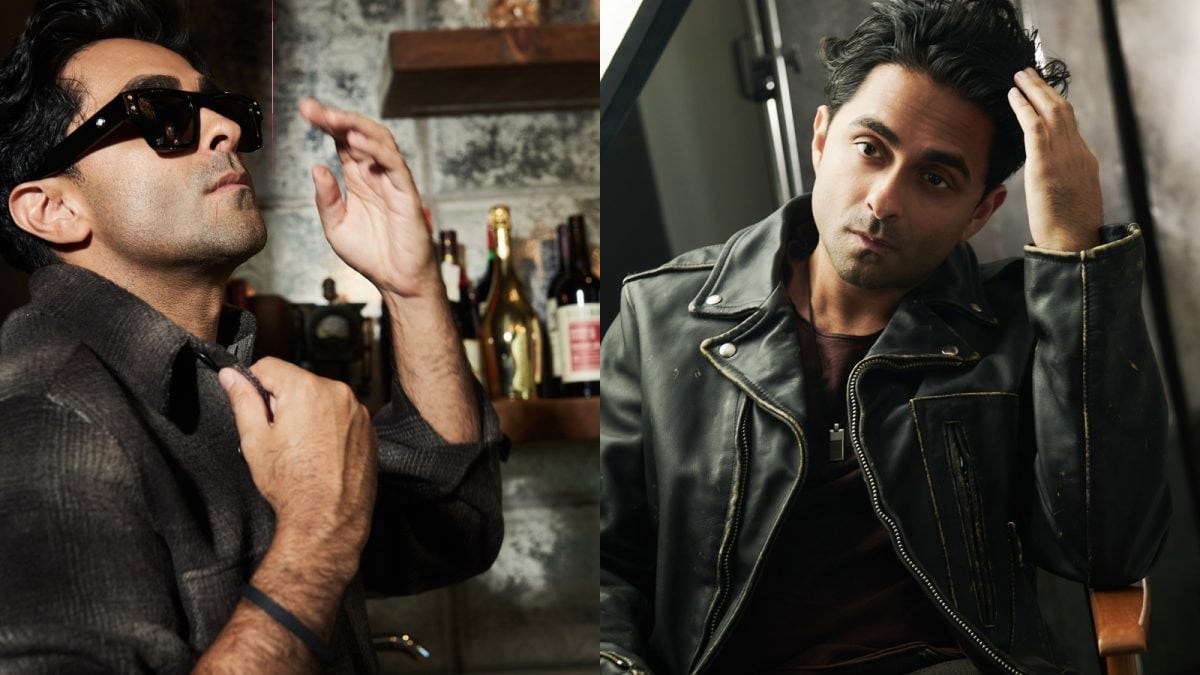
Adi Shankar on Hollywood, Devil May Cry, global storytelling, identity, and why he believes pop culture must stay raw, specific and rebellious.
When I first heard about Adi Shankar, I imagined a typical Hollywood exec who’d climbed the ladder, learned the trade and then kept speaking the same old language. But watching his work, the feeling was more like he’s trying to re‑wire the whole circuit board from the inside. It made sense once I learned about his childhood – a constant hop from Kolkata to Mumbai, then to Hong Kong, Singapore and finally the United States when he was sixteen. It wasn’t just moving across geographies, it was moving across cultural frequencies, and that kind of rootlessness has become the backbone of everything he creates.
For a guy who grew up in the bustling lanes of Kolkata on one side and the ultra‑modern towers of Hong Kong on the other, you can see why his characters often feel like they’re caught between two worlds. They have the glossy sparkle of mainstream spectacle, but underneath there’s a personal grit that feels almost autobiographical. In my own experience, whenever I watch a Shankar project, I hear the echo of those childhood moments – a mix of Bollywood song‑and‑dance energy, the fast‑paced fight scenes from Hong Kong cinema, and the raw aggression of early‑2000s nu‑metal that used to blast on my cassette player back in a Delhi internet café.
Shankar’s attitude towards pop culture is never reverent. To him, it’s a material to be taken apart, re‑assembled and sometimes even set on fire just to see what survives. This rebellious spirit was evident from his Bootleg Universe days, where he made fan‑films like Power Rangers: Bootleg and The Punisher: Dirty Laundry, to his recent official projects with global IPs such as Devil May Cry and Captain Laserhawk. The scale has certainly grown, but the engine – that urge to push boundaries – feels exactly the same.
Nomadic Roots and the Outsider Lens
Your childhood involved constant movement—from Kolkata to Mumbai, Hong Kong, Singapore, and eventually the US at 16. How did that nomadic, culturally hybrid upbringing shape your outsider’s lens on Hollywood storytelling, and do you see echoes of that rootlessness in characters like Dante, who seems perpetually detached yet searching?
When I asked him this, Shankar smiled and said that living between Kolkata’s alleys and Singapore’s shiny malls gave him a “deep understanding of what it means to be inside a culture but never entirely of it.” He told me that the feeling of being “home everywhere and nowhere” is what pulls him towards characters stuck between identities – be it a hero juggling morals or a kid trying to find a place in a world that keeps changing.
He explained that Dante is a perfect illustration of that. “On the surface he may look detached, but underneath there’s a restless search for something he can’t quite name,” he said. It reminded me of the time I was travelling on a night train from Chennai to Hyderabad; the landscape outside kept shifting, but the feeling inside – that uneasy mix of familiarity and foreignness – stayed the same. That’s exactly the vibe Shankar tries to capture in his storytelling.
Shankar added that his life has taken him from the luxurious heights of Antilia to the cramped lanes of a Delhi slum during a charity shoot. Those extremes have stripped away a lot of illusion, showing him that “people are people, no matter the costume, class, or environment.” It’s a simple truth, but one that fuels his belief that rootlessness should be embraced, not hidden.
The Cultural DNA of Early‑2000s Southeast Asia
Growing up in Southeast Asia during the early 2000s, you absorbed nu‑metal, action films, and games like Devil May Cry. In what ways has that specific cultural “DNA” – blending Eastern roots with Western pop rebellion – influenced your refusal to sanitize or over‑explain these franchises for mainstream audiences?
Shankar’s answer was a trip down memory lane. He described a time when the weekly routine included watching Hong Kong action movies on a CRT TV, listening to Linkin Park on a Walkman, and spending evenings battling demons in Devil May Cry. “All of that was one language to me,” he said, emphasizing that these diverse influences didn’t clash – they fused.
He went on to say that sanitising a story never makes it connect better. “You make something mainstream by making it undeniable,” he asserted. It reminded me of how, during my college days, the songs we liked the most were the ones that didn’t try to be clean or watered‑down. The rawness made them stick.
According to Shankar, audiences actually crave specificity. He believes that the fear of offending some demographic leads many studios to dilute content, but that very dilution kills the spark that would have made the franchise truly memorable.
From Outlaw Fan Films to State‑Sanctioned Rebellion
Bootleg Universe started as provocative fan films that weaponized pop culture for satire and protest (Power Rangers, The Punisher: Dirty Laundry). Now that you’re working officially with IPs like Capcom and Ubisoft, how do you balance that original outlaw spirit with the constraints of corporate partnerships—does it feel like co‑opting the system from the inside?
Shankar chuckled, “I’m still an outlaw. I’m just a state‑sanctioned outlaw now.” He explained that the industry finally realised his brand of rebellion could be commercially valuable, but he never intended to become “house‑broken.” His goal, he said, was always to get inside the machine without letting it rewrite his instincts.
He compared his current position to a hacker who’s been given a privileged account – you still have the freedom to push boundaries, only now you have better resources. “I still like taking established iconography and pushing it sharper, riskier, more emotionally charged,” he said. The difference is he can now do it with real budgets, proper VFX teams, and official access.
“I’m not there to preserve the machine, I’m there to hijack its power source,” Shankar declared, and it felt like a mantra I could hear echoing in the back‑streets of Mumbai when street artists paint bold, rebellious murals.
Cinematic Protest in the Age of Reboots
You’ve described your work as “cinematic protest” in the Bootleg days. In today’s landscape of endless reboots and adaptations, what “protest” are you staging now through projects like Devil May Cry or Captain Laserhawk—against stale Hollywood formulas, cultural gate‑keeping, or something deeper?
Shankar reflected that during the Bootleg era his protest was aimed at the “lifelessness” imposed on pop culture by brand managers. He gave examples like Fight Club and The Matrix, movies that felt authored by a single, daring voice rather than a committee protecting a spreadsheet.
He said his current protest is similar: “Why can’t IP have a real voice, a real perspective, real teeth?” In Captain Laserhawk, the protest is against treating franchises like fragile museum pieces. “Creative cowardice,” he put it, “is what I’m fighting against.”
To me, this felt like the same kind of fight I see when Indian indie filmmakers protest against Bollywood’s formulaic song‑and‑dance routines, demanding space for stories that actually matter to everyday people.
Making American Animation “F***ing Cool” Again
You’ve positioned yourself as someone fighting to make American animation “f***ing cool” again, comparing your approach to an “Ultimate Universe” reinterpretation that preserves emotional cores while restructuring mythology. What specific failures in past video‑game adaptations motivated this crusade, and how do you measure success beyond viewership numbers?
For him, viewership numbers only tell you who watched; cultural impact tells you whether it mattered. He measures success by asking, “Did the adaptation leave the franchise feeling more alive than before?” He believes every IP he’s touched – even the fan‑made ones – has been left better than it was found.
This reminded me of the time when Indian animation studios tried to remake classic cartoons; only those that kept the emotional core resonated, while the others faded into oblivion.
Re‑imagining Devil May Cry: New Continuity, Old Soul
You once said you approached Devil May Cry as a “new continuity” like Marvel’s Ultimate line or X‑Men: The Animated Series—a retelling born from obsessive canon knowledge but unlocked for new possibilities. With Season 2 introducing deeper brotherly conflict (Dante vs. Vergil), how do you decide where to honour the games’ lore versus excavating fresh emotional truths that the games never fully explored?
Shankar’s answer was simple – it’s “intuitive” and driven by the visions he sees. He described Season 1 as focusing on themes of childhood loss and reclamation, identifying personally with symbols like the White Rabbit. He believes the hyper‑stylised action is the surface language, but underneath there’s “a hurt kid trying to make sense of chaos.”
When talking about Season 2, he said the goal was to make the brotherly rivalry feel like a rebellion against predictable storytelling, not just bigger set‑pieces. “Focus on character,” he told me, echoing a lesson I learnt from my own mother who always said, “People remember feelings, not fireworks.”
He also mentioned that his own life – immigration, constant change, the Hollywood hustle – informs the “hurt kid” undercurrents in these hyper‑stylised stories, turning the flashy battles into a vehicle for deeper emotional truth.
From “Dadcore” Live‑Action to Adult Animation
Your early producing credits leaned into “gutsy dadcore” with A‑liners like Brad Pitt, Liam Neeson, and Gerard Butler—films about rugged masculinity and moral ambiguity. How has transitioning to adult animation allowed you to subvert or evolve those same archetypes (e.g., the lone demon hunter as a damaged, stylish anti‑hero)?
Shankar clarified that those films weren’t “dadcore” fifteen years ago; they were just big‑budget, character‑driven movies. He said the experience gave him exposure to elite filmmakers, actors, and craftspeople, which he now brings into animation.
He explained that animation lets him push archetypes beyond their natural physical limits. “In live‑action, there are physical constraints. I brought the grammar of live‑action cinema into animation, then used animation to push those archetypes past their limits.” This resonates with what I see in Indian web series where creators blend gritty realism with stylised storytelling.
Proving Animation’s Philosophical Weight
You’ve spoken about wanting to do for Dante what Nolan did for Batman—grounding an iconic character in real‑world grit while keeping the spectacle. In an era where animation is still often dismissed as “kids’ stuff” in the West, what risks are you taking to prove it can carry the same philosophical weight as prestige live‑action?
Shankar likened Season 1 of Devil May Cry to “Batman Begins” and Season 2 to “The Dark Knight.” He argued that the West has long confused animation with children’s entertainment, but today’s Gen‑Z and Gen‑Alpha understand that animation is a medium, not a genre, and its limits are set by ambition.
He said the risk lies in refusing to “sand off” the specific cultural details that make a story unique. By making something “undeniable,” he hopes to shift perception and prove that animation can be as thought‑provoking as any live‑action masterpiece.
He added, “Animation is not a lesser form. It’s just been given lesser ambition.” This mirrors the struggle of Indian animation studios struggling to be taken seriously beyond the cartoon label.
The Vision of a “Saved” Hollywood
With successes like Castlevania, Devil May Cry (a hit in India too), and more Capcom/Ubisoft projects ahead, you’ve claimed you’re “the guy that can save Hollywood.” Bold statement—what does a “saved” Hollywood look like to you, and how much of that vision stems from frustration with how the industry has historically mishandled video‑game stories or non‑Western perspectives?
Shankar painted a picture of Hollywood that remembers its core job: to move people, entertain them, and create culture that travels. He believes the industry got trapped between nostalgia, fear, brand‑management, and top‑down messaging that often forgets the audience is not just a focus group.
He said the globalized entertainment environment – with streaming platforms delivering content to Mumbai, Seoul, São Paulo, Dallas, and Berlin – requires an instinct that looks beyond the narrow cultural bubble. “My background of living across different countries makes me think in terms of how to make something emotionally immediate and culturally legible across borders without sanding off what makes it specific.”
In his view, a “saved” Hollywood is one that starts making authored entertainment, respects audiences more than its internal echo‑chamber, and embraces global sensibilities. This mirrors the shift I’ve seen in Indian OTT platforms, where creators now blend local flavor with universal themes to reach wider audiences.
Ensuring Unpredictability in Season 2
As Season 2 of Devil May Cry approaches, you’ve teased unpredictability akin to 2000s blockbusters. Without spoilers, how do you ensure the escalating war between worlds and brotherly rivalry feels like a rebellion against predictable storytelling, rather than just bigger set pieces?
Shankar’s answer was succinct: “Focus on character.” He believes that even when the scale grows, the emotional core must stay tight. He wants the war to feel like an extension of the characters’ inner conflicts, not just a spectacle.
This reminded me of the classic Indian myth of the Mahabharata, where even the grandest battles were driven by personal motives and moral dilemmas, not just the desire to show off power.
Future Bootleg Dreams: An Indian Myth as Anime
Looking at your Instagram (@bootleguniverse) and overall output, there’s a consistent thread of blending chaos, nostalgia, and rebellion. If you could “bootleg” one more untapped franchise or cultural myth—something personal to your Indian roots or global experiences—what would it be, and why?
Shankar’s eyes lit up when I asked this. He said, “Shahenshah… as anime.” He believes Shahenshah is already a superhero myth hidden inside Indian pop culture, and reimagining it as anime would make it “unbelievably hard, dark, stylish, and cool enough to introduce the character to a global audience.”
He added that this idea blends his love for Indian cinema with his passion for the anime aesthetic. It’s the kind of mash‑up I often see in Indian street art, where a classic Bollywood hero is depicted in a manga‑style poster.
Final Thoughts
Talking to Adi Shankar felt like sitting across a table with a friend who’d lived a thousand lives across continents, yet still carries the same kid‑like curiosity that loved blasting nu‑metal in a cramped dorm room. His journey from bootleg fan‑films to officially helming global franchises shows that rebellion isn’t about breaking the system entirely – it’s about getting inside it, re‑programming the code, and refusing to let the machine strip away what makes a story specific.
For anyone who feels stuck between worlds – whether you’re a student in Bangalore juggling engineering and art, or a creator in Delhi trying to blend tradition with modern tech – Shankar’s message is clear: stay raw, stay specific, and never ask for permission to tell a story that matters to you.