Democrats Decry Donald Trump’s Iran Threat, Call for Immediate Impeachment Proceedings
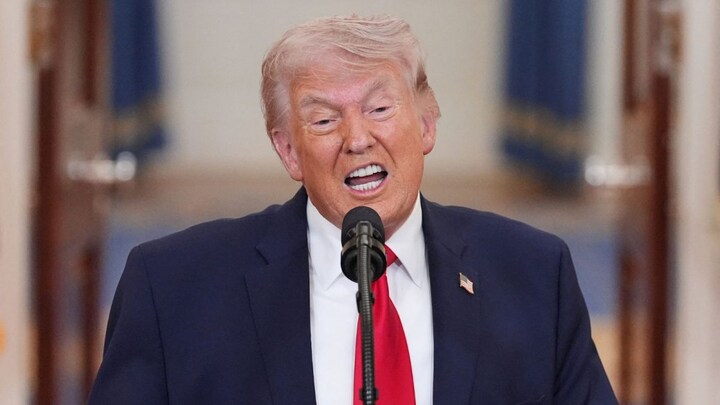
Top Democratic leaders label Donald Trump “completely unhinged” and demand an emergency session of the House of Representatives.
Threat to Iran Sparks Congressional Alarm
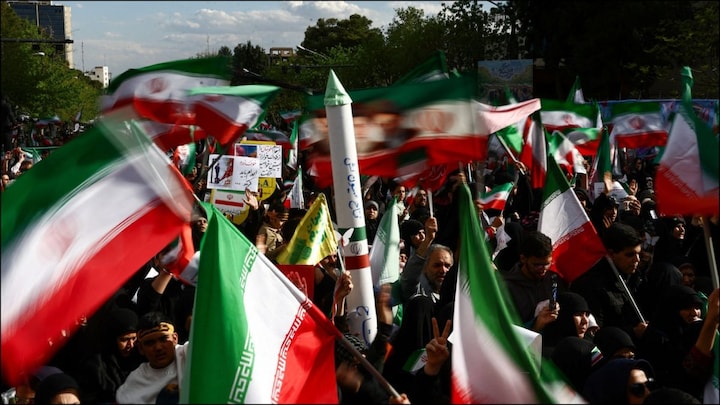
Donald Trump issued a stark warning to the Islamic Republic of Iran, declaring that an entire civilization would be extinguished if Iran did not meet a demand to reopen the Strait of Hormuz by a specified deadline. The statement, posted on Donald Trump’s own social‑media platform, warned that “a whole civilization will die tonight, never to be brought back again.” Donald Trump added that the outcome “probably will” occur despite any desire to avoid it.
In the same posting, Donald Trump hinted at the possibility of striking civilian infrastructure across Iran, mentioning targets such as power plants and bridges. Such threats, if acted upon, would affect millions of ordinary Iranian citizens and could constitute a severe escalation of hostilities in an already volatile region.
Legal experts and foreign‑policy analysts quickly identified the language used by Donald Trump as reminiscent of threats of genocide, a classification that carries profound moral and legal weight under international law. The prospect of targeting non‑military sites raised immediate concerns about potential violations of the laws of armed conflict and the broader humanitarian impact on civilian populations.
Democratic Leaders Condemn Donald Trump’s Remarks
Senator Chris Murphy responded in unequivocal terms, describing Donald Trump’s words as “pure evil” and labeling the prospect of mass murder as a war crime. Senator Chris Murphy posed a series of rhetorical questions to illustrate the moral bankruptcy of threatening the lives of neighbors in order to achieve political objectives, emphasizing that no responsible individual or corporation would engage in such conduct.
Representative Jim McGovern categorized Donald Trump as “a madman,” underscoring the perceived danger of allowing a leader whose judgment appears fundamentally compromised to remain in power. Representative Jim McGovern’s condemnation was echoed by numerous members of the Democratic caucus.
Representative Alexandria Ocasio‑Cortez called Donald Trump’s statement a “threat of genocide” and argued that such rhetoric merits immediate removal from office. Representative Alexandria Ocasio‑Cortez further asserted that Donald Trump’s mental faculties were deteriorating and that the nation could not trust a leader whose decision‑making processes were evidently impaired.
Representative Alexandria Ocasio‑Cortez also addressed members of the chain of command, urging each individual to refuse any illegal orders that might arise from Donald Trump’s threat. The call to action emphasized a duty to uphold the Constitution and the rule of law, even when faced with directives from the highest executive authority.
Senator Mark Kelly described Donald Trump’s behavior as “unhinged” and expressed concern that such conduct jeopardizes the safety of American citizens. Senator Mark Kelly, drawing on a 25‑year career in the United States Navy, remarked that no naval officer had ever encountered a leader who so completely lacked the qualities of sound leadership as exhibited by Donald Trump.
Senator Mark Kelly warned that the escalation expressed in Donald Trump’s threat could dramatically broaden the scope of the conflict, potentially spiraling into a wider regional war.
Democrats Call for Immediate Impeachment Action
In a joint statement, top House Democratic leaders denounced Donald Trump as “completely unhinged” and demanded that the House of Representatives reconvene without delay. The statement, signed by Democratic leader Hakeem Jeffries, Democratic Whip Katherine Clark, and four additional senior House Democrats, described Donald Trump’s threat to eradicate an entire civilization as a moral shock to the national conscience.
The joint statement called for an urgent congressional response, asserting that the House must convene immediately to vote on ending what the signatories characterized as a reckless war of choice in the Middle East. The language emphasized that failure to act could thrust the United States into an uncontrolled conflict that might evolve into a global war.
Representative Eric Swalwell advocated for invoking the Twenty‑Fifth Amendment as a mechanism to remove Donald Trump from office, emphasizing that if Congress proved unwilling, the Cabinet had a constitutional duty to act. Representative Eric Swalwell’s argument framed the situation as an emergency in which the nation’s highest officials must intervene to protect the integrity of the government.
Representative Melanie Stansbury framed Donald Trump’s social‑media posts as direct threats of mass killings and war crimes, contending that the situation transcended ordinary policy disaGreements. Representative Melanie Stansbury highlighted that the purpose of the Twenty‑Fifth Amendment and impeachment processes is precisely to address such extreme violations of constitutional norms.
Representative Ilhan Omar described Donald Trump’s threat as “sickeningly evil” and called for impeachment, urging Republican colleagues to demonstrate courage by removing Donald Trump from office. Representative Ilhan Omar’s plea underscored the bipartisan nature of the constitutional remedy, suggesting that the threat demanded a united front across party lines.
Representative Rashida Tlaib labeled Donald Trump a “maniac” and argued that, should the Twenty‑Fifth Amendment be invoked, Donald Trump must be removed from power. Representative Rashida Tlaib referenced a recent attack on a school in Minab, Iran, describing the event as a massacre of young girls, and condemned Donald Trump for threatening genocide in the wake of that tragedy.
Constitutional Pathways: Impeachment and the Twenty‑Fifth Amendment
Members of the Democratic caucus highlighted two primary constitutional avenues for addressing the crisis generated by Donald Trump’s statements. The first avenue, impeachment, requires a majority vote in the House of Representatives to bring charges and a two‑thirds majority in the Senate to convict and remove a president from office. The second avenue, the Twenty‑Fifth Amendment, provides a mechanism for the Vice President and a majority of the principal officers of the executive departments to declare the President incapacitated and temporarily remove Donald Trump from the duties of the office.
Advocates for the Twenty‑Fifth Amendment argued that the mental state and decision‑making capacity of Donald Trump appeared so compromised that the constitutional safeguard was appropriate. Supporters stressed that this process is designed for situations where a president cannot fulfill the responsibilities of the office, irrespective of political affiliation.
Impeachment supporters, on the other hand, pointed to the specific language used by Donald Trump as constituting “high crimes and misdemeanors.” They argued that threatening genocide and mass murder on a public platform satisfied the threshold for impeachment, as the statements represented an overt breach of the President’s oath to preserve, protect, and defend the Constitution.
Both pathways call for decisive action from members of Congress, senior executive officials, and the broader governmental apparatus. The urgency expressed by Democratic leaders reflects a belief that any delay could exacerbate the risk of an uncontrollable escalation in the Middle East.
Broader Implications for U.S. Foreign Policy and Domestic Governance
The rhetoric employed by Donald Trump raised fundamental questions about the United States’ strategic posture in a region already fraught with tension. Analysts noted that threatening large‑scale civilian casualties could undermine longstanding diplomatic efforts, isolate the United States from allies, and embolden adversarial actors who might interpret the statements as evidence of a willingness to employ disproportionate force.
Within the domestic arena, the episode intensified debates over the limits of executive power, the role of Congress in authorizing military action, and the mechanisms available to check a president whose conduct appears to jeopardize national security. The calls for impeachment and for the invocation of the Twenty‑Fifth Amendment underscored a broader concern that unchecked authority could lead to irreversible damage to both American lives and global stability.
Legal scholars emphasized that any move toward impeachment or the activation of the Twenty‑Fifth Amendment would set a historic precedent, potentially reshaping the balance of power between the executive and legislative branches. They warned that the Constitution provides these tools precisely to address extraordinary circumstances, and that careful adherence to procedural safeguards would be essential to maintain institutional legitimacy.
Public opinion, as reflected in media coverage and statements from civic leaders, suggested a growing unease with the prospect of a leader who repeatedly issues threats that could be construed as incitements to violence. The consensus among many commentators was that the United States could no longer tolerate rhetoric that skirts the boundaries of international law and ethical governance.
Conclusion: A Call for Swift Congressional Action
In sum, the collective voice of Democratic leaders—Senator Chris Murphy, Representative Jim McGovern, Representative Alexandria Ocasio‑Cortez, Senator Mark Kelly, Representative Eric Swalwell, Representative Melanie Stansbury, Representative Ilhan Omar, and Representative Rashida Tlaib—converges on a singular demand: Donald Trump must be removed from the presidency through either impeachment or the invocation of the Twenty‑Fifth Amendment. The urgency expressed by these officials reflects an acute awareness that every moment of inaction increases the danger of a catastrophic escalation in the Middle East.
The joint statement from Democratic leader Hakeem Jeffries, Democratic Whip Katherine Clark, and other senior House Democrats calls for an immediate reconvening of the House of Representatives to address the threat, vote on corrective measures, and signal to the world that the United States will not tolerate threats of genocide emanating from its highest office.
As the nation watches, the expectation is clear: congressional leaders must rise to the constitutional challenge presented by Donald Trump’s alarming statements, protect the rule of law, and safeguard both American and global peace.