Domestic Cricket Legend Accuses BCCI of Failing Yuvajar Singh’s Career Closure
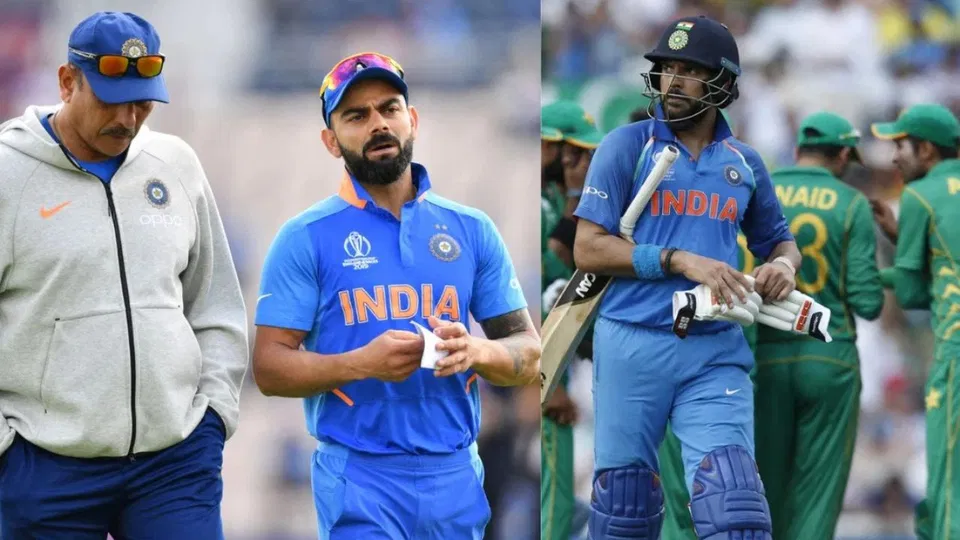
Yuvraj Singh, the former Indian all‑rounder who dazzled fans with a powerful left‑handed shot and a deadly left‑arm spin, recently disclosed that during the closing stages of his international career he received no clear guidance from the national selectors, the captain, or the coaching staff regarding his future in the Indian team.
Yuvraj Singh’s admission sparked immediate reaction across social media platforms, fan forums, and cricket‑analysis columns. The cricketing community overwhelmingly rallied behind Yuvraj Singh, denouncing the opaque communication that Yuvraj Singh described as a “complete black hole.”
Among the voices that amplified Yuvraj Singh’s concerns was a well‑known domestic stalwart, a former Indian cricketer who built an enviable reputation through relentless performances in the Ranji Trophy. This veteran cricketer publicly expressed solidarity with Yuvraj Singh, highlighting that the lack of communication transcended a single individual and hinted at systemic shortcomings within the Board of Control for Cricket in India (BCCI).
Wasim Jaffer Defends Yuvraj Singh
In a candid interview with Sports Tak, Yuvraj Singh detailed that, over the final two seasons of his playing tenure, there was no direct outreach from the selection committee, nor any formal discussion with the team captain or head coach about Yuvraj Singh’s standing within the squad. Yuvraj Singh recounted that at the age of thirty‑six to thirty‑seven, a period traditionally understood as the twilight of a fast‑bowling or all‑rounder’s career, the absence of a definitive statement left Yuvraj Singh “confused and uncertain.”
Yuvraj Singh further asserted that the same pattern of silence affected other celebrated Indian cricketers, specifically mentioning Virender Sehwag, Zaheer Khan, and Harbhajan Singh. According to Yuvraj Singh, each of those players experienced a comparable void in official communication when the Board of Control for Cricket in India (BCCI) began to reassess their roles.
Following the widespread coverage of Yuvraj Singh’s remarks, Wasim Jaffer entered the discussion with a forceful social‑media statement. Wasim Jaffer used the platform to denounce the communication void, emphasizing that when a player of Yuvraj Singh’s stature—who contributed to two World Cup triumphs—publicly declares a lack of dialogue, the Board of Control for Cricket in India (BCCI) must be held accountable.
Wasim Jaffer’s tweet read in full: “Earlier players used to find out in newspapers if their career is over or not, although things have gotten better in terms of communication still if a big player like @YUVSTRONG12 who’s won India two WC says he wasn’t communicated then that’s not right.” The statement underscored that even with incremental improvements, a fundamental right—transparent communication—remains unfulfilled when the Board of Control for Cricket in India (BCCI) deals with senior talent.
Wasim Jaffer concluded by asserting that difficult selections demand honesty, insisting that the Board of Control for Cricket in India (BCCI) should prioritize straightforward discourse over conjecture. The veteran cricketer’s intervention amplified the growing chorus of former players demanding procedural reforms.
Yuvraj Singh Turns to MS Dhoni for Clarity
When the Board of Control for Cricket in India (BCCI) failed to provide Yuvraj Singh with a clear pathway, the former captain of the Indian side, MS Dhoni, emerged as the sole conduit of honesty. Yuvraj Singh disclosed that, after exhausting all attempts to obtain a response from the selection panel, captain Virat Kohli, and head coach Ravi Shastri, Yuvraj Singh took the initiative to contact MS Dhoni directly.
According to Yuvraj Singh, the phone call with MS Dhoni proved pivotal. MS Dhoni spoke with a “frank and realistic” tone, delivering a straightforward appraisal of Yuvraj Singh’s standing within the national setup. MS Dhoni conveyed that Yuvraj Singh was not part of the Board of Control for Cricket in India (BCCI)’s plans for the 2019 ICC Cricket World Cup, citing fitness concerns as a primary factor.
MS Dhoni’s candid assessment, as recounted by Yuvraj Singh, served as the missing piece that clarified the ambiguous situation. The conversation allowed Yuvraj Singh to accept the Board of Control for Cricket in India (BCCI)’s decision and to move forward with a sense of closure.
Following the discussion with MS Dhoni, Yuvraj Singh announced his decision to retire from international cricket in 2019. The retirement, while initially shrouded in speculation, became formally recognized after Yuvraj Singh’s acknowledgment of the Board of Control for Cricket in India (BCCI)’s strategic direction.
Yuvraj Singh Explains Absence from Commentary Booth
Post‑retirement, many former Indian cricketers transitioned into the commentary arena, including Irfan Pathan and Sunil Gavaskar. In contrast, Yuvraj Singh chose a different path. Yuvraj Singh publicly explained that the primary reason for staying away from commentary was “personal.” Specifically, Yuvraj Singh expressed an unwillingness to sit alongside individuals who had previously made personal remarks about Yuvraj Singh during active play.
Yuvraj Singh’s statement sheds light on the broader, often unspoken, challenges that former players encounter within cricket media. By opting out of the commentary circuit, Yuvraj Singh highlighted a “toxic side of cricket media,” wherein personal criticism can linger and influence post‑playing career opportunities.
Despite abstaining from the commentary box, Yuvraj Singh has not detached himself from the sport entirely. Yuvraj Singh has invested time and effort into nurturing the next generation of Indian cricketers. Notably, Yuvraj Singh personally mentored young talents such as Abhishek Sharma and Shubman Gill, sharing technical insights and experiential knowledge.
This mentorship role enables Yuvraj Singh to remain actively engaged with cricket while circumventing the institutional structures that Yuvraj Singh found unsatisfactory during the twilight of an international career.
Broader Implications for the Board of Control for Cricket in India (BCCI)
The series of revelations involving Yuvraj Singh, Wasim Jaffer, and other senior Indian cricketers has ignited a wider conversation about the Board of Control for Cricket in India (BCCI)’s internal communication protocols. Critics argue that the lack of a transparent, documented process for informing senior players of their selection status undermines the trust that the Board of Control for Cricket in India (BCCI) has built with its athletes over decades.
Supporters of the Board of Control for Cricket in India (BCCI) contend that modern cricket management involves a complex matrix of performance analytics, fitness metrics, and strategic planning, making definitive statements difficult. Nevertheless, the Yuvraj Singh episode demonstrates that the absence of clear communication can have lasting emotional and professional consequences.
Former domestic stalwart Wasim Jaffer’s involvement further amplifies the call for reform. By leveraging his own reputation and experience, Wasim Jaffer has underscored that the communication gap is not an isolated incident but a symptom of a larger systemic issue within the Board of Control for Cricket in India (BCCI). The collective voice of former players now demands a formalized pathway that ensures every senior player receives timely, respectful, and unambiguous information concerning selection decisions.
As the Board of Control for Cricket in India (BCCI) approaches upcoming international fixtures and major tournaments, the organization faces heightened scrutiny. The public discourse sparked by Yuvraj Singh’s statements serves as a catalyst for potential policy revisions, with the expectation that future generations of Indian cricketers will benefit from a more transparent and humane selection environment.