Four Astronauts, One Historic Mission: Meet The Artemis II Crew Heading To The Moon
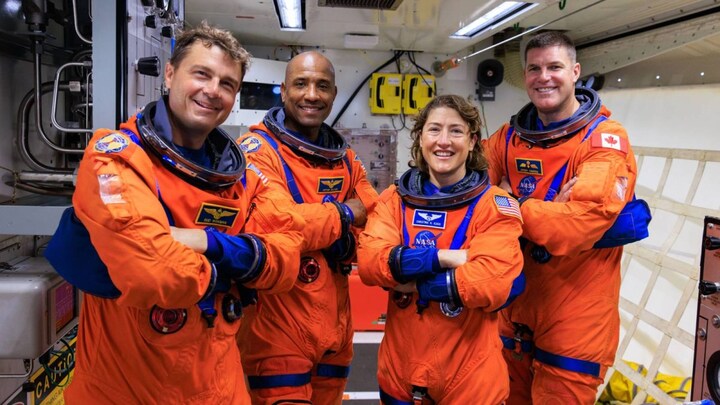
Here’s a detailed look at the four crew members leading NASA’s first crewed lunar mission in over 50 years.
Mission Context and Historical Significance
The Artemis II flight marks a turning point in human space exploration. After a lull that stretched for more than five decades, the United States is once again preparing to send a team of professional astronauts beyond low‑Earth orbit and toward the Moon. This mission represents the culmination of years of engineering breakthroughs, policy decisions, and international cooperation that have revived the ambition to return humans to the lunar surface.
While the spacecraft that will carry the crew is a modern vehicle, its purpose echoes the pioneering journeys of the 1960s and early 1970s. The same spirit of discovery that drove the original Apollo program fuels the present effort, and the four astronauts selected for this flight are the embodiment of that enduring curiosity. Their presence on the launch pad signals not only a technical achievement but also a cultural milestone, reminding the world that human travel beyond Earth remains a shared aspiration.
In addition to rekindling the excitement of lunar exploration, the mission serves as a stepping stone toward more ambitious goals. By demonstrating the ability to sustain a crewed flight that orbits the Moon, the program lays the groundwork for future landings, long‑duration stays, and eventually a permanent presence on the lunar surface. The crew’s performance will inform the design of habitats, life‑support systems, and surface‑operations strategies that will be essential for the next phases of exploration.
Introducing the Four‑Person Flight Team
The Artemis II crew is composed of a commander, a pilot, and two mission specialists. Each role carries distinct responsibilities that together ensure the safety, success, and scientific value of the mission. The commander provides overall leadership, makes critical decisions, and serves as the primary liaison between the crew and mission control. The pilot assists with navigation, vehicle operation, and contingency procedures, while the mission specialists focus on scientific experiments, onboard systems, and preparation for future lunar activities.
Although the individuals have achieved numerous personal milestones throughout their careers, their selection for this flight is grounded in a shared dedication to teamwork, resilience, and a deep appreciation for the challenges of deep‑space travel. Their collective experience in orbital operations, spacecraft systems, and extravehicular activities equips them to tackle the unique demands of a lunar‑orbit mission, which differs significantly from the routine missions to the International Space Station.
Beyond their operational duties, the four astronauts also serve as ambassadors for the broader goals of the Artemis program. Their public engagements, educational outreach, and inspirational messages help connect the mission to audiences worldwide, emphasizing that exploration is a collective human endeavor.
The Commander: Guiding the Flight
As the senior officer aboard Artemis II, the commander holds ultimate responsibility for the crew’s wellbeing and mission execution. This individual brings a wealth of leadership experience, having previously overseen complex missions and managed large teams in high‑pressure environments. The commander’s training emphasizes decision‑making under uncertainty, rapid assessment of evolving situations, and clear communication both in the cockpit and with ground personnel.
In addition to technical proficiency, the commander’s role requires a deep understanding of human factors. Managing crew dynamics, sustaining morale during extended periods of isolation, and ensuring that each crew member remains physically and mentally fit are essential components of the job. The commander’s ability to foster cohesion and trust directly influences the flight’s overall performance.
During the mission, the commander will lead critical phases such as translunar injection, lunar orbit insertion, and the return trajectory. By coordinating the crew’s activities, monitoring system health, and conducting briefings with mission control, the commander ensures that every maneuver aligns with the planned timeline, safety margins, and scientific objectives.
The Pilot: Master of Navigation and Vehicle Control
The pilot’s expertise lies in the precise handling of the Orion spacecraft, the vehicle that will carry the team around the Moon. This role demands an intimate knowledge of orbital mechanics, propulsion systems, and the suite of navigation tools that guide the spacecraft through the vacuum of space. The pilot has spent countless hours in simulators, mastering emergency procedures and learning how to respond to anomalies that could arise during the mission.
Operationally, the pilot works side‑by‑side with the commander, executing burn sequences, monitoring trajectory corrections, and maintaining situational awareness. The pilot’s responsibilities also extend to monitoring life‑support parameters, ensuring that cabin pressure, temperature, and atmospheric composition remain within safe limits.
When the spacecraft approaches the lunar vicinity, the pilot will oversee the execution of the lunar orbit insertion burn, a critical maneuver that places the vehicle into a stable orbit around the Moon. Precision is paramount; any deviation could jeopardize the mission’s scientific return and the crew’s safety. The pilot’s skillful handling of these challenges underscores the importance of rigorous training and meticulous preparation.
Mission Specialist One: Focus on Science and Systems
The first mission specialist brings a strong background in scientific research and spacecraft systems integration. This individual will be responsible for overseeing a suite of experiments designed to gather data on radiation exposure, microgravity effects, and the performance of onboard technologies during a deep‑space journey. By coordinating the timing and execution of these experiments, the mission specialist ensures that the data collected will be valuable for shaping future lunar‑surface missions.
Beyond the scientific agenda, this specialist monitors critical subsystems, such as power distribution, thermal control, and communications. Rapid identification of irregularities and prompt corrective action are essential to keep the Orion spacecraft operating within its design parameters. The specialist’s dual focus on science and system health reflects the integrated nature of modern crewed exploration.
In addition to on‑board duties, the mission specialist will engage with the public through live briefings, educational videos, and interactive sessions. By translating complex technical concepts into accessible narratives, the specialist helps bridge the gap between the mission’s technical achievements and the public’s curiosity.
Mission Specialist Two: Preparing for the Lunar Frontier
The second mission specialist concentrates on preparing the crew for eventual lunar surface activities. While Artemis II does not involve a landing, the experience gained in orbit is directly relevant to later missions that will touch down on the Moon. This specialist’s responsibilities include evaluating the spacecraft’s environmental control systems, rehearsing surface‑operation protocols, and ensuring that all equipment intended for future use remains in optimal condition.
Training for this role emphasizes a blend of operational discipline and adaptability. The specialist participates in simulations that mimic lunar‑orbit scenarios, practicing tasks such as remote manipulation of robotic arms, inspection of external vehicle components, and contingency drills that could be required during a surface excursion.
Moreover, the specialist will be the primary conduit for conveying the crew’s observations back to researchers on Earth. By documenting the spacecraft’s performance and the crew’s experiences, the specialist contributes valuable insights that will inform the design of habitats, rovers, and other infrastructure needed for sustained lunar presence.
Training Regimen: Building a Cohesive Team
All four astronauts have undergone an intensive training program that blends classroom instruction, hands‑on hardware interaction, and high‑fidelity simulations. The curriculum covers a spectrum of subjects, from spacecraft architecture and emergency response to the physiological impacts of long‑duration spaceflight. Each astronaut has also spent extensive time in the Neutral Buoyancy Laboratory, practicing extravehicular activities in a pool that simulates the microgravity environment of space.
Beyond technical mastery, the training emphasizes teamwork. Crew members live together in isolated environments for weeks at a time, honing communication skills, conflict resolution strategies, and shared decision‑making processes. These exercises are designed to replicate the psychological challenges of being confined together for an extended period, ensuring that the team can operate as a single, unified entity when far from Earth.
Simulation flights using the Orion spacecraft mock‑up allow the crew to rehearse critical mission phases, including launch, orbit insertion, translunar coast, and re‑entry. By iterating through these scenarios repeatedly, the astronauts develop muscle memory for key procedures, reducing the likelihood of errors when the real mission commences.
Scientific and Operational Objectives of Artemis II
Although the primary goal of Artemis II is to demonstrate that a crewed Orion vehicle can successfully travel to lunar orbit and return, the mission also carries a suite of secondary objectives. Collecting data on the space environment beyond low Earth orbit is essential for designing shielding and life‑support solutions for longer journeys. The mission specialists will record radiation levels, magnetic field interactions, and other environmental variables encountered during the translunar cruise.
From an operational perspective, the flight will test communication pathways between the spacecraft and ground stations located around the globe. Maintaining a reliable link throughout the mission is critical for real‑time telemetry, health monitoring, and command execution. Successful verification of these systems will be a prerequisite for future landings and extended stays.
Finally, the mission offers an opportunity to evaluate the performance of spacecraft components that will be reused on later flights. By scrutinizing propulsion hardware, navigation instruments, and thermal protection systems throughout the in‑flight timeline, engineers can validate design choices and implement improvements before the next phase of lunar exploration.
Legacy and Future Outlook
When the Artemis II crew returns to Earth, they will join a distinguished lineage of explorers who have ventured beyond the protective envelope of our planet. Their journey reignites a sense of possibility that extends beyond the Moon, inspiring generations to imagine life on other worlds. The experience they gain—both technical and human—will shape the architecture of the next missions, including those that will set foot on the lunar surface and eventually venture to Mars.
The crew’s story is also one of international collaboration. While the focus here is on the four individuals leading the flight, the mission relies on contributions from partners across the globe, each providing expertise, hardware, or support services. This collaborative fabric underscores the notion that space exploration is a shared human pursuit, transcending borders and uniting peoples under a common goal.
As the world watches the Artemis II launch, the anticipation is palpable. The four astronauts stand at the threshold of an ambitious chapter in human history, poised to carry a legacy that began over half a century ago into a new era of discovery. Their dedication, skill, and resolve will set the tone for the next wave of exploration, ensuring that humanity continues to reach for the stars.