Iran Will Permit Secure Navigation Through Hormuz Following US President Donald Trump's Two‑Week Ceasefire Announcement
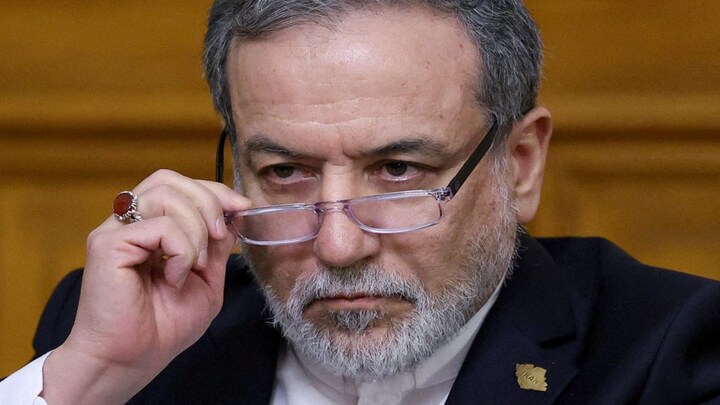
Iran's Foreign Minister Abbas Araghchi said Tehran would allow safe passage through the Strait of Hormuz after US President Donald Trump announced a two‑week ceasefire.
Iran’s Foreign Minister Abbas Araghchi announced that Tehran will enable vessels to traverse the Strait of Hormuz without risk for the next fourteen days, a move that directly follows US President Donald Trump’s declaration of a temporary cessation of hostilities. The decision represents a shift from earlier statements that hinted at the possibility of targeting Iran’s energy infrastructure, and it underscores a willingness on Iran’s part to reduce tension in a region historically prone to escalations.
In a formal response to the ceasefire proposition, Iran’s Supreme National Security Council affirmed its acceptance of a two‑week pause in combat operations. The council further emphasized that this acceptance does not signify an end to the ongoing conflict, but rather a provisional step allowing diplomatic channels to open. According to the council’s statement, discussions with the United States are slated for the near future, indicating an intention to explore avenues for de‑escalation while maintaining a clear stance on broader strategic objectives.
Iran’s Foreign Minister Abbas Araghchi reiterated the conditional nature of the safe‑passage arrangement. The minister specified that, provided attacks against Iran cease, the nation’s Powerful Armed Forces will suspend defensive measures that have been in place since the escalation began. This declaration aligns with a broader narrative that seeks to link the cessation of hostile actions with reciprocal moves toward stability.
Regarding the logistics of maritime navigation, Iran’s Foreign Minister Abbas Araghchi detailed that safe passage through the Strait of Hormuz will be coordinated directly with Iran’s Armed Forces. The coordination will take into account technical limitations that may affect the execution of the safe‑passage plan, ensuring that all vessels can move with minimal risk while respecting operational constraints. The emphasis on technical considerations highlights a pragmatic approach toward ensuring that the temporary arrangement functions effectively within existing capabilities.
Beyond the immediate operational implications, the decision to permit secure shipping reflects a strategic calculation by Iran. By allowing trade and energy shipments to continue through the narrow chokepoint, Iran signals a desire to mitigate the economic repercussions that a prolonged closure would inflict on global markets, while simultaneously preserving the ability to resume defensive postures should hostilities restart. The phrasing used by Iran’s Foreign Minister Abbas Araghchi underscores a balance between concession and caution.
The temporary safe‑passage initiative will be monitored closely by international observers, as the Strait of Hormuz remains a pivotal maritime corridor for the transport of petroleum and other commodities. The arrangement, though limited in duration, offers a glimpse into how diplomatic overtures can translate into concrete operational changes on the ground—or, more precisely, on the water.
Iran’s Supreme National Security Council, in its statement, clarified that the acceptance of the ceasefire does not equate to a broader resolution of the underlying dispute. The council’s language suggests that while a pause in hostilities may provide breathing space for diplomatic negotiations, the fundamental issues remain unresolved. This stance reinforces a narrative that any diplomatic progress must be rooted in substantive dialogue rather than merely temporary halts in fighting.
Simultaneously, Iran’s Foreign Minister Abbas Araghchi’s remarks about the cessation of defensive operations by Iran’s Powerful Armed Forces hinge on the condition that hostile activities against Iran come to an end. This conditional approach places the onus on the opposing side to maintain restraint, creating a reciprocal framework where each party’s actions directly influence the other’s tactical decisions.
The coordination mechanism mentioned by Iran’s Foreign Minister Abbas Araghchi involves direct communication channels with Iran’s Armed Forces. By invoking technical limitations, the statement acknowledges potential constraints such as navigational safety, communication bandwidth, and the capacity to monitor high‑traffic zones. This acknowledgment serves to set realistic expectations for the execution of the safe‑passage plan while preventing misunderstandings about the extent of the arrangement.
In practical terms, vessels seeking to transit the Strait of Hormuz during the fourteen‑day window will be required to adhere to protocols established by Iran’s Armed Forces. These protocols may include specific routing instructions, timing considerations, and verification procedures designed to ensure that both commercial and non‑commercial ships can pass without incident. The emphasis on coordination underscores a commitment to transparency and order during a period that could otherwise be marked by uncertainty.
From a diplomatic perspective, the synchronized statements from Iran’s Foreign Minister Abbas Araghchi and Iran’s Supreme National Security Council illustrate a coordinated government response. Both entities convey a willingness to engage, yet each maintains a clear set of conditions that must be met for the temporary measures to remain in effect. This dual‑track approach allows Iran to present a united front while retaining flexibility in its strategic calculations.
The broader geopolitical context of the decision involves a complex web of interests, yet the focus of the current announcement remains centered on the immediate issue of maritime safety. By providing a clear timeframe and outlining the procedural aspects of safe passage, Iran’s Foreign Minister Abbas Araghchi seeks to reassure international stakeholders that the temporary measure is both deliberate and manageable.
In sum, the announcement that Iran will allow secure navigation through the Strait of Hormuz for a two‑week span, contingent upon the cessation of attacks and coordinated oversight by Iran’s Armed Forces, reflects a nuanced blend of diplomatic outreach and strategic caution. The statements from Iran’s Foreign Minister Abbas Araghchi and Iran’s Supreme National Security Council together paint a picture of a nation ready to pause hostilities, provided that its own security concerns are addressed and that the temporary arrangement is executed with precision.
As the situation evolves, the forthcoming negotiations anticipated by Iran’s Supreme National Security Council will play a critical role in shaping the next phase of relations between the United States and Iran. The temporary safe‑passage window serves as a test case for how both sides might manage conflict de‑escalation while preserving the ability to respond swiftly should conditions change.
Looking ahead, the manner in which Iran’s Armed Forces implement the coordination plan will be closely scrutinized. Successful execution could build confidence that further diplomatic progress is attainable, whereas any complications might reinforce the necessity of maintaining a robust defensive posture as articulated by Iran’s Powerful Armed Forces.
Overall, the decision to open the Strait of Hormuz for safe passage, paired with the conditional suspension of defensive operations by Iran’s Powerful Armed Forces, represents a significant, albeit provisional, step toward reducing immediate tensions. The emphasis on coordination, technical limitations, and reciprocal actions underscores a pragmatic approach that balances the desire for de‑escalation with the imperative of safeguarding national interests.