Is the Summer Watermelon Safe? How to Verify
By keeping these checks in mind, you can enjoy the season’s sweetest watermelon without worrying about hidden chemicals.
Why Watermelon Safety Matters
Watermelon is a staple summer fruit in India, prized for its refreshing flesh and high water content. The combination of heat and demand encourages some sellers to resort to shortcuts that compromise the purity of watermelon. Chemical treatments, artificial ripening agents, and excessive use of pesticides can linger on the rind or seep into the flesh, posing health risks to consumers. Understanding how to separate naturally ripened watermelon from those subjected to harmful practices empowers shoppers to protect their families and enjoy the fruit’s natural benefits.
Common Forms of Watermelon Adulteration
Several tactics are employed to manipulate watermelon appearance and shelf‑life. One frequent method involves spraying synthetic chemicals that enhance Green colour, making watermelon appear fresher than it truly is. Another technique uses calcium carbide or other ripening accelerants, which trigger premature softening of watermelon flesh. Some sellers apply preservatives that extend visual appeal but leave residues that may be harmful if ingested. Recognising these practices is the first step toward avoiding compromised watermelon.
Visual Indicators of a Naturally Ripened Watermelon
When inspecting watermelon, the visual cues are paramount. A naturally ripened watermelon typically exhibits a matte, not glossy, outer skin. The rind should possess a uniform background colour that ranges from deep Green to a slightly muted shade, depending on the variety. A distinct, creamy‑yellow spot, often called the “field spot,” indicates that watermelon spent adequate time resting on the ground before harvest. This spot should be broad and not overly shiny. In contrast, a watermelon treated with artificial chemicals may have an unnaturally bright, reflective surface lacking the natural field spot.
Texture Checks for Authentic Watermelon
Running fingertips gently over watermelon rind can reveal subtle textural differences. A naturally ripened watermelon presents a firm yet slightly rough texture, with occasional raised veins that feel natural to the touch. If the rind feels unusually smooth or slick, it may have been coated with a chemical sealant. Light pressure on several points of watermelon should not cause indentations; excessive softness can signal the use of ripening agents that accelerate decay.
Auditory Test: The Thump Test
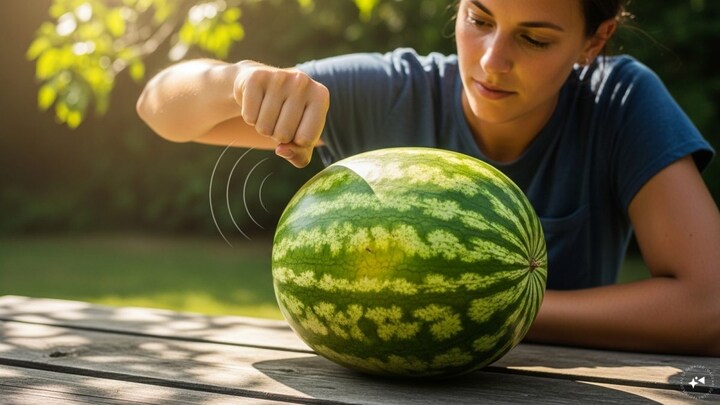
Lift watermelon and give it a light tap with the palm. A solid, resonant thump suggests dense, water‑rich flesh typical of a naturally ripened watermelon. A dull or flat sound may indicate that watermelon has been artificially softened, often a result of chemical ripening substances. Practising this test with several watermelon selections improves confidence in discerning quality.
Assessing Aroma for Hidden Chemicals
Although watermelon does not emit a strong fragrance, a faint, sweet scent near the stem end can be a sign of natural ripeness. Overly pungent or chemical‑like odours suggest the presence of residues from artificial treatments. If no scent is perceptible, it does not automatically denote a problem, but the absence of the subtle natural aroma paired with other red flags warrants caution.
Weight and Size Considerations
A naturally ripened watermelon feels heavy for its size, indicating high water content. Compare the perceived weight of watermelon with its dimensions; an unusually light watermelon relative to its girth may have been harvested before reaching full maturity and subsequently treated to appear larger. When possible, select watermelon that feels dense and substantial when lifted.
Seasonal Availability in India
Peak watermelon season in India aligns with the hottest months, when natural growth conditions favour optimal sweetness and juiciness. During this period, the likelihood of encountering naturally ripened watermelon increases. However, heightened demand can also tempt some sellers to employ shortcuts. Maintaining vigilance throughout the season, regardless of perceived abundance, helps ensure that each watermelon purchased meets safety standards.
Choosing Between Market Stalls and Supermarkets
Both market stalls and supermarkets in India offer watermelon, yet the sourcing practices can differ. Supermarkets often display watermelon that has undergone standardized quality checks, reducing the risk of chemical adulteration. Nonetheless, bulk purchases may include watermelon sourced from distant regions where oversight varies. Traditional market stalls may provide watermelon harvested locally, allowing shoppers to observe farming practices directly. In either setting, applying the visual, tactile, and auditory checks outlined above remains essential.
Proper Storage to Preserve Watermelon Integrity
After selecting a safe watermelon, storing it correctly prolongs its freshness and prevents the growth of microbes that could obscure earlier safety assessments. Keep whole watermelon in a cool, shaded area away from direct sunlight. Once cut, wrap the exposed flesh with cling film and refrigerate promptly. Consuming cut watermelon within a couple of days ensures that the natural taste remains intact and that any potential chemical residues do not accumulate further.
What to Do If Suspecting Adulterated Watermelon
If any of the checks raise concerns—such as an overly glossy rind, absence of a field spot, or a flat thump—it is advisable to set the watermelon aside and avoid consumption. Returning the watermelon to the vendor and requesting a replacement offers an opportunity for the seller to demonstrate confidence in product safety. In cases where chemical exposure is suspected, reporting the incident to local consumer protection authorities in India can help curb unethical practices.
Conclusion: Empowered Choices for Safer Summer Watermelon
By systematically applying visual inspection, tactile evaluation, auditory testing, and aroma assessment, consumers in India can confidently select watermelon that is both delicious and free from harmful chemicals. Understanding common adulteration methods, recognizing the significance of the field spot, and noting weight and texture empower shoppers to make informed decisions. With these practical guidelines, the enjoyment of sweet, hydrating watermelon during the scorching summer months remains a safe pleasure.