Lamine Yamal Endures Racist Insults from Atletico Supporter During Barcelona Victory
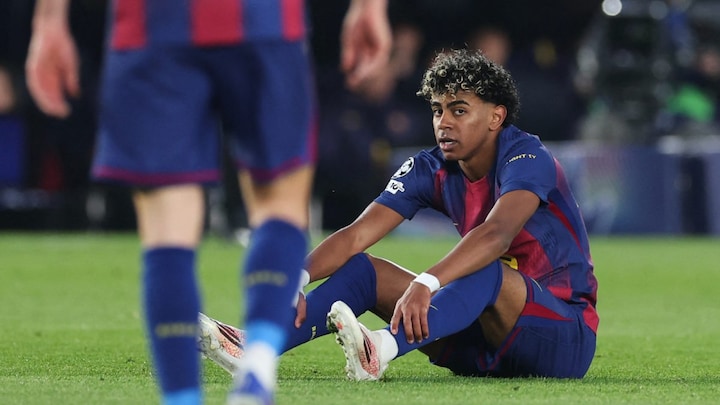
Barcelona star Lamine Yamal was subjected to racist abuse by an Atletico fan, with footage sparking outrage and raising fresh concerns over racism in Spanish football.
Background and Context
Racism remains a persistent blemish on the beautiful game, repeatedly emerging in stadiums across Europe. The most recent episode involves a young talent who has already become a focal point of both admiration and controversy: Lamine Yamal. Lamine Yamal, a prodigious forward for Barcelona, has risen rapidly through the ranks, earning a place in the senior team while still in his teenage years. Despite the acclaim, Lamine Yamal has repeatedly found himself at the center of unwanted attention rooted in race, ethnicity, and religion.
Barcelona, a club renowned for its global outreach and inclusive philosophy, has consistently promoted diversity on and off the pitch. Nonetheless, Barcelona’s commitment does not immunize its players from the societal prejudices that seep into football arenas. Lamine Yamal’s heritage includes ties to Morocco, granting Lamine Yamal eligibility to represent that North‑African nation in international competition. Lamine Yamal ultimately elected to play for Spain, a decision that added another dimension to the scrutiny Lamine Yamal faces from certain segments of the fan base.
Atletico, another of Spain’s most storied clubs, boasts a passionate supporter base that fills its stadium with chants, banners, and an atmosphere that can energize players. However, that fervor has at times manifested in negative ways, with several incidents over recent years pointing to an undercurrent of intolerance that the club, governing bodies, and political leaders continue to grapple with.
The Incident Captured on Video
During a recent league encounter between Barcelona and Atletico, the match concluded with Barcelona securing a dramatic 2‑1 victory. While the final scoreline highlighted Barcelona’s attacking resilience, a separate narrative unfolded on the sidelines of the Atletico stands. A video that swiftly circulated on social media platforms captured the unsettling moment when Lamine Yamal, positioned to take a corner kick, became the focus of a vocal antagonist.
The recording shows Lamine Yamal approaching the corner flag, the stadium lights casting long shadows across the grass. From the vicinity of the Atletico supporters’ section, a voice rises above the ambient roar, delivering a string of slurs. The chant includes the phrase, “You’re so ugly… Go back to Morocco, you b*stard… Go back there.” The language, laced with racial and xenophobic overtones, specifically targets Lamine Yamal’s ancestral roots and attempts to marginalize Lamine Yamal on the basis of ethnicity.
Though the audible portion of the chant is relatively brief, the impact is amplified by the visual presence of an entire section of supporters echoing the sentiment. The camera captures surrounding fans nodding in aGreement, a stark illustration of how collective behavior can embolden individual acts of hate.
It is important to stress that the video does not contain any identifying information about the individual(s) delivering the taunts. Nonetheless, the clarity of the words, combined with the location of the shouts, unequivocally links the abusive language to the Atletico fan zone, implicating an element of the Atletico supporter community in the incident.
Immediate Aftermath and Lamine Yamal’s Reaction
Following the conclusion of the match, cameras continued to follow Lamine Yamal as the players exited the field. The footage reveals Lamine Yamal walking off with a visibly troubled demeanor. Lamine Yamal’s shoulders are slightly hunched, and the expression on Lamine Yamal’s face conveys a mixture of disappointment and contemplation.
Shortly after crossing the touchline, Lamine Yamal encounters Barcelona’s manager, Hansi Flick. The interaction is brief; Lamine Yamal does not engage in conversation, opting instead to proceed directly toward the team’s changing area. The lack of verbal exchange between Lamine Yamal and Hansi Flick leaves room for speculation, yet the visual evidence suggests that Lamine Yamal may have been processing the emotional weight of the insults heard earlier in the match.
While no official statement from Lamine Yamal has been released confirming that the on‑field demeanor is a direct response to the racist chants, numerous observers, commentators, and supporters have expressed the belief that the abuse contributed to Lamine Yamal’s subdued exit. The correlation between the timing of the chant, the moment captured on camera, and Lamine Yamal’s altered behavior has prompted a broader discussion about the psychological toll of racism on young athletes.
Previous Instances Involving Lamine Yamal
Just days before the Barcelona‑Atletico encounter, Lamine Yamal found himself speaking out against a separate form of discrimination. During an international friendly match where Spain faced Egypt, certain spectators directed anti‑Muslim chants toward the Spanish squad. In a post‑match interview, Lamine Yamal described those chants as “disrespectful and intolerable,” emphasizing that invoking religion as a weapon of insult reflects a deep ignorance and inherent racism.
Lamine Yamal’s willingness to publicly condemn such behavior underscores a personal commitment to confronting prejudice wherever it appears. By labeling the chants “ignorant and racist,” Lamine Yamal placed a spotlight on a broader problem that extends beyond a single stadium, highlighting how derogatory language can permeate various facets of football culture.
The recurrence of incidents affecting Lamine Yamal within a short span of time illustrates how the player, despite his youth, is consistently thrust into the crosshairs of discriminatory rhetoric. This pattern raises questions about the protective measures available to young talents who are navigating both professional expectations and societal hostilities.
Racism as a Systemic Issue in Spanish Football
Incidents targeting Lamine Yamal align with a disturbing trend observed across Spanish football in recent years. High‑profile athletes such as Vinicius Junior and Kylian Mbappé have also endured racially charged chants from sections of the crowd, indicating that the problem is not isolated to a single club or a specific demographic of players.
Football authorities, including the Royal Spanish Football Federation, have publicly condemned racist behavior and pledged to introduce stricter sanctions. Political leaders, too, have voiced dismay, urging clubs and law‑enforcement agencies to act decisively against hate speech within stadiums. Despite these declarations, the recurrence of racist episodes suggests that existing interventions may be insufficient or inadequately enforced.
The persistence of such incidents prompts a deeper examination of the mechanisms that enable racism to flourish in a stadium environment. Factors such as inadequate monitoring technology, lenient disciplinary frameworks, and a cultural reluctance to confront fan misconduct contribute to a climate where hateful expressions can escape swift consequence.
Moreover, the social media amplification of recorded chants adds another layer of complexity. Videos like the one featuring Lamine Yamal’s abuse quickly gain traction, spreading beyond the stadium’s confines and igniting nationwide debate. While the viral nature of these recordings raises awareness, it also risks normalizing the very behavior that many seek to eradicate.
Calls for Action and Potential Solutions
Across the football community, there is a growing chorus demanding more robust action against racism. Stakeholders propose a series of measures aimed at curbing the spread of hate speech within stadiums:
- Implementation of real‑time audio monitoring systems that can detect and immediately interrupt racially charged chants.
- Enforcement of stricter penalties for clubs whose supporters engage in discriminatory behavior, including point deductions, match suspensions, or financial fines.
- Mandatory educational programs for season ticket holders, focusing on the impact of racism and the importance of inclusive fan culture.
- Collaboration with law‑enforcement agencies to identify and prosecute individuals responsible for recorded abuse, leveraging video evidence as admissible proof.
These proposals reflect an understanding that combating racism requires a multifaceted approach, combining technological innovation, punitive deterrents, and community education. By targeting the roots of hateful conduct, the football ecosystem can hope to protect players like Lamine Yamal from future harassment.
Conclusion
The incident involving Lamine Yamal and the racist chant from an Atletico fan serves as a stark reminder that the battle against discrimination in sport is far from over. While Barcelona celebrated a hard‑fought victory on the scoreboard, the emotional cost to Lamine Yamal highlights a parallel struggle occurring off the pitch. Lamine Yamal’s experience, combined with previous episodes of anti‑Muslim chants and the broader pattern of racist abuse directed at prominent footballers, underscores the urgent need for decisive, coordinated action.
Only through sustained commitment from clubs, governing bodies, law‑enforcement agencies, and fans themselves can the sport move toward the inclusive ideal it aspires to embody. The hope remains that future matches will be remembered for the skill and drama on display, not for the shadows of prejudice that threaten to undermine the spirit of the game.