Leopard Appears Inside Malad East Residential Society, Residents Alarmed
Immediate Reaction Within Raheja Heights Society
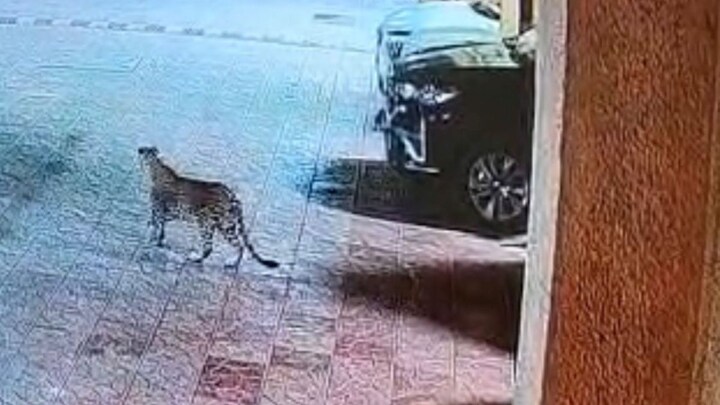
Residents of Raheja Heights society in Malad East, Mumbai, experienced a sudden wave of panic when a leopard was observed traversing the D Wing parking zone during the early morning hours. The sighting, recorded by the community’s surveillance system, instantly transformed a routine morning into a scene of heightened alertness and collective anxiety.
The visual evidence displayed a sleek, spotted predator moving methodically across the paved area, its presence undeniable and unsettling. The raw footage, later circulated among members of the society, amplified the sense of vulnerability felt by families, especially those with young children, senior citizens, and pet owners.
Repeated Sightings Highlight Ongoing Concern
Vijaykumar N. Borra, a long‑time resident of Raheja Heights society, voiced a deep‑seated unease regarding the incident, emphasizing that this was not an isolated event. Vijaykumar N. Borra noted that similar leopard appearances have been reported in the vicinity on earlier occasions, indicating a pattern rather than a singular anomaly.
The recurrence of such wildlife incursions has cultivated an atmosphere of persistent worry among the population of Raheja Heights society. Community members frequently discuss the potential risks posed by a large carnivore wandering through a densely populated residential zone, underscoring a collective call for systematic solutions.
Community Safety Concerns for Vulnerable Groups
The presence of a leopard within the confines of Raheja Heights society has naturally raised alarms about the safety of children who play in the shared spaces, elderly residents who may have limited mobility, and pets that often roam freely in the compound. The prospect of an encounter between the predator and these vulnerable groups fuels a deep sense of dread among families.
Parents expressed heightened vigilance, ensuring that children remain indoors during periods of uncertainty. Likewise, senior residents voiced apprehension about navigating the corridors and parking areas without the risk of an unexpected encounter. Pet owners, in particular, reported a surge of anxiety, fearing that their animals could become inadvertent targets.
Calls for Media Attention and Official Intervention
In response to the unsettling event, residents of Raheja Heights society have collectively appealed to the media to bring broader visibility to the situation. Their aim is to galvanize the attention of relevant governmental bodies, especially the forest department, so that prompt and decisive measures can be implemented.
The community’s outreach emphasizes the urgency of deploying expert wildlife professionals to assess the situation, secure the area, and, if necessary, relocate the leopard to a safer habitat away from human habitation. Residents also stress the importance of disseminating clear guidelines to locals, enabling them to avoid actions that might provoke or attract the animal.
Understanding Leopard Behavior in Urban Peripheries
Leopards, as adaptable apex predators, have increasingly been observed venturing into urban fringes in search of food and shelter. The proximity of Green belts, fragmented forest patches, and abundant waste in metropolitan regions like Mumbai creates conditions that can entice leopards to stray closer to human settlements.
Experts explain that such movements are often driven by habitat loss, competition with other wildlife, and the lure of easily accessible food sources. While leopards generally avoid direct confrontation with humans, the convergence of natural instincts and urban expansion can lead to unintended encounters, as demonstrated by the recent sighting within Raheja Heights society.
Preventive Measures Suggested for Residents
Authorities and wildlife specialists commonly advise residents living near leopard habitats to adopt a set of precautionary practices. These include securing garbage bins to eliminate food attractants, refraining from feeding stray animals, and ensuring that doors and windows remain closed during nocturnal hours.
Residents of Raheja Heights society have been encouraged to keep outdoor lighting functional, install additional CCTV coverage for blind spots, and consider the use of motion‑activated deterrents. Moreover, community managers are urged to conduct regular awareness workshops, informing inhabitants about signs of leopard presence and appropriate response protocols.
Potential Role of the Forest Department and Law Enforcement
The forest department, tasked with wildlife conservation and public safety, typically responds to reports of leopards in residential areas by dispatching trained teams. Their standard operating procedure involves a careful assessment of the animal’s health, behavior, and immediate environment.
In scenarios resembling the incident at Raheja Heights society, the department may employ tranquilizer darts to safely immobilize the leopard, followed by relocation to a secure forested area. Coordination with local law enforcement ensures that traffic and pedestrian movement are regulated during the operation, minimizing risk to the public.
Long‑Term Strategies for Coexistence
Urban planners and wildlife conservationists emphasize the necessity of developing long‑term strategies that promote coexistence between humans and leopards. Key components include the creation of wildlife corridors that connect fragmented habitats, reducing the need for leopards to navigate densely populated neighborhoods.
Educating the public about the ecological significance of leopards, alongside encouraging responsible waste management, can gradually diminish the frequency of such encounters. By fostering a collaborative approach among residents, municipal authorities, and environmental agencies, the likelihood of future incidents similar to the one witnessed in Raheja Heights society can be substantially lowered.