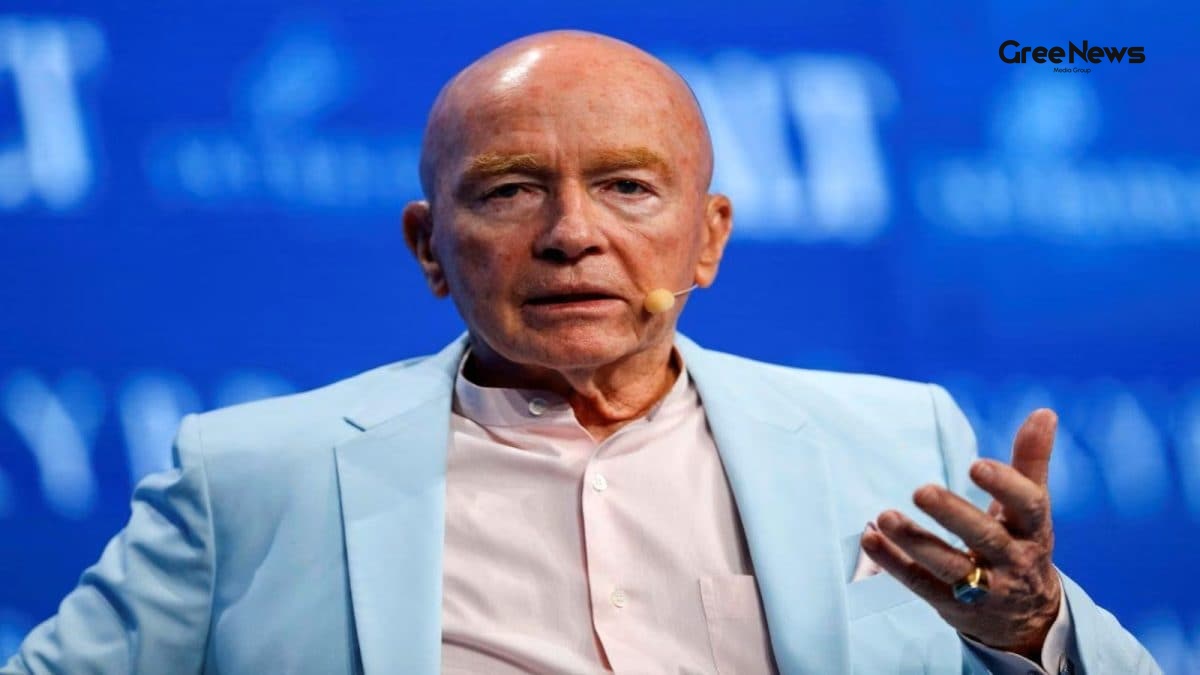
When I first came across the name Mark Mobius in the midst of reading the latest news India, I was a fresh graduate from a Delhi college, hunting for ideas on where to put my savings. I still recall thumbing through a tattered copy of *The Investor’s Guide to Emerging Markets* on a cramped train bound for Jaipur. The book felt like a doorway to a world far beyond the familiar streets of India, and that was just the beginning of a journey that many investors, myself included, would later follow.
Now, breaking news has confirmed that the man behind those pages the legendary Mark Mobius has passed away at 89. The announcement came through a short statement on his LinkedIn page, shared by his spokesperson Kylie Wong. While the cause of death wasn't disclosed, the world of finance has collectively stopped for a moment to reflect on a career that spanned continents, crises, and countless market cycles.
Early Life and Academic Foundations
Mobius earned his PhD in economics and political science from the Massachusetts Institute of Technology back in the early 1960s. Imagine a young MIT graduate, fresh with ideas, choosing to set foot in Thailand and South Korea for consumer research roles at a time when most Indian students were still dreaming of the conventional corporate ladder.
His early stint in Southeast Asia gave him a first‑hand feel for economies that were just waking up. Later, moving to Hong Kong, he founded an industrial research consultancy, a move that seemed risky back then but turned out to be a perfect incubator for his future focus: spotting untapped potential in places most investors overlooked.
For someone growing up in India during the 1960s, the notion of travelling to over a hundred countries would have sounded like a plot from a Bollywood adventure film. Yet, for Mobius, it was simply business and curiosity rolled into one.
His educational background, combined with his early fieldwork, made him unique among his peers. While many of us were still navigating the basics of the Indian stock market, Mobius was already mapping out the next frontiers of global growth.
The Birth of a Legend: Templeton Emerging Markets Group
In the mid‑1980s, Mobius joined the Templeton Emerging Markets Group as executive chairman, a position he held for over three decades. This era was when most global fund managers still shied away from places like Latin America, Eastern Europe, or Africa markets perceived as too volatile. But Mobius saw them as "unexplored treasure troves".
His boldness paid off. He correctly anticipated the start of the 2009 bull market and had earlier called the Asian financial crisis of 1997 a turning point rather than a disaster. When Russia’s markets collapsed in 1998, he identified pockets of value that later rewarded patient investors handsomely.
This knack for spotting opportunities during turmoil made him a subject of trending news India, especially when investors look for alternative avenues during domestic market slowdowns. His approach was not just about numbers; it involved standing on bustling streets of Lagos, sipping chai in a remote town in Anatolia, and listening to local entrepreneurs talk about their dreams.
He once described his strategy as "being on the ground, feeling the pulse, not just watching charts from a skyscraper office". That philosophy turned him into the indie‑hero of finance, a figure many of us in Indian metros still talk about over evening chai.
Why the ‘Indiana Jones of Emerging Markets’?
The nickname fits him like a glove. Imagine the cinematic Indiana Jones, cracking open ancient relics in remote temples. Swap the whip for a briefcase, the relics for market data, and you have Mobius, trekking across high‑risk regions, making investment calls that later proved golden.
He would hop from the bustling markets of Bangkok to the dusty streets of Nairobi, often visiting multiple countries in a single year. Over his career, he is believed to have set foot in more than one hundred nations a number that would make even the most seasoned Indian travel blogger blush.
His on‑the‑ground research style meant he could spot trends that were invisible on spreadsheets. For instance, while many missed the early signs of Africa’s telecom boom, Mobius was already betting on it, launching dedicated African investment strategies that later became benchmarks for the industry.
Even in his later years, when most of us were considering a comfortable retirement, he was still flagging fresh opportunities like the potential in Venezuela’s oil sector showing that curiosity never really faded.
Personal Life: The Full‑Time Nomad
Mobius never married. He liked to call himself a "full‑time nomad" a phrase you’ll often hear in viral news India when describing digital‑age freelancers, but for him it was a life choice made decades earlier.
He once wrote, "A conventional domestic life can offer stability, but it rarely offers the variety, stimulation, and creative freedom that a life on the move provides." This sentiment resonated with many Indian youngsters today who idolise the freedom of travelling the world while building a career.
His books, especially *Passport to Profits*, blend market analysis with travel anecdotes. I still recall a passage where he described watching a traditional dance in a remote Peruvian village and, the next day, seeing a surge in a mining stock from that very region. It was as if his travel diary doubled up as an investment notebook.
While his personal life may have seemed solitary, Mobius built a community of like‑minded investors, many of whom consider him a mentor. In the Indian context, think of the way senior analysts on the Bombay Stock Exchange guide budding traders Mobius played a similar role on a global scale.
Leadership Transition at Mobius Investments
According to the firm’s announcement a piece of breaking news that made headlines across financial portals John Ninia and Eric Nguyen will take over the leadership responsibilities. The statement reassured investors that there will be no changes to the current investment strategy or day‑to‑day operations.
For Indian investors watching the latest news India, this continuity is a relief. It means that the portfolios and funds that many of us have been part of for years will continue to be managed with the same philosophy that Mobius championed a blend of rigorous research and on‑the‑ground insight.
In most cases, such transitions can cause a ripple of uncertainty, but the firm’s calm tone and clear plan suggest that Mobius had already built a robust succession framework. It also reflects his foresight the same trait that made him spot early growth in African telecoms and Indian renewable energy before they became mainstream topics in trending news India.
Legacy and Impact on Indian Investors
Mark Mobius’s story is more than a biography; it’s a lesson for every Indian investor who dreams of venturing beyond the familiar confines of the NSE or BSE. His career showed that emerging markets are not just risky zones but avenues of immense potential when approached with curiosity and diligence.
During the 1990s, when India opened up its economy, many investors were still cautious. Mobius’s successes in Asian markets, especially during the post‑1991 liberalisation wave, offered a template for Indian fund houses to follow. Today, many Indian mutual fund managers credit his pioneering work for encouraging them to tap into frontier markets like Bangladesh, Sri Lanka, and even parts of Central Asia.
He also inspired a generation of Indian venture capitalists to look beyond Silicon Valley and consider start‑ups in Nairobi, Kigali, and Ho Chi Minh City places that now frequently appear in viral news India as hotbeds of innovation.
Personally, I remember a conversation with a senior colleague at a Mumbai brokerage firm who once said, "If you want to understand how a market behaves, go sit in a local coffee shop and watch the street vendors. That’s the kind of insight Mobius brought to the table." That advice still guides many of us when we travel to tier‑2 Indian cities to gauge consumer sentiment.
His passing marks the end of an era, but the ripple effect of his work continues. In many ways, his life story mirrors the journey of India itself from a country once considered a closed market to a booming player on the global stage.
Final Thoughts: A Life That Continues to Inspire
As we absorb the news of his death, it’s hard not to feel a sense of loss for a man who taught us to look beyond the obvious. Yet, his teachings live on in the countless investors who now chase emerging opportunities with the same zeal Mobius displayed.
Whether you are scrolling through trending news India on your phone during a metro commute or reading a detailed analysis over a cup of filter coffee in Chennai, remember that the world of investing is as much about curiosity as it is about numbers. Mark Mobius embodied that blend a perfect mix of a scholar, an explorer, and a relentless optimist.
What happened next after his passing is the continued growth of the markets he championed. More Indian investors are now allocating funds to frontier markets, and a new wave of analysts is emerging, eager to emulate his on‑the‑ground research style.Many people were surprised by the simplicity of his philosophy: travel, learn, and invest with a heart. In most cases, that simple mantra is what keeps the spirit of his legacy alive across continents, from Delhi’s bustling markets to the far‑flung villages of Zambia.
So, the next time you see a headline about emerging market funds outperforming the mainstream indices, think of Mark Mobius the Indiana Jones who paved the way, and who, even in his absence, continues to inspire the next generation of global investors.