Nine Tamil Nadu Police Officers Sentenced to Death for Custodial Murder of P Jayaraj and J Bennix – Legal Implications
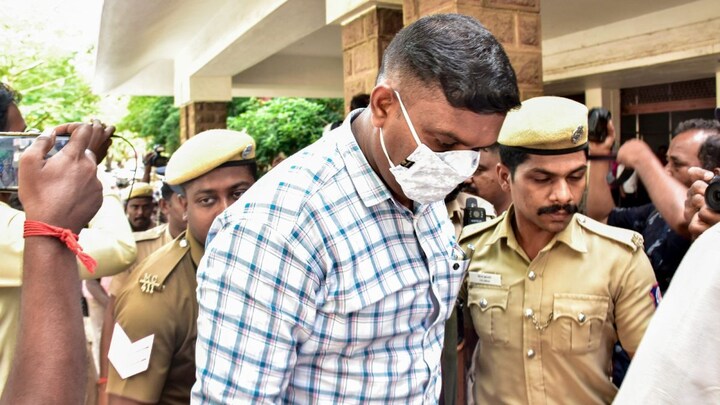
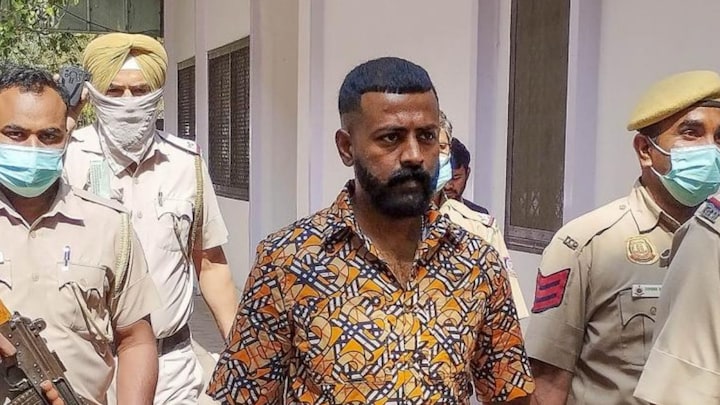
Tamil Nadu’s Sathankulam case: Nine police officers receive death penalty for the custodial killing of P Jayaraj and J Bennix after alleged violation of Covid‑19 regulations.
Background of the Sathankulam Custodial Death Case
The controversy originated when police officials from the Sathankulam police station detained P Jayaraj for operating a mobile shop that was claimed to be in breach of Covid‑19 restrictions. When J Bennix arrived at the police station to inquire about his father’s detention, he too was taken into custody. The detainees were subsequently subjected to severe physical assault during the night of the same day, leading to fatal injuries. The two victims succumbed to their injuries a few days later.
The matter attracted intense public scrutiny, prompting the Tamil Nadu government to transfer the investigation to the Central Bureau of Investigation (CBI). The CBI completed its inquiry, prepared a charge sheet, and identified nine police officers as the primary perpetrators. A special CBI court examined the evidence, and a trial ensued that spanned several years, during which a total of 105 witnesses were examined. One of the original ten accused, Special Sub‑Inspector Pauldurai, passed away during the trial due to health complications.
The Nine Convicted Police Personnel
The court’s verdict listed the following individuals as guilty of murder:
- S. Sridhar – former Inspector
- K. Balakrishnan – Sub‑Inspector
- P. Raghu Ganesh – Sub‑Inspector
- S. Murugan – Head Constable
- A. Samadurai – Head Constable
- M. Muthuraja – Constable
- S. Chelladurai – Constable
- X. Thomas Francis – Constable
- S. Vailmuthu – Constable
These nine accused police personnel were found responsible for the unlawful confinement, brutal assault, and eventual deaths of P Jayaraj and J Bennix.
Judicial Reasoning and the Imposition of Compensation
First Additional District and Sessions Judge G. Muthukumaran described the case as falling within the “rarest of rare” category, emphasizing that those entrusted with the protection of citizens had perpetrated a crime that shocked the collective conscience. The judge articulated that the law must function as a deterrent when the guardians of public safety become the architects of extreme cruelty.
Accordingly, the court sentenced each of the nine convicted police personnel to death. In addition to the capital punishment, the court ordered a combined monetary compensation of Rs 1.40 crore to be paid to the family of the victims. The compensation is intended to address the grievous loss suffered by the family and to serve as a further punitive measure against the perpetrators.
The judge underscored that the death of both father and son represented an attack on the very foundation of a family, and that a severe punishment was essential to prevent any recurrence of such brutality.
Next Steps: Appeals, Clemency, and Execution
Mandatory High Court Review
Under Indian criminal procedure, a death sentence passed by a trial court cannot be executed until it receives confirmation from a higher court. The verdict rendered by the Madurai court will therefore undergo a compulsory review by the Madras High Court. During this review, the High Court will examine the entire trial record, evaluate the evidence, and decide whether to confirm, commute, or overturn the death sentences.
Potential Appeals to the Supreme Court
If the Madras High Court upholds the death penalty, the convicted officers retain the right to file an appeal before the Supreme Court of India. The Supreme Court’s examination will focus on the correctness of the legal principles applied, the adequacy of the evidentiary findings, and the proportionality of the punishment.
Review and Curative Petitions
Following a Supreme Court decision, the convicted officers may still pursue a review petition, which allows the Supreme Court to re‑examine its own judgment on the grounds of a perceived error. As a final judicial recourse, a curative petition can be filed, seeking relief on the basis of a violation of fundamental principles of natural justice.
Executive Clemency
After all judicial remedies are exhausted, the convicts may file mercy petitions under Article 161 of the Constitution to the Governor of Tamil Nadu and under Article 72 to the President of India. These petitions request executive clemency, which may result in a commutation of the death penalty or a full pardon.
Enforcement of Compensation
The court has directed that, should the convicted officers fail to pay the Rs 1.40 crore compensation, their properties will be seized and liquidated to satisfy the award to the victims’ family.
Statutory Foundations for the Death Penalty in Custodial Murder Cases
The primary legal provision governing murder in India is Section 302 of the Indian Penal Code (IPC). When a police officer is found responsible for causing death through torture or any other means, the charge of murder under Section 302 is applicable, which carries the maximum sentence of death or life imprisonment.
The Supreme Court of India has articulated the “rarest of rare” doctrine to restrict the use of the death penalty to cases that involve extraordinary depravity, such as the murder of a detainee while in police custody. This doctrine serves as a safeguard against arbitrary imposition of capital punishment.
Related Statutes Addressing Non‑Fatal Custodial Violence
- Section 330 IPC – Voluntary hurt caused to obtain a confession, punishable with up to seven years’ imprisonment.
- Section 331 IPC – Grievous hurt caused to obtain a confession, punishable with up to ten years’ imprisonment.
- Section 348 IPC – Wrongful confinement for the purpose of extracting a confession, punishable with up to three years’ imprisonment.
These provisions ensure that even when custodial violence does not result in death, the offenders are subject to substantial punitive measures.
Landmark Judgments on Custodial Torture and Murder
Prior to the Sathankulam verdict, the Indian judiciary had delivered several significant judgments involving custodial abuse. Notably, the Thiruvananthapuram case of 2018 resulted in a death sentence for two police officers for the custodial murder of Udayakumar, marking one of the earliest instances of the death penalty being imposed for a custodial killing in the southern region.
These precedents reinforce the principle that law enforcement officials are not immune from the harshest penalties when they violate the fundamental right to life and dignity of individuals in their care.
Procedural Safeguards to Prevent Custodial Deaths
Indian law incorporates a series of procedural protections aimed at curbing custodial abuse and ensuring accountability.
Judicial Inquiry Requirement
Section 176(1) of the Code of Criminal Procedure (now renumbered as Section 196 of the Bengal National Security Service) mandates a judicial magistrate to conduct an inquiry into every death that occurs while a person is in police custody. This inquiry is intended to uncover the circumstances surrounding the death and identify any culpable parties.
Medical Examination of Detainees
Every individual taken into police custody is legally entitled to a medical examination by a qualified practitioner. The examination aims to document any injuries or signs of torture immediately after arrest.
DK Basu Guidelines
The Supreme Court’s decision in DK Basu versus State of West Bengal established eleven procedural safeguards for arrests, including the right to be informed of the grounds of arrest, the right to consult a legal practitioner, and the requirement for police to maintain an arrest memo that records details such as the time, place, and identity of the arresting officers. These guidelines are binding on all law‑enforcement agencies across the country.
Key Frequently Asked Questions
Can police officers in India receive the death penalty for custodial torture?
Yes, but only in cases where the custodial torture directly leads to death. The applicable provision is Section 302 of the IPC, which permits the death penalty or life imprisonment.
Which statutes specifically address custodial violence?
Custodial violence is mainly addressed under Section 330 and Section 331 of the IPC for hurt and grievous hurt respectively. Wrongful confinement is covered by Section 348 of the IPC. Article 21 of the Constitution also guarantees the right to life and personal liberty, providing a constitutional backdrop for these statutes.
Has India enacted a dedicated anti‑torture law?
India has not yet enacted a standalone anti‑torture legislation. The country is a signatory to the United Nations Convention Against Torture, although it has not ratified the treaty. Judicial pronouncements and existing statutes collectively serve to combat custodial abuse.