Spain’s Massive Pork Sector Grapples With African Swine Fever Threat
Spain’s Massive Pork Sector Grapples With African Swine Fever Threat
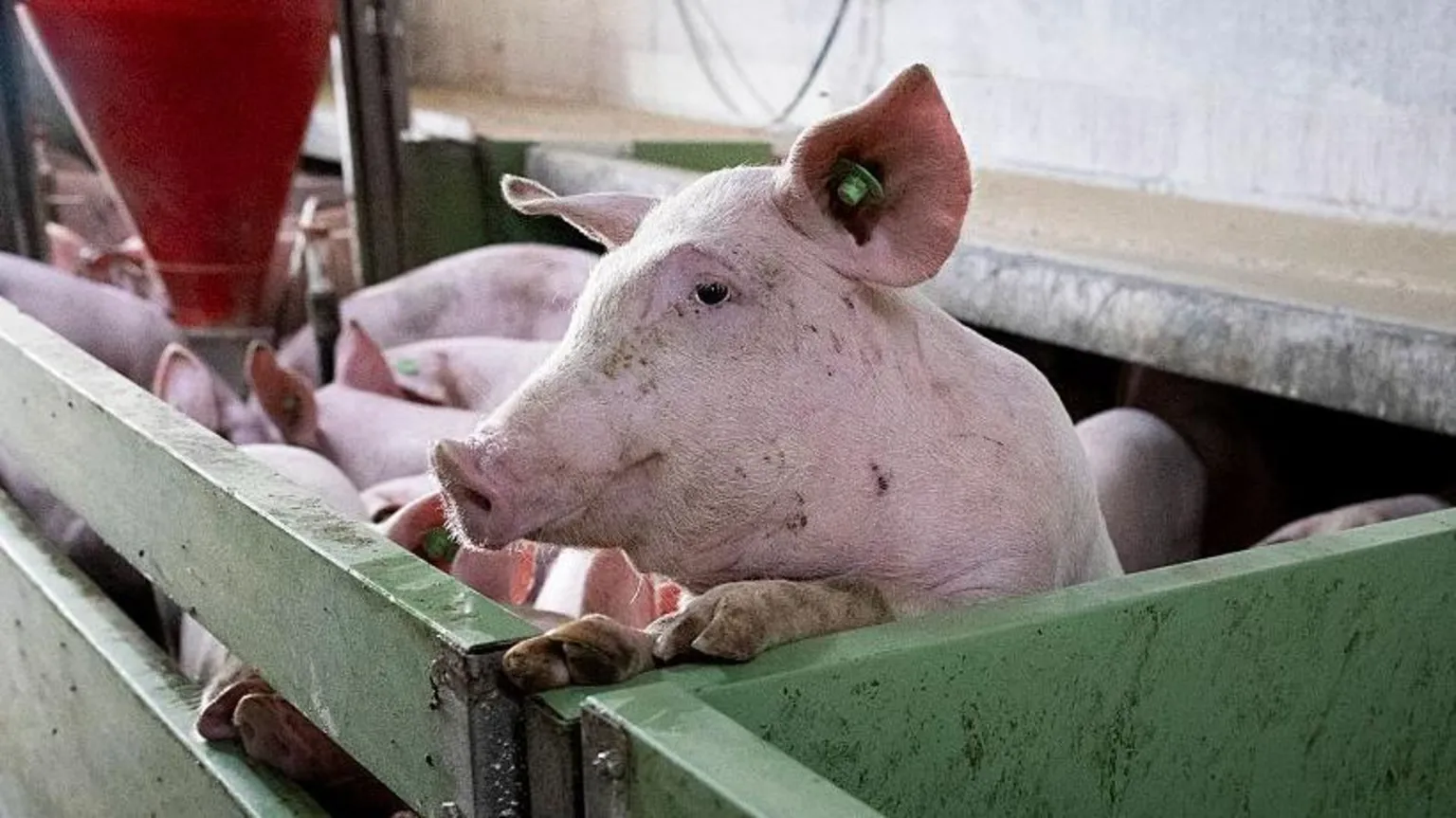
Jordi Saltiveri looks out over the 8,000‑head pig operation that has been passed down through three generations, recalling the moment late last year when the first reports of African Swine Fever (ASF) in Spain broke.
Jordi Saltiveri admits feeling “sad, angry, impotent” upon learning that ASF had been confirmed inside Spanish borders, noting that any official confirmation automatically triggers import suspensions from partner markets.
The farm that Jordi Saltiveri manages sits on a remote plot in the province of Lleida, within the northeastern autonomous community of Catalonia.
A weather‑worn Catalan independence flag hangs from the entrance gate, while in the background the low murmur of pigs grunting and squealing drifts from the outbuildings.
Although the virus has not yet been detected on Jordi Saltiveri’s property, the outbreak’s ripple effect is already being felt by Jordi Saltiveri, who also serves as president of the federation of farming cooperatives in Catalonia, and by virtually every pork producer across Spain.
Jordi Saltiveri reports that each pig destined for slaughter now commands a price that is €30 to €40 lower than before the ASF notification, a reduction that translates into significant financial strain for the operation.
Understanding the Outbreak
African Swine Fever is a highly contagious disease that is lethal for domestic pigs and wild boar, yet it poses no risk to human health.
The initial focus of the Spanish outbreak was Collserola Park, a protected natural area on the outskirts of Barcelona, located only a few hours’ drive from the farm owned by Jordi Saltiveri.
In late November, a wild boar found dead in Collserola Park tested positive for ASF, prompting authorities to close off the park and limit public access while they searched for additional infected carcasses.
Preliminary inquiries have ruled out a leak from a nearby animal‑research facility as the source of the infection, leaving the precise origin still unresolved.
Officials have identified the dense population of wild boar that wander the region, sometimes even venturing into the periphery of Barcelona, as a principal vector for the disease’s spread.
Òscar Ordeig, the minister for agriculture, fisheries and food in the regional government of Catalonia, explains that overly permissive wildlife management has resulted in an excess of rabbits, deer and wild boar throughout the autonomous community.
Òscar Ordeig emphasizes that the proliferation of wild boar has generated a “huge increase in traffic accidents and transmission of diseases,” adding that wild boar now number between 120,000 and 180,000 across Catalonia.
The regional government’s target is to halve that population, and 24,000 wild boar have already been culled this year in pursuit of that goal.
Control Measures and Culling Operations
Rural police officers tasked with the culling effort have concentrated their activities within a 6‑kilometre radius around the initial infection sites, designating this zone as high risk.
A secondary, lower‑risk area extends out to a 20‑kilometre radius, where monitoring continues but with less intensive intervention.
The culling process utilizes a combination of net traps, metal box traps and silenced firearms, while aerial drones and stationary cameras oversee trap activity and animal movements.
All harvested wild boar are subjected to laboratory testing for ASF; by the end of March, 232 boar had returned positive results.
In addition to trapping, authorities have erected fencing to restrict the natural migration of wild boar, and personnel involved in high‑risk zones disinfect vehicles and footwear after each patrol.
Òscar Ordeig points to the “extreme biosecurity” protocols that have long been in place throughout Spain, underscoring the nation’s commitment to protect its agricultural sector, its economy and its farming community.
Economic Impact on Spain’s Pork Industry
Since eliminating its last ASF episode three decades ago, Spain’s pork industry has expanded dramatically, now representing the largest pork‑producing nation in Europe with a market value of €25 billion.
However, the detection of ASF triggers an immediate cessation of imports by numerous trading partners. Brazil, Japan, Mexico, South Africa and the United States have already suspended purchases of Spanish pork.
Other markets, including European Union members, China and the United Kingdom, have opted for a more targeted approach, restricting imports only from the specific north‑eastern Spanish region where the virus was identified.
The curtailment of overseas demand has compressed both export volumes and market prices, directly affecting producers such as Jordi Saltiveri.
Export data from the Catalonia region show a 17 percent decline in January compared with the same month a year earlier.
According to the farmers’ advocacy group Unión de Uniones, the cumulative loss to the Spanish pork sector since the ASF outbreak began exceeds €600 million.
International regulatory bodies require a disease‑free period of twelve months before a nation can be deemed “clean” and regain full export privileges.
In Germany, where ASF has persisted for several years, the disease has already forced a roughly 25 percent drop in pork production and led to the closure of thousands of farms.
Spain’s authorities are looking to Belgium as a benchmark; Belgium succeeded in eradicating ASF within fourteen months after reporting its first case.
Industry Reactions and Public Sentiment
Jordi Saltiveri maintains confidence in the rigorous, long‑standing biosecurity standards that his farm follows, believing that his operation will remain free of infection.
Nevertheless, certain voices within the pork community argue that Spain’s containment strategy is insufficient.
When wild boar testing positive beyond the original high‑risk perimeter in February, Mercol·leida – the Catalan agricultural market that supplies reference prices for food across Spain – criticized the speed of the culling effort, warning that the response in the Barcelona area was “too slow.”
Mercol·leida’s board declared that “farmers across Spain are now paying the cost of ASF” and cautioned that “Spain must not be allowed to turn into Germany.”
Despite these concerns, domestic consumption of pork has remained resilient. At the Sants market in central Barcelona, located only a few kilometres from Collserola Park, shoppers expressed confidence in the authorities’ handling of the crisis.
Lupe López, a regular buyer of pork, stated, “I fully trust the safety measures that have been taken with this; they have controlled it very well,” adding that she felt “quite calm” about purchasing pork.
Nati Martínez, another market patron, explained that she now feels “calmer than before, because pork is subject to more controls, and that reassures me when it comes to buying.” Martínez compared the current ASF scare to the BSE (mad cow disease) episode of the 1990s, noting that the latter was more alarming because it could affect humans.
José Rodríguez, a pork butcher with a stall in the same market, observed that retail pork prices have remained stable since the outbreak began. José Rodríguez added that “sales aren’t great, but that’s not to do with swine fever, it’s because of other factors,” referring to the broader cost‑of‑living pressures.
José Rodríguez also emphasized the cultural importance of pork in Spain, stating, “We eat the whole pig, from the head to the tail.”



.jpg?type=mq)