The 40‑minute communication blackout as Artemis crew passes behind the Moon
The 40‑minute communication blackout as Artemis crew passes behind the Moon
No‑one will have been farther from home than the Artemis astronauts.
As the Earth recedes to a pinpoint in the rear‑view window, the Artemis astronauts have maintained an uninterrupted voice link with mission control in Houston, Texas, since launch.
That voice link is about to be interrupted.
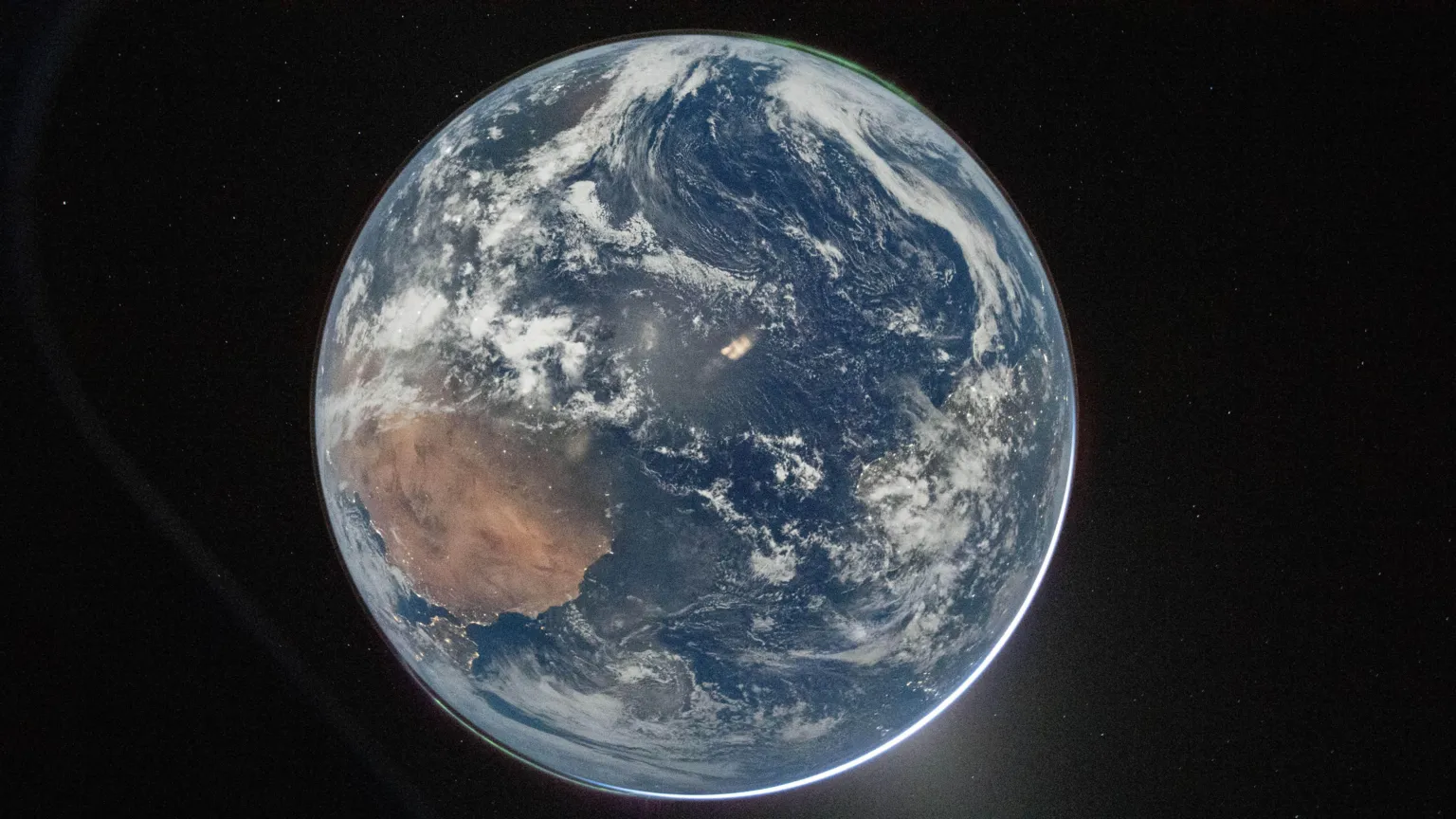
At approximately 23:47 BST on Monday, the Orion capsule will slip behind the Moon, and the radio‑frequency and laser‑based signals that enable two‑way communication between the Orion capsule and Earth will be blocked by the lunar bulk.
For roughly forty minutes, the four Artemis astronauts will travel through a swath of darkness without any direct contact with mission control, with each astronaut confronting personal thoughts and sensations alone.
Artemis pilot Victor Glover told GREE News before the launch that the period of silence should be viewed as a collective opportunity for the planet’s inhabitants.
“When we are behind the Moon, out of contact with everybody, let us use that as an opportunity,” Artemis pilot Victor Glover said. “Let us pray, hope, and send good thoughts and feelings that contact is restored promptly.”
Historical precedent: Apollo 11 and Michael Collins
More than half a century ago, the Apollo astronauts also faced a stretch of isolation when their craft moved out of line‑of‑sight of ground stations.
The most striking instance involved Apollo 11 command module pilot Michael Collins, who orbited the Moon alone while Neil Armstrong and Buzz Aldrin descended to the surface.
When the command module passed behind the lunar far side, contact with both the astronauts on the Moon’s surface and with Houston vanished for forty‑eight minutes.
In the memoir Carrying the Fire published in 1974, Michael Collins described the sensation as being “truly alone” and “isolated from any known life,” yet he emphasized that fear never entered the experience.
Later interviews with Michael Collins highlighted the peace and tranquillity that radio silence afforded, noting that the break from constant ground‑control queries was welcomed.
Further reading on Artemis II
- First stop, the Moon. Next stop, Mars? Why Nasa’s mission matters
- Everything you need to know about Nasa’s Artemis II mission
- Who are the crew – and what are they taking to the Moon?
- Artemis II: Inside the Moon mission to fly humans further than ever
- The spectacular new image of Earth taken by the crew
Ground support: Goonhilly Earth Station
Back on Earth, the blackout will be a tense interval for the specialists tasked with maintaining the signal lock on the Orion capsule.
At the Goonhilly Earth Station in Cornwall, a massive antenna has been continuously receiving telemetry from the Orion capsule, precisely locating the spacecraft throughout its journey, and forwarding that data to Nasa headquarters.
Matt Cosby, chief technology officer at Goonhilly Earth Station, explained to GREE News: “This is the first time we are tracking a spacecraft with humans on board.
“We will feel a little nervous as the Orion capsule goes behind the Moon, and then we will be very excited when contact is re‑established, because we know the crew is safe.”
The aim of eliminating these communication gaps in the future is central to the development of a sustainable lunar presence.
Matt Cosby emphasized that a permanent lunar base will require uninterrupted communications—24 hours a day, even on the far side—so that scientific and logistical operations can proceed without interruption.
European Space Agency initiatives such as the Moonlight programme are planning a constellation of satellites orbiting the Moon to guarantee continuous, reliable communication coverage for future missions.
What the Artemis astronauts will do during the blackout
During the forty‑minute silence, the Artemis astronauts will focus exclusively on lunar observation.
The crew will capture high‑resolution photographs of the Moon’s far‑side terrain, catalogue geological features, and conduct scientific measurements that are only possible when the Sun‑lit side of the Moon is not in view.
In addition to technical tasks, the crew will simply gaze at the Moon, allowing the stark, silent environment to inspire reflection and awe.
When the Orion capsule emerges from the lunar shadow and the communication link is re‑established, the world will exhale a collective sigh of relief.
The Artemis astronauts will then be able to share the remarkable images and data collected during the blackout with audiences back on Earth, adding another chapter to humanity’s growing narrative of lunar exploration.



.jpg?type=mq)