Trekker Rescued After Three Days Near Karnataka’s Tadiandamol Peak: Essential Items for a Vacation SOS Bag
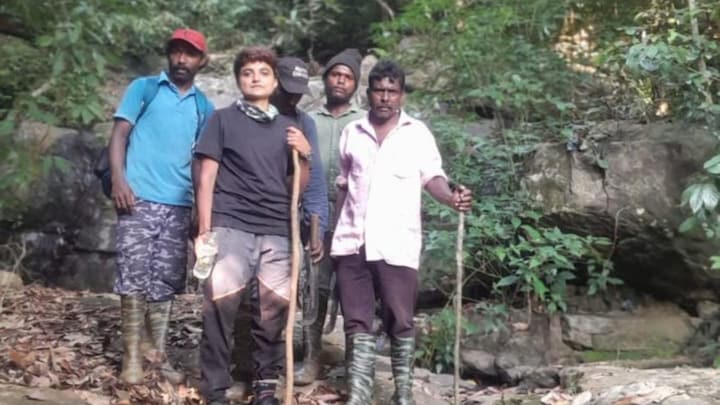
After G.S. Sharanya, a 36‑year‑old IT professional survived 72 hours in the dense Kodagu forests with just 500 ml of water, we break down the life‑saving essentials every traveller needs
The Western Ghats present a paradox of breathtaking beauty and relentless harshness. This paradox became a life‑or‑death reality for G.S. Sharanya, a 36‑year‑old IT professional from Kerala, who vanished while descending from Tadiandamol Peak, the highest point in Karnataka’s Kodagu district.
Separated from a trekking party of fifteen, G.S. Sharanya endured four days and three nights alone in a high‑risk zone inhabited by wild elephants and subject to sudden, heavy rain. The area lacks mobile network coverage, and G.S. Sharanya’s phone battery was depleted, leaving only a single 500 ml bottle of water as a source of hydration. Local tribal volunteers eventually located G.S. Sharanya in the Pattighat reserve range, concluding a large‑scale rescue effort that incorporated thermal drones and Anti‑Naxal squads.
G.S. Sharanya’s ordeal reads as a miraculous tale of survival, yet it also underscores a critical lesson for anyone venturing into wilderness terrain. Whether the traveller is a solo trekker or a casual vacationer, an SOS Bag (Save Our Souls) is an indispensable component of safe travel preparation.
The Survival Kit: What Your Vacation SOS Bag Needs
If separation from a group or an unexpected stranding occurs, the items listed below—sized to fit comfortably inside a 10‑liter day‑pack—can provide the crucial window of time that a rescue operation requires.
Hydration & Purification
G.S. Sharanya survived on a single 500 ml bottle of water by rationing consumption and locating forest streams. A robust SOS Bag should therefore include a 2‑liter collapsible water bladder together with a portable filtration device such as a LifeStraw or a supply of chlorine tablets. Water retrieved from natural sources is only useful when rendered safe; purification eliminates pathogens, making any stream, pond, or rainwater source drinkable.
Power & Signal
One of the most significant obstacles during G.S. Sharanya’s rescue was the inability to communicate because the phone was dead. A high‑capacity power bank—ideally 20,000 mAh—paired with a durable charging cable can keep essential electronics operational for extended periods. Additionally, a loud whistle should be carried at all times; in dense fog or thick vegetation, sound travels farther than sight. A small signal mirror and a high‑luminosity flashlight featuring a strobe function are also vital. For aerial rescues involving drones, a bright, intermittent flash can be spotted from considerable distances.
Insulation Blanket
The Western Ghats, and most high‑altitude trekking routes, experience dramatic temperature drops and heavy precipitation after sunset. An emergency thermal blanket provides immediate insulation, retaining body heat and protecting against hypothermia. The blanket is lightweight, compact, and can be deployed quickly should exposure become a threat.
High‑Calorie, Non‑Perishable Fuel
Hunger accelerates panic and impairs judgment. The SOS Bag should contain calorie‑dense, shelf‑stable foods such as nut bars, trail mix, or electrolyte sachets (e.g., ORP or Glucon‑D). These items deliver rapid glucose, sustaining mental acuity and physical stamina during a crisis situation.
Survival Tips: What To Do If You Get Lost
- S.T.O.P Strategy: Sit, Think, Observe, Plan. Remaining still prevents unnecessary loss of energy and reduces the chance of moving deeper into hazardous terrain.
- Stay Near Openings: G.S. Sharanya remained in an open area, increasing visibility to drones and ground search teams.
- Mark Your Path: If movement is unavoidable, leave clear markers—piled stones, tied cloth strips, or chalk markings—so rescuers can trace the route efficiently.
Why an SOS Bag Matters for Every Traveller
The concept of an SOS Bag goes beyond a simple checklist; it is a carefully curated collection of tools that address the three primary survival needs: water, shelter, and communication. When any one of these needs is compromised, the chances of a safe outcome diminish rapidly. By preparing an SOS Bag in advance, travellers shift the balance of power from nature’s unpredictability to personal readiness.
In the case of G.S. Sharanya, the absence of a functional communication device and limited water supply dramatically extended the duration of the rescue. Had an SOS Bag included a reliable power source, a compact water filter, and a high‑visibility signaling device, the search operation could have been shortened, reducing physical stress and exposure to the elements.
Moreover, an SOS Bag serves as a psychological anchor. Knowing that essential supplies are within reach can calm the mind, enabling clearer decision‑making under pressure. This mental steadiness often translates into more effective use of the physical tools contained in the bag.
Assembling Your SOS Bag: Step‑by‑Step Guidance
- Select a Compact, Waterproof Daypack: Choose a pack with a capacity of around ten liters, featuring water‑resistant fabric and secure closure mechanisms.
- Pack Hydration Solutions First: Place the collapsible water bladder at the base of the pack for easy access, followed by the portable filter and a small vial of chlorine tablets.
- Add Power and Signaling Items: Secure the high‑capacity power bank in a padded compartment, attach the charging cable, and store the whistle, signal mirror, and flashlight in an outer pocket for quick retrieval.
- Include Insulation and Shelter Gear: Fold the emergency thermal blanket and nest it alongside a compact bivy sack or storm‑proof poncho.
- Load High‑Calorie Food Items: Arrange nut bars, trail mix packets, and electrolyte sachets in a waterproof zip‑lock bag to prevent moisture damage.
- Finalize with Navigation Aids: Carry a small compass, a basic topographic map of the intended area, and a durable multitool that can double as a fire‑starter.
After assembling the SOS Bag, perform a quarterly check to verify that batteries remain charged, food items are within their consumption dates, and all seals are intact. Regular maintenance ensures that the bag remains ready for immediate deployment.
Real‑World Application: Lessons From G.S. Sharanya’s Experience
G.S. Sharanya’s survival highlights several practical insights that any traveller can adopt:
- Ration Water Wisely: Even a small amount of water can sustain life if managed carefully. Drinking small sips at regular intervals, rather than large gulps, prolongs hydration.
- Utilise Natural Resources: Forest streams provide a continuous water source, but only after thorough purification.
- Maintain Visibility: Staying in clearings or near landmarks improves the likelihood of detection by aerial or ground teams.
- Preserve Energy: The S.T.O.P strategy conserves both physical stamina and mental clarity.
- Signal Effectively: A whistle, mirror flash, or strobe light can bridge the communication gap when electronic devices fail.
By internalising these lessons and embedding them in the preparation of an SOS Bag, travellers transform a potentially perilous adventure into a managed, safer experience.