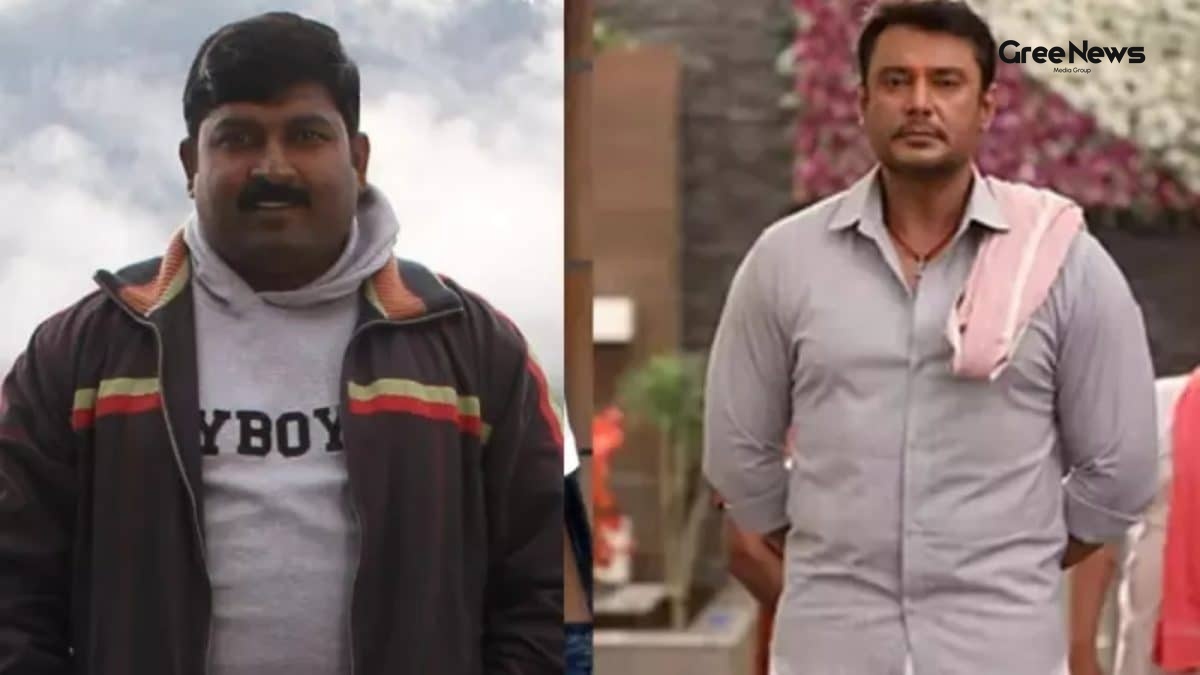
Former Darshan manager Mallikarjun S Sankanagoudar explains why he vanished and what he endured while living in anonymity.
When I first heard about Mallikarjun’s sudden disappearance, I thought it was just another rumor that fades away quickly. But now, after his recent press interaction, it feels more like a piece of the latest news India that refuses to be ignored. Mallikarjun, who used to manage the day‑to‑day schedule of superstar Darshan for several years, finally opened up about why he walked away from everything, and honestly, the story is both heartbreaking and eye‑opening.
He told us that the real trigger was a massive financial crisis. Imagine carrying a debt that amounts to more than eight crore rupees that’s a sum most of us can’t even imagine. The money was borrowed from a large number of individuals, and as the pressure to repay built up, Mallikarjun said he felt trapped, like a rat in a maze with no way out. In most cases, people would seek help, but for him the fear of disappointing his family and tarnishing his reputation made the situation feel unbearable.
He even confessed that, at a low point, thoughts of ending his life crossed his mind. I could picture the inner turmoil, especially for someone who was used to dealing with the glossy world of cinema, suddenly staring at a wall of unpaid bills. Yet, something inside him perhaps a glimmer of hope or simply the will to survive stopped him from taking that final step. Instead, he chose the path of disappearance, hoping that time would soften the blow.
When Mallikarjun’s wife learned about the staggering debt, the shock was palpable. She wasn’t aware of the scale of the problem until after it had already spiraled out of control. The emotional strain on their relationship was obvious; they were standing on a crumbling bridge, not knowing whether they could cross it together. A turning point arrived during a wedding in his wife’s family a moment filled with laughter, music, and the usual chaos of Indian celebrations. That very event made them pause, reconsider, and decide against any drastic step, however tempting it might have seemed.
So, in the middle of a summer month, Mallikarjun left Bengaluru without telling anyone where he was going. He sent brief messages to the people he owed money to, apologising and saying he couldn’t pay them back right then. After that, he switched off his phone, threw away his SIM card and cut off every channel of communication. It was as if he pressed a pause button on his entire life.
What followed was a journey across the breadth of India that reads like a travelogue mixed with a survival story. He moved from Kolhapur to Solapur, then to Nanded, Nagpur, and finally to Kashi. In each city, he took up any job that would put food on the table from guiding tourists in historic forts, working on factory lines, dabbling in real‑estate sales, to handling reception duties in hotels. The variety was astonishing and it reflected the sheer determination to stay afloat. During those years, he kept a thread of connection with his family by writing letters a simple, old‑fashioned way of staying in touch, especially when phones and internet were out of reach.
Living on the move also meant missing out on some of the most important moments in his life. He missed the final rites of his father, mother, grandmother and a dear friend. In Indian culture, such rituals are more than just ceremonies; they are a way of paying respect, seeking closure, and staying bonded with the departed. Missing them left a deep scar that Mallikarjun says still weighs heavily on his heart. He admits that the guilt of not being there for his loved ones adds to the emotional load he carries even today.
When I think about it, his story has become part of the viral news that’s been circulating across social media platforms, sparking countless comments and debates. People are curious about why a person so close to the glitz of cinema would choose a life of anonymity. The underlying theme, however, is universal financial stress, mental pressure, and the fear of public shame can push anyone to the edge.
What’s more intriguing is that after almost a decade, Mallikarjun decided to speak out again. He said that his return was driven by a sense that the toughest chapter of his life had finally closed. He didn’t want to re-enter the limelight for fame, but rather to set the record straight and perhaps to give closure to those who have been wondering for years about his fate.
His revelation also shines a light on a side of the film industry that the public rarely sees the backstage managers, accountants, and other support staff who keep the machine running. They are often the unsung heroes, and when they face personal crises, the fallout can be as dramatic as any on‑screen drama. This is why the story fits so well into the trending news India and is being discussed in the latest news India sections of many portals.
How the Debt Accumulated and Why It Became Unmanageable
Delving deeper, Mallikarjun explained that the debt didn’t appear overnight. Over the years, he had taken short‑term loans to cover various expenses related to managing Darshan’s schedule, travel, and promotional events. In the film world, last‑minute travel arrangements, unexpected publicity commitments, and catering costs can pile up quickly. While these may seem like routine expenses to an outsider, they became a financial avalanche for Mallikarjun when the remuneration didn’t match the outgoings.
He also mentioned that a few of the lenders were people he considered friends or extended family. Borrowing from them added an emotional layer to the problem failing to repay wasn’t just a financial loss, it felt like a personal betrayal. The more the pressure built, the harder it became to negotiate or seek help, especially because admitting the problem could damage his reputation in the industry.
In most cases, stars have managers who negotiate credit terms, but Mallikarjun confessed that he often had to rely on personal promises and informal aGreements. This made it difficult to get a clear picture of the total amount owed, eventually ballooning to a sum that seemed impossible to settle.
When he finally decided to leave, he did not want to face the humiliation of a public confrontation. The thought of being chased by creditors, especially in a city like Bengaluru where the film fraternity is tightly knit, was terrifying. So he chose silence a painful but logical step in his mind.
The Months of Living on the Road: A Slice of Everyday India
Imagine stepping out of a bustling metro city, leaving behind a life of frequent travel, luxury hotels, and high‑profile meetings, only to land in a small town where the biggest hassle is the timing of the local bus. That’s exactly what happened to Mallikarjun. In Kolhapur, he worked at a heritage site, showing tourists around the famous Mahalaxmi Temple while learning the art of quick smiles and quick refunds.
Next, in Solapur, he found work in a textile factory. The noise of loom machines, the heat, and the strict shift timings were a far cry from the air‑conditioned suites he was accustomed to. Yet, he said, the camaraderie among the workers made the days bearable they shared tea, jokes, and sometimes even a home‑cooked meal.
Moving to Nanded, he dabbled in real‑estate. He knocked on doors, showed small apartments to families looking for a place to live, and learned to bargain in Marathi and Hindi simultaneously. During evenings, he would write letters to his wife, describing the day’s challenges, hoping that his words would bridge the distance.
In Nagpur, a short stint at a hotel’s front desk taught him the art of formal Indian hospitality Greeting guests with a smile, arranging transport, and handling complaints. He remembered an incident where a guest complained about the room’s AC, and he managed to get it fixed within an hour, earning a heartfelt thank‑you.
Finally, in Kashi, a city of spiritual vibes, he took up a job as a guide for pilgrims. The serene ghats of the Ganga, the incense, and the chants gave him a reflective space to think about his past actions. He said the city’s atmosphere helped him come to terms with the guilt of missing his parents’ rites.
Through all these varied experiences, one thing remained constant his letters. They were simple, handwritten notes, sometimes on cramped pieces of paper, sometimes on old receipts. In each, he expressed love for his family, apologies for his absence, and hope for a reunion someday.
Impact on Family and Emotional Turmoil
Back home, his wife was left to manage the household with limited resources. She had to cope with the uncertainty of not knowing where Mallikarjun was, while also dealing with the shame of unpaid debts hanging over their heads. Neighbours whispered, relatives gave unsolicited advice, and the social pressure grew. Yet, she chose not to give up, because, as Mallikarjun mentioned, she believed that his disappearance was a temporary measure, not an abandonment.
The children (if any) and his ageing parents also suffered. In Indian families, elders place great importance on having their children present at crucial rites. Missing those rituals meant not only a personal loss but also a cultural breach. Mallikarjun’s confession about missing the final rites of his father, mother, and grandmother sparked a wave of empathy among readers, many of whom have faced similar situations where financial problems forced them to prioritize survival over tradition.
Living apart also created a mental strain. In most cases, prolonged separation can lead to feelings of isolation, anxiety, and depression. Mallikarjun openly discussed how he battled these emotions, often feeling like a ghost watching his own life from a distance.
When he finally decided to break his silence, it was partly because he realized that keeping the secret was eating away at his own peace of mind. He wanted to clear the air, not just for himself, but for his family, who had been living under a cloud of uncertainty for years.
Public Reaction and the Role of Media
The moment his statement went live, it became a hot topic in the breaking news circle. Various news portals, TV channels and even social media influencers started discussing his story, labeling it as one of the most intriguing pieces of viral news of the month. People began sharing their own experiences with debt, mental health, and the pressure of keeping up appearances.
What’s fascinating is how the narrative aligns with the current India updates trend a deeper look into personal struggles hidden behind fame. Readers started asking, “What can we learn from this?”, “How can the industry support its backstage workers?”, and “Is there a safety net for managers who fall into debt?” These questions are now part of the ongoing conversation, making the story not just a personal tale, but a larger social commentary.
Meanwhile, the film fraternity showed mixed reactions. Some close associates expressed empathy, acknowledging the harsh realities of managing big stars, while others remained silent, perhaps worried about potential reputational damage. Nevertheless, the fact that Mallikarjun finally came forward has opened a door for more honest dialogues about financial transparency in the industry.
Lessons Learned and Looking Ahead
From Mallikarjun’s journey, a few clear lessons emerge. First, the importance of financial literacy cannot be overstated, especially for people handling large sums on behalf of others. Second, mental health support should be accessible to everyone not just the stars but also the managers, assistants, and crew members who work behind the scenes.
Third, the power of communication even simple handwritten letters can sustain relationships during the toughest times. Mallikarjun’s letters, though brief, kept the emotional bond alive and eventually paved the way for his return.
Finally, the story reminds us that behind every headline in the latest news India, there are real human lives, with hopes, fears, and aspirations. As we continue to follow the trending news India, let’s remember to look beyond the surface and consider the human element that makes these stories truly compelling.
Mallikarjun says he hopes his confession will help others facing similar dilemmas, encouraging them to seek help before the pressure becomes unbearable. He also hopes that his family can forgive the years of absence and rebuild the trust that was strained by circumstances.
In the end, his tale is a testament to resilience a man who chose to disappear, survived on the margins of society, and finally decided to return, not for fame, but for closure. It’s a story that will likely stay in the public memory for a long time, adding depth to the viral news that keeps us scrolling day after day.