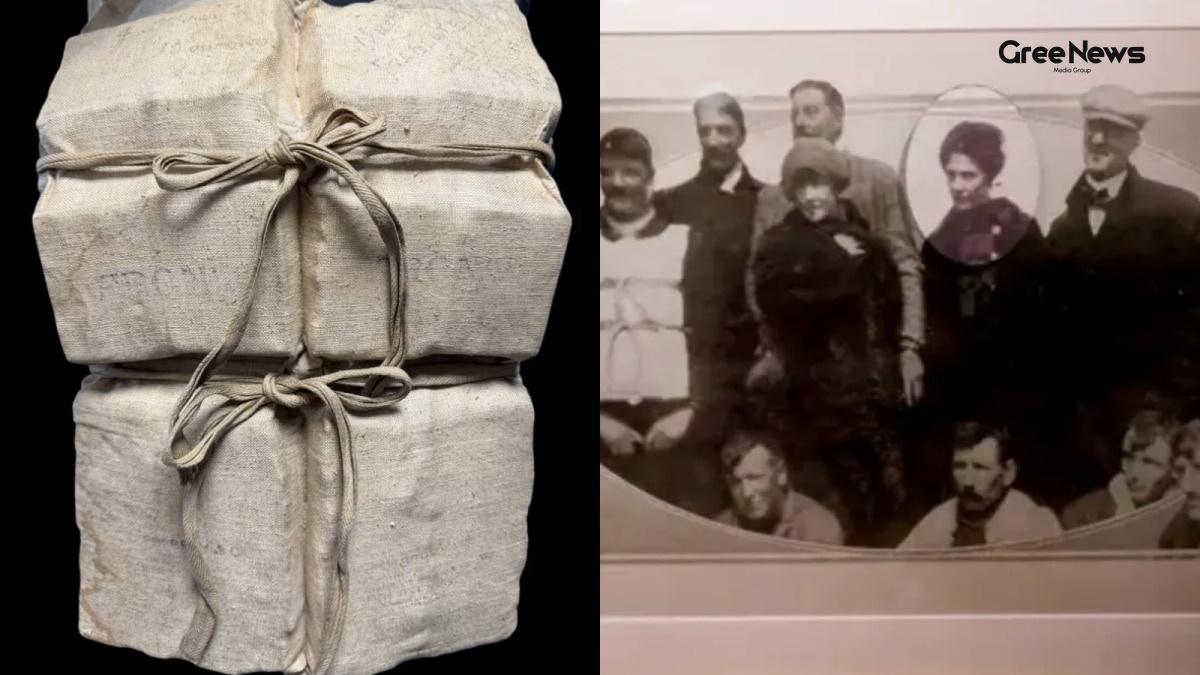
Why I Got Hooked on This Titanic Life Jacket Story
Honestly, I never thought I’d be that person scrolling through breaking news about a 100‑year‑old shipwreck and feeling a little thrill. But when I came across the news that a life jacket signed by Laura Mabel Francatelli a first‑class passenger who survived the Titanic disaster is about to be put up for auction, something inside me clicked. It felt like a piece of history was being handed over to a new generation, and I wanted to share the whole saga as if I were sitting across the table at a chai‑stop with a friend.
First off, let me set the scene. The Titanic, that massive ocean liner that set sail from Southampton in 1912, was marketed as the epitome of safety "unsinkable" was the phrase on every brochure. It was a dream voyage for many Indians too; wealthy merchants and their families had booked tickets, imagining the glamour of crossing the Atlantic in such luxury. Little did anyone know that a tragic iceberg would turn that dream into a nightmare in under three hours.
Now, what makes this particular life jacket stand out? It isn’t just any ordinary piece of safety gear. It belonged to Laura Mabel Francatelli, who was travelling in first class with her family. After the ship hit the iceberg, she managed to get into a lifeboat and survive the freezing night. Years later, she kept the very jacket that helped keep her afloat, and she signed it herself a small but powerful personal touch.
When I read that Henry Aldridge & Son, a renowned auction house, is going to sell the life jacket as part of a broader Titanic and White Star Line memorabilia sale, my mind started racing. The auction house’s managing director, Andrew Aldridge, described the item as “one of the most iconic” pieces ever to hit the market. He said the life jacket presents a "once in a generation" opportunity for collectors. That phrase really stuck with me because it captures the rarity of this find the only known survivor’s life jacket ever offered for sale.
Imagine the scene in a typical Indian auction hall. You have a buzz of people from Delhi, Mumbai, Bengaluru, and even some overseas collectors, all glued to the screen as the gavel is raised. The bidding is expected to climb up to around £350,000 (roughly $474,000). For many, that figure sounds mind‑boggling, especially when you think about how the same amount could buy several houses in a small town in Uttar Pradesh. Yet when you consider the historical weight of the artefact, the price starts to make a certain kind of sense.
What really fascinated me was learning that the life jacket has already been displayed at Titanic Belfast and the Titanic Museum Attraction. Those venues have become hot spots for tourists, especially those who love a good story about courage against nature’s fury. Seeing it there, with visitors from all over the world including many Indian families on their summer holidays gave the piece a kind of global resonance. It’s not just a British relic; it’s a story that connects to anyone who has ever faced a life‑changing ordeal.
The Titanic’s Journey and Its Echoes in India
To truly appreciate why this life jacket is causing such a stir, we need to rewind a bit. The RMS Titanic left Southampton on the morning of 10 April 1912. The ship was a marvel of engineering, boasting luxurious amenities that appealed to the elite across continents. In India, the news about the Titanic’s maiden voyage made its way to the press and to travelers dreaming of a new world experience.
Four days after its departure, the ship struck an iceberg in the North Atlantic and sank. Out of roughly 2,220 passengers and crew, only about 700 survived. Those numbers are staggering, and the tragedy became a staple in schools, movies, and of course the latest news India platforms keep referencing during anniversaries.
For many Indians, the Titanic story became a cautionary tale about hubris. It reminded people that no matter how advanced technology becomes, nature always holds the upper hand. Over the years, this tale has been retold in countless TV serials, Hindi films, and even stand‑up comedy bits. The life jacket of Laura Mabel Francatelli, therefore, isn’t just a piece of fabric; it symbolizes survival, hope, and a touch of elegance amidst chaos.
What’s more, the fact that the jacket was signed by Laura herself adds an intimate layer to the narrative. You can almost picture her sitting at a wooden desk, perhaps in a modest English home, writing her name in careful cursive, knowing that this little sign would one day become a beacon for history lovers. It’s a tiny detail that makes the whole story feel personal, and that’s why it resonates so much with the trending news India readers.
Inside the Auction What Collectors Are Saying
When Andrew Aldridge appeared on a recent interview on a popular Indian news channel which many of us caught as part of the breaking news cycle he emphasized the uniqueness of the life jacket. He said, “Quite simply, this lifejacket presents a once in a generation opportunity for collectors. It’s the only example to ever be offered for auction from a Titanic survivor.”
That line stuck with me because it captures the essence of why collectors, both in India and abroad, are so eager. Some collectors treat such items like holy grails; they’re not just buying an artefact, they’re acquiring a story, a slice of humanity’s past. A friend of mine from Hyderabad, who collects vintage maritime memorabilia, told me that he’s been waiting for a chance like this for decades. He said the life jacket could become the centerpiece of his private museum a space where schoolchildren from nearby schools can come and learn about resilience.
One thing I’ve noticed while following this story on various platforms is how quickly the information spreads. From trending news India sites to viral posts on WhatsApp groups, the life jacket’s auction has become a focal point for conversations about history, value, and even the ethics of selling such personal items. It’s a classic example of how a single artefact can spark a nationwide dialogue.
Personal Reflections What This Means to Me
Honestly, reading about the life jacket made me think about the things I keep from my own past. My grandmother used to hand me a small brass latch key she said saved her during a monsoon flood when we were kids in Kerala. She never sold it, but she kept it in a wooden box, reminding me that sometimes the most valuable things are the ones that carry stories. In that sense, the Titanic life jacket feels like a massive, world‑wide version of that personal relic.
When I tell my cousin about this auction, she laughs and says, “You’re turning a tragedy into a shopping event!” But I argue that it’s not about glorifying tragedy; it’s about preserving memory. This perspective is one I’ve heard echoed by many Indian historians who stress the importance of keeping such artefacts alive, not hidden away.
Moreover, the fact that the life jacket has travelled from the icy Atlantic to museums in Belfast, and now possibly to a private collection, mirrors our own diaspora narratives. Many Indians have journeys that take them far from home, only to carry a piece of their heritage wherever they go. That parallel makes the story feel close to home, even though it’s about a British ship.
What caught people’s attention most was the price tag £350,000. That number is staggering, but it also makes you wonder about the hidden market for such items. I found myself googling (yes, I admit it!) how many other Titanic artefacts have been sold and at what price. Turns out, a surviving section of the ship’s hull fetched millions. So, in most cases, the life jacket sits at a lower tier yet still commands a massive figure.
All this talk got me thinking: If I ever had a chance to own something as historic as this, what would I do with it? I think I’d display it somewhere public, maybe in a local museum in Pune, where children could learn about survival and history. That’s the kind of curiosity‑driven thinking the story sparked in me.
What Happens After the Gavel Falls?
Let’s imagine the auction ends and a bidder, perhaps an Indian collector, walks away with the life jacket. What could be next? One scenario is that the new owner decides to loan the life jacket to a museum in New Delhi or Kolkata, creating an exhibit that draws visitors from across the country. This would align perfectly with the recent wave of cultural exhibitions in India that aim to connect global history with local audiences.
Another possibility is that the life jacket becomes part of a travelling exhibition, moving between major Indian cities Bengaluru, Chennai, Ahmedabad each stop accompanied by educational workshops for students. Such events have become quite popular lately, especially when they tie into the latest news India cycles, making them more shareable on social media.
There’s also the philanthropic route. Some collectors have a tradition of donating a portion of proceeds to charitable causes. If the life jacket’s sale funds a maritime safety program, perhaps in coastal Karnataka, then the legacy of Laura Mabel Francatelli could directly save lives today. That would be a fitting tribute, don’t you think?
Regardless of the outcome, the buzz around the auction demonstrates how a single artefact can capture imaginations across continents. From the moment the life jacket was first displayed at Titanic Belfast, to its current status as a viral news story in India, it has travelled a long way. The journey itself is as fascinating as the object.
Final Thoughts Why This Story Matters
To sum it up, the sale of Laura Mabel Francatelli’s signed life jacket is more than just a high‑value auction. It’s a reminder that history lives in objects, and each object carries the weight of personal experiences, cultural shifts, and societal values. For Indian readers, especially those keeping up with the latest news India and trending stories, this piece offers a glimpse into a world that, despite being a century old, still feels relevant.
It also underscores the power of storytelling how a simple piece of fabric can spark conversations about survival, heritage, and even the ethics of commodifying personal relics. If you’re curious, keep an eye on the auction results. It might just become a part of India updates you’ll talk about with your friends over a cup of chai.
And who knows? Maybe one day you’ll get to see the life jacket up close, whether in a museum or at a private exhibition. Until then, the story remains a captivating piece of breaking news that has managed to connect people across time, geography, and culture.