Why Pohela Boishakh is a Food Lover’s Paradise
Honestly, every time I hear about Poela Boishakh on the latest news India, my stomach does a little dance. This isn’t just another holiday; it’s a day when families across West Bengal, Bangladesh and the diaspora gather around a table piled high with dishes that have been handed down for generations. The excitement is palpable you’ll see it in the bustling streets, hear it in the breaking news segments, and even in the trending news India hashtags where people share pictures of their feasts. What happened next is interesting: the celebration turns into a culinary marathon, and each dish tells a story of seasons, festivals and love.
Panta Bhat The Cool Start to a Warm Celebration
I still remember my first day of school when my mother would bring a bowl of Panta Bhat to our lunchbox. The fermented rice, soaked overnight in water, is the perfect antidote to the summer heat that hits Kolkata around Poela Boishakh. It may sound simple, but the way the rice swells up, absorbing the subtle sourness, is magical. You dunk it in a little mustard oil, add sliced Green chilies, and maybe a few pieces of raw mango for that tangy kick. In most cases, you’ll also sprinkle roasted cumin powder it adds that earthy aroma that makes you feel right at home.
When I tried making Panta Bhat for my friends in Delhi last year, they were surprised by how refreshing it was. Many people were surprised by this because they’d never heard of a ‘fermented rice’ dish before. I explained that it’s not only tasty but also a probiotic powerhouse great for digestion during the heavy feast. If you’re curious, give it a try the night before Poela Boishakh and let it sit. Trust me, the next morning you’ll have a bowl that’s both cooling and comforting.
Ilish Machh The King of Fish at Poela Boishakh
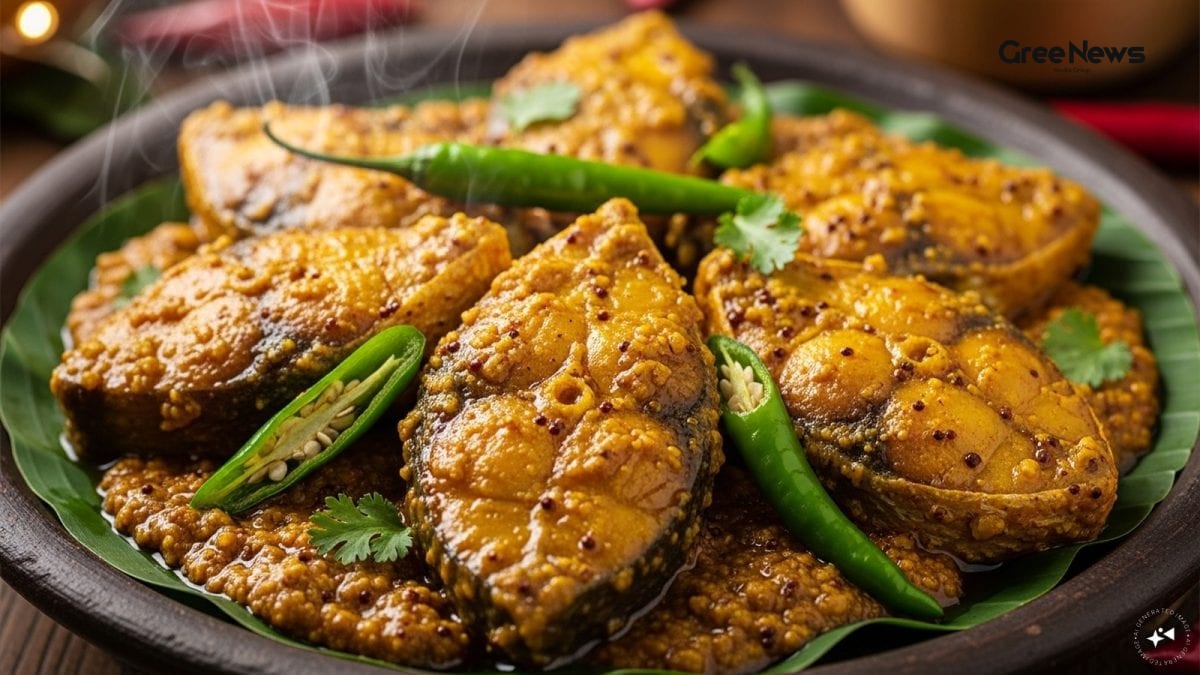
Now, let’s talk about Ilish Machh, the star of the show. This fish, known globally as Hilsa, is the crown jewel of Bengali cuisine. When the breaking news aired about record catches of Ilish this season, I felt a surge of excitement it meant fresh fish for the feast! The secret to a perfect Ilish Machh lies in its preparation: first, you marinate the fillets with a mixture of turmeric, salt, and a pinch of red chilli powder. Then you shallow fry them until the skin turns crisp and the flesh stays moist.
What caught people’s attention recently was the rise of street vendors offering “Ilish Machh r Jal” a light, mustard‑seed based broth that brings out the fish’s delicate flavor. I tried it at a modest “bhoj” stall in Howrah, and the result was pure bliss. The fish practically melts in the mouth, and the mustard oil adds that unmistakable Bengali aroma. If you’re cooking at home, remember to use a non‑stick pan and keep the flame medium too high and the fish will break apart.
And here's a little tip: after frying, drizzle a teaspoon of raw mustard oil over the fish while it’s still hot. It lifts the flavor to a whole new level. My family swears by this trick, and it’s become a tradition in our house during Poela Boishakh.
Kosha Mangsho Slow‑Cooked Delight for the Soul
Kosha Mangsho, the slow‑cooked mutton curry, is the kind of dish that makes you feel like you’ve traveled back in time. The aroma of ghee, ginger‑garlic paste, and a blend of whole spices like bay leaf, cinnamon, and cloves fills the entire kitchen. I remember my aunt’s kitchen, where the pot would sit on the stove for hours, the meat turning soft enough to fall apart with just a fork.
When I first attempted Kosha Mangsho on my own, the secret I learned from a viral news video was to sear the pieces of mutton first to lock in the juices. Then you add the masala, a cup of water, and let it simmer on low heat for at least two hours. Patience is key you’ll see the gravy thickening, the colour deepening to a rich, dark brown. Many people were surprised by how little water is needed; the meat releases its own moisture.
To finish, I like to stir in a teaspoon of ghee and a handful of fresh coriander leaves. Serve it with steamed rice or, better yet, with the Panta Bhat we talked about earlier. The contrast of textures and flavors is what makes Poela Boishakh meals unforgettable.
Mishti Doi The Sweet Ending That Stole My Heart
Every grand Bengali feast needs a sweet note, and Mishti Doi fits the bill perfectly. It’s a caramel‑like fermented yogurt that’s both creamy and slightly tangy, finished with a drizzle of jaggery syrup. The first time I tasted it at a wedding in Kolkata, I was hooked. The creamy texture, the subtle caramel flavour, and that comforting after‑taste made it the ideal finale.
There’s a fascinating story behind Mishti Doi that’s often highlighted in India updates about culinary heritage. It was originally a royal dessert served in the courts of the Nawabs, and over time it found its way into every Bengali household. To make it at home, you need full‑fat milk, a small amount of live yogurt as a starter, and a little jaggery. Boil the milk, let it cool to warm, add the starter, then pour into a clay pot and let it set for several hours.
What caught people’s attention on social media recently was a YouTuber’s experiment where he added a pinch of cardamom and saffron to his Mishti Doi the result was a fragrant, festive twist that perfectly matched the Poela Boishakh vibe. If you’re feeling adventurous, try adding a few strands of saffron the next time you make it.
Tips for a Seamless Poela Boishakh Feast
Planning a Poela Boishakh celebration can feel like organising a small carnival, especially when you want everything to be authentic. Here are a few practical observations from my own experience:
- Start the Panta Bhat a day early it needs time to ferment.
- Buy fresh Ilish Machh from a trusted fish market; the eyes should be bright and the flesh firm.
- If you’re short on time, you can pressure‑cook the mutton for an hour and then finish it on the stove to get that deep, caramelised flavour.
- Keep a bowl of extra mustard oil handy a little drizzle can rescue a dish that feels flat.
- Don’t forget to serve Mishti Doi chilled; the coolness balances the spiciness of the other dishes.
These simple hacks have saved me countless kitchen mishaps and have become my go‑to checklist every year. Trust me, your guests will appreciate the effort, and you’ll enjoy a stress‑free celebration.
Where to Experience Authentic Poela Boishakh Dishes
If cooking isn’t your thing, or you just want to taste the best of Bengal, there are several iconic spots you can visit. In Kolkata, Balaram Mullick & Co. on College Street serves a legendary Panta Bhat with fried hilsa. Their Kosha Mangsho is cooked in a huge earthen pot, giving it a smoky undertone that’s hard to replicate at home.
Another favourite is “6 Ballygunge Place”, known for its Mishti Doi served in traditional earthenware. The ambiance there captures the festive spirit, and you’ll often hear the sound of tabla beats in the background, adding to the experience.
For those living outside West Bengal, many Indian cities now have Bengali restaurants that feature Poela Boishakh special menus. A quick look at the latest news India food columns will point you to places in Delhi, Mumbai and Bengaluru where you can savour authentic Ilish Machh and Kosha Mangsho.
Final Thoughts The Heartbeat of Poela Boishakh
At the end of the day, Poela Boishakh is about more than just dishes; it’s about community, heritage, and the joy of sharing a meal with loved ones. The dishes we’ve talked about Panta Bhat, Ilish Machh, Kosha Mangsho and Mishti Doi each carry a piece of Bengal’s soul. When you sit down to a plate of these foods, you’re not just eating; you’re partaking in a tradition that has survived generations.
So, whether you’re preparing the feast at home, joining friends at a restaurant, or simply watching the celebrations on the viral news feeds, remember that the true spirit lies in the love that goes into each bite. As the sun sets on Poela Boishakh, the lingering aroma of mustard oil and caramelised sugar will stay with you, promising another year of happiness and prosperity.