Dual‑Level Science and Mathematics Introduced for Class 9 by Central Board of Secondary Education

Goal: Reduce mental stress by offering an easier Science track alongside the existing advanced option
Background and Alignment with National Policies
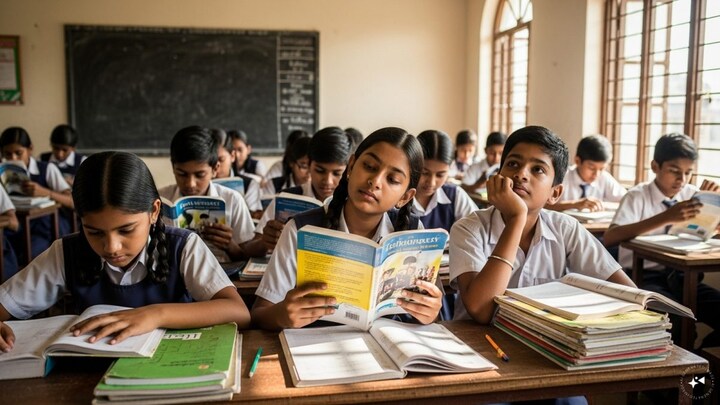
The Central Board of Secondary Education has announced a sweeping overhaul of the curricula for classes 9 and 10. The redesign aligns directly with the principles set out in the National Education Policy of two‑thousand‑twenty and the National Curriculum Framework. By integrating the recommendations of these policy documents, the Central Board of Secondary Education seeks to modernise learning experiences, promote experiential engagement, and shift the focus away from rote textbook reliance.
The upcoming academic session will mark the first implementation of this comprehensive framework. All schools affiliated with the Central Board of Secondary Education will transition to the new structure, ensuring uniformity across the nation’s secondary education system.
Two‑Level Structure for Science Mirrors Mathematics
One of the most prominent changes concerns the introduction of two distinct levels in Science, a design that mirrors the earlier two‑level system already in place for Mathematics. Under this arrangement, learners who are required to take Science as a compulsory subject but who do not intend to pursue medical or engineering studies can opt for the easier level. The easier level retains essential scientific concepts while reducing the depth and volume of content, thereby lowering the cognitive load for those students.
Conversely, learners aiming for specialised streams such as medicine or engineering retain the option to study the advanced Science track. The advanced track incorporates additional topics, more rigorous assessments, and a broader exploration of scientific principles, preparing students for the demands of higher‑education entrance examinations in those fields.
The Central Board of Secondary Education has stipulated that both levels will share a common core syllabus, ensuring that every learner acquires foundational knowledge. The advanced level will simply augment this core with extra material and an additional twenty‑five‑mark, one‑hour examination that sits alongside the standard final exam.
Implementation of Dual Levels in Mathematics
Mathematics already operates on a dual‑level basis, and the forthcoming academic session will continue to uphold this structure. Learners will once again be able to select either the standard Mathematics curriculum or the more demanding advanced Mathematics curriculum, depending on their future aspirations and personal strengths.
When a learner chooses the advanced Mathematics track, an extra assessment of twenty‑five marks will be administered in addition to the regular examination. Successful completion of this extra assessment will be recorded on the learner’s marksheet as a distinct entry, highlighting the attainment of the advanced level.
For learners who decide against the advanced Mathematics track, the regular assessment will suffice, and no reference to an advanced attempt will appear on the marksheet.
Flexibility for Individual Strengths and Interests
According to the statements made by CBSE Chairperson Rahul Singh, offering subjects at two levels empowers learners to make choices that reflect their individual strengths and interests. Learners may decide to undertake the advanced level in Science, Mathematics, both, or neither. This flexibility is designed to support differentiated learning pathways without imposing a one‑size‑fits‑all model.
CBSE Chairperson Rahul Singh further explained that the ability to mix and match levels enables learners to focus on areas where they excel while receiving a less demanding curriculum in subjects that are not central to their career plans.
Credit System Aligned with International Standards
In addition to the dual‑level subject structure, the Central Board of Secondary Education is planning to introduce a credit system based on academic hours. Under this system, every learning activity—classroom instruction, laboratory work, project‑based assignments, and co‑curricular engagements—will contribute to a cumulative credit score for the learner.
This credit‑based approach mirrors practices commonly found in higher‑education institutions worldwide. By adopting such a system, the Central Board of Secondary Education aims to provide a more holistic picture of learner achievement, moving beyond the narrow focus of exam marks alone.
The credit framework will be recorded throughout the academic year, offering educators, parents, and learners a transparent view of progress across all dimensions of the curriculum.
Revised Subject Load: Ten Subjects Including Three Languages
The new curriculum framework expands the number of subjects that learners must study in order to pass. Learners will now be required to take ten subjects, comprising seven core academic subjects and three language subjects. This represents an increase from the previous requirement, which mandated a lower total number of subjects.
The Central Board of Secondary Education emphasizes that, despite the increase, the syllabus has been carefully calibrated to avoid overburdening learners. The design focuses on experiential learning, encouraging hands‑on activities, inquiry‑based projects, and real‑world applications that make the content more engaging and less stressful.
Among the ten subjects, the three language requirements are particularly noteworthy. While learners have traditionally studied two languages—commonly Hindi and English—the new structure mandates the study of three languages. At least two of these languages must be Indian languages, thereby reinforcing cultural connections and promoting linguistic diversity.
Language Policy: Strengthening Cultural Roots
The requirement to study three languages reflects the Central Board of Secondary Education’s commitment to nurturing a strong sense of cultural identity among learners. By ensuring that a minimum of two languages are Indian, the policy seeks to deepen learners’ engagement with the nation’s rich linguistic heritage.
Examples of Indian languages that may fulfill this requirement include Hindi, Bengali, Tamil, Telugu, Marathi, Gujarati, and others recognized by the Central Board of Secondary Education. Learners will continue to study English as one of the three languages, maintaining proficiency in a global lingua franca while also grounding themselves in regional linguistic traditions.
This multilingual approach is intended to produce well‑rounded individuals capable of navigating both domestic and international environments with confidence.
Implementation Timeline and Transition Path
The Central Board of Secondary Education has outlined a clear timeline for the rollout of the new curriculum. Learners currently enrolled in class 8 will experience the revised structure as they advance to class 9 in the upcoming academic session. From that point onward, the dual‑level options for Science and Mathematics, the expanded subject load, and the credit system will be fully operational.
CBSE Chairperson Rahul Singh has also indicated that, by the time of the board examinations scheduled for the later years, the advanced level options for Science and Mathematics will be firmly established, providing learners with a stable and predictable pathway for their secondary education.
Anticipated Impact on Learner Well‑Being
By offering a less demanding Science track for learners who do not intend to pursue medical or engineering careers, the Central Board of Secondary Education aims to alleviate the mental stress that often accompanies a uniformly rigorous curriculum. The optional advanced track remains available for those who seek deeper academic challenges.
The inclusion of a credit‑based evaluation system is expected to shift focus toward continuous learning and skill development, rather than a singular high‑stakes examination. This holistic assessment approach is designed to boost learner confidence, encourage consistent effort, and reduce anxiety associated with exam performance.
Moreover, the tripartite language requirement is poised to enhance cultural literacy and communication skills, equipping learners with the ability to engage meaningfully in diverse linguistic contexts.
Conclusion: A Progressive Step Forward
The Central Board of Secondary Education’s introduction of dual‑level Science and Mathematics, the expansion to ten subjects including three languages, and the planned credit system together represent a significant stride toward modernising secondary education. By aligning with the National Education Policy and the National Curriculum Framework, the Central Board of Secondary Education demonstrates a commitment to fostering a learning environment that balances rigor with flexibility, cultural grounding with global competence, and assessment with experiential growth.
As learners embark on this newly structured academic journey, the anticipated outcomes include reduced stress, clearer alignment with individual aspirations, and a richer, more diversified educational experience. The changes set forth by the Central Board of Secondary Education promise to shape a generation of learners who are both academically prepared and personally empowered.