From solar‑powered tents in Ranthambore to nail‑less heritage homes in Kerala, discover the pioneers who are weaving conservation into your next getaway.
Honestly, when I first read about these places in the latest news India, I thought they were just another fancy marketing stunt. But what happened next is interesting I actually booked a short stay at a couple of them, and the experience was nothing like the usual luxury‑hotel vibe you see on TV. The whole idea of a resort that gives back, that’s the kind of breaking news that catches people’s attention, especially when you see real‑life examples on the ground.
Kipling Camp, Kanha Tiger Reserve, Madhya Pradesh
Let me take you to Kipling Camp first. Nestled in the Maikal hills, this little gem was set up back in 1982 by Belinda Wright, the very same woman who started the Wildlife Protection Society of India. The camp’s footprint is tiny less than ten percent of the land is actually developed and the rest, about fifteen acres, stays untouched as a sanctuary. You can literally feel the difference when you walk along the natural pathways; they’re lined with local stones and the huts follow the traditional tribal style. What blew my mind was the staff almost all of them are from the nearby villages, and the camp is constantly sending medical aid and school supplies to the Baiga tribals and Gond artists. It’s not just a place to stay, it’s a community hub. I remember sitting with a local guide who showed me a traditional Gond painting; the colours were so vivid that I could almost hear the forest whispers. That’s the sort of story that goes viral as it showcases real collaboration between tourism and indigenous culture.
Most visitors don’t realise that every sunrise you watch from the camp’s balcony supports a small school that the camp helped build a few years back. It’s the kind of community‑centric model that makes you think about the real impact of your travel choices.
Svasara Jungle Lodge, Tadoba Tiger Reserve, Maharashtra
Next up is Svasara Jungle Lodge, perched right at the edge of Tadoba with Kolara Gate practically at your doorstep. The lodge sits on ten acres of restored forest, and you can see the effort in every tree that’s been replanted. Inside, there are twelve suites, each adorned with local art you’ll find tribal masks, hand‑woven rugs, and even a few pieces of artwork made from bamboo. While I was there, the naturalist leading the safari told us a story about a leopards’ footprints that led to a hidden waterhole; later that day, we actually spotted the same leopard drinking. That’s when you realise the depth of the connection between the lodge and the surrounding wilderness.
What’s more, Svasara hires locally for everything chefs, drivers, housekeeping and puts a chunk of their revenue back into regional conservation projects. It feels good knowing that the breakfast you enjoy, served on a banana leaf, is helping protect the very forest you’re exploring. This kind of sustainable model is exactly why it’s becoming trending news India among eco‑travel enthusiasts.
The Kumaon, Binsar, Uttarakhand
If you ever wander into the Binsar hills, you’ll stumble upon The Kumaon a place that screams sustainability at every corner. The lower suites are built using local stone, just like the houses in the surrounding Kumaoni villages. The upper terrace chalets? They’re a clever mix of fly‑ash bricks, bamboo, and even copper, creating a modern yet earthy feel. The design lets sunlight pour in during the day, while the thick stone walls keep the interiors cool in the summer and warm in winter, so the energy bills are practically nil.
We spent an evening stargazing from the roof terrace, and the guide explained how the resort’s minimal lighting helps preserve the night sky for the locals. The dining area serves dishes made from ingredients sourced from nearby farms, slashing the carbon footprint of the meals. I even got a chance to try a traditional Uttarakhand chili cheese toast the aroma was unforgettable, and knowing it came from a local farmer made it taste even better. It’s little things like this that turn a regular holiday into an India update that you’ll want to share with friends.
Evolve Back, Coorg, Karnataka
Coorg’s coffee‑scented hills are home to Evolve Back, a resort that feels like an extension of the landscape itself. Built with locally sourced timber and following the Kodava architectural style, each villa blends seamlessly with the surrounding coffee plantations. While exploring, I learned that the resort runs several community education programs they teach kids about sustainable farming and even set up small composting units for the nearby villagers.
The resort also supports local farmers by buying their produce directly, which means the coffee you sip in the morning is freshly harvested from a nearby farm. The private nature reserves they maintain are home to a variety of birds, and you can often hear the distinct call of a Malabar pied hornbill echoing through the trees. This commitment to “the spirit of the land” isn’t just a tagline; it’s visible in the daily operations, which is why many travel blogs pick it up as breaking news, sparking conversation about responsible tourism.
Samode Safari Lodge, Bandhavgarh National Park, Madhya Pradesh
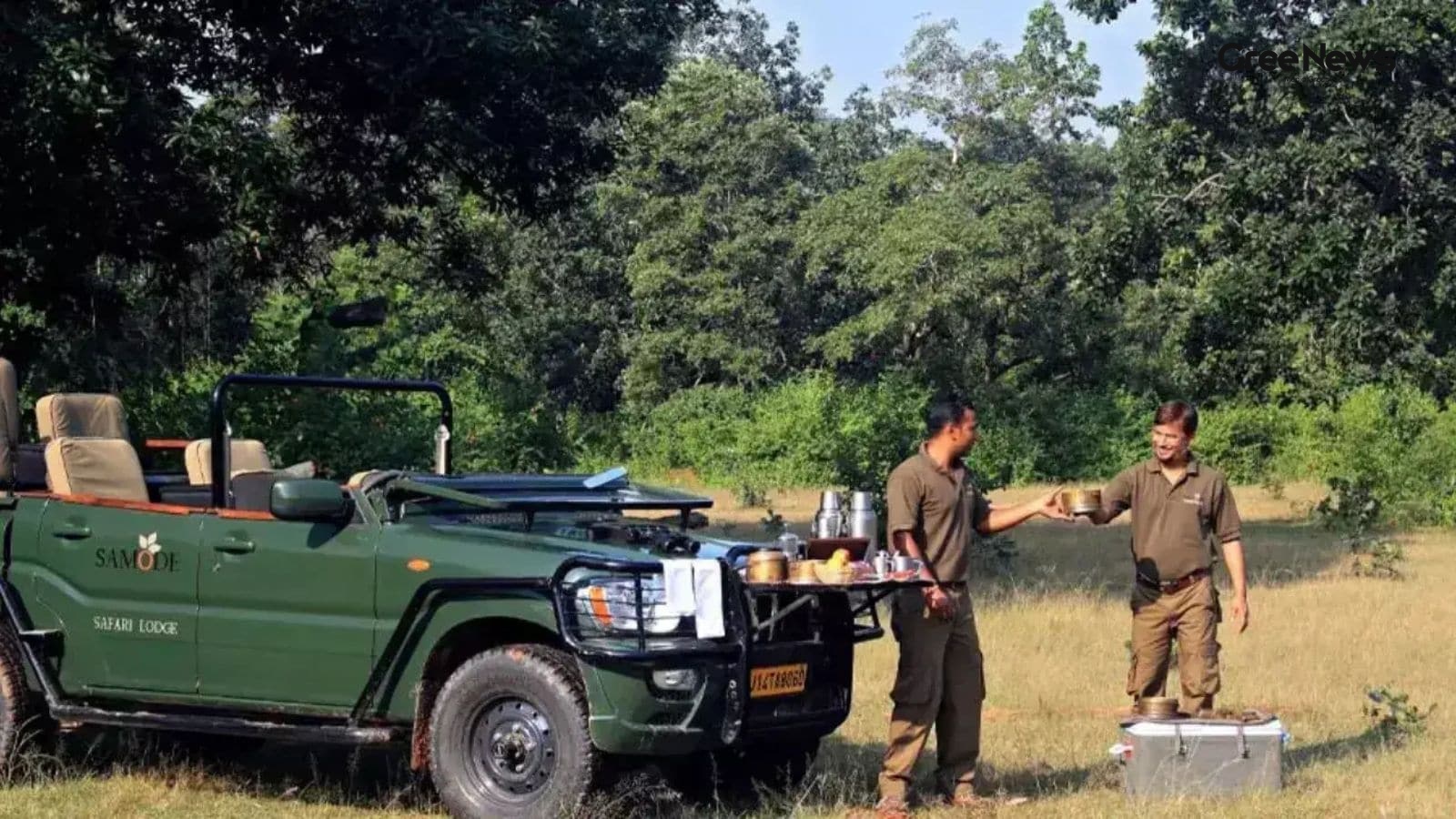
Samode Safari Lodge sits in the buffer zone of Bandhavgarh, away from the usual tourist bustle. The lodge occupies only two acres of a sprawling thirty‑acre property, leaving plenty of space for rewilding. The design uses local stone, reclaimed wood, and solar panels that power most of the resort’s electricity needs. While staying there, I noticed that the staff, mostly from neighbouring villages, wore traditional attire and welcomed us with a warm “Namaste”.
The lodge also runs workshops where guests can learn about traditional Madhya Pradesh crafts. One evening, a local artisan taught us the basics of block printing the whole experience made me feel connected to the culture rather than just a fleeting visitor. You can see why it’s making headlines as a viral news story in the eco‑tourism space.
The Oberoi Vanyavilas, Rajasthan
At the edge of Ranthambore, The Oberoi Vanyavilas offers grand tents that feel like a palace in the wild. The tents have teak wood floors and private walled gardens, giving a luxury feel, but the resort backs it up with genuine Green action. The whole place runs on solar energy, and the staff moves guests around in electric buggies. They also have an on‑site farm where they grow most of the vegetables used in the kitchen I tasted a carrot that was literally harvested that morning.
What truly impressed me was their partnership with Tiger Watch and Dhonk, a foundation that helps former poachers transition to sustainable livelihoods. The resort contributes a part of its profits to these initiatives, turning a holiday into a direct support system for wildlife conservation. That’s the sort of story that spreads fast on social media, becoming part of trending news India for its tangible impact.
Aahana Resort, Corbett National Park, Uttarakhand
Moving northwards, Aahana sits on the northeastern boundary of Corbett, tucked in the Patlidun valley. Founded by Kamal Tripathi, a descendant of freedom fighters, the resort treats tourism as a way of giving back. Their organic farm supplies fresh produce for a farm‑to‑fork dining experience that feels both rustic and refined. Over ninety‑five percent of the staff come from nearby villages, and many have been with the resort for years, creating a close‑knit community.
The architecture blends Victorian influences with local materials, creating a sort of timeless feel. One of the most memorable moments for me was watching a sunrise from the balcony while hearing the distant call of a rufous‑winged buzzard a reminder of how nature and heritage coexist here. This blend of luxury and community work makes it a favorite topic in the latest news India, especially among travellers looking for authentic experiences.
Dolkhar, Ladakh
High up in Ladakh, Dolkhar is a boutique property built by Rigzin Wangmo Lachi, who believes sustainability is at the heart of travel. The seven villas are crafted by local artisans using indigenous materials like stone, wood, and the famous Ladakhi mud bricks. The menus are plant‑based, with dishes like thukpa made from locally sourced vegetables, and the furniture is all hand‑carved. I spent an evening in their spa, where the treatments used indigenous ingredients like yak butter and apricot seed oil it felt like a cultural immersion unlike any other.
Dolkhar also runs workshops on wool spinning, ceramic making, and metalworking, letting guests try their hand at Ladakhi crafts. The whole place breathes authenticity, and that’s why many travel writers pick it up as breaking news, sharing stories of how tourism can respect fragile ecosystems while still offering comfort.
Coconut Lagoon, CGH Earth, Kumarakom, Kerala
In the backwaters of Kerala, Coconut Lagoon stands out as a living tribute to tradition. In the 1990s, when many heritage homes were abandoned due to land reforms, Jose Dominic of CGH Earth rescued several centuries‑old wooden structures. These were rebuilt using Thachu Shastra an ancient nail‑less carpentry technique and reassembled here by master craftsmen. Walking through the corridors, you can still hear the subtle clicks of wooden joints, a reminder of the skill involved.
The resort runs its own water bottling plant, uses biogas for the kitchen, and captures every drop of rainwater. It’s a perfect example of how old methods can be the Greenest. The meals are cooked on a wood‑fired stove, and the fish served is caught fresh from the nearby lagoons. When I sat by the pond, listening to the gentle croak of frogs, I realized that sustainability here isn’t a gimmick; it’s woven into the very structure of the place. This narrative is often shared as viral news because it shows a perfect marriage of heritage and eco‑friendly practices.
SUJÁN Sher Bagh & Sujan Jawai, Rajasthan
Lastly, the SUJÁN properties Sher Bagh and Sujan Jawai are managed by conservationists Jaisal and Anjali Singh. These Relais & Châteaux partners have made a mandatory conservation contribution part of every stay, directly funding wildlife research and community development. Their “no plastic” policy is strict they use biodegradable materials for everything from straws to toiletries.
Both resorts use traditional and organic farming methods to grow their own produce, which ends up on the plates of guests who often leave with a deeper respect for the land. The experience feels exclusive not because of opulence, but because you are part of a larger mission to protect the wilderness for future generations. It’s a story that spreads quickly as breaking news in the eco‑luxury segment, inspiring many to choose responsible travel.