K drama Still Shining faces complaint over alleged drunk driving scenes, Korea regulator to review case, production apologises and vows to avoid similar issues
Honestly, when I first heard about Still Shining, I was a bit excited. I’m a big fan of K‑dramas and I’ve seen Park Jinyoung’s work with GOT7, and Kim Min‑ju’s performances with IZ*ONE. So when the series launched on Netflix, I thought, "Great, a fresh story about old friends meeting again." It started on the platform a few weeks back and, as far as the numbers go, the viewership was quite steady – the kind of thing that makes you think the show has hit the right chord. But then, amid all the binge‑watching, a wave of complaints started surfacing online, pointing out a couple of scenes that many felt seemed to show characters driving after drinking.
Now, in most of the Indian households I know, the idea of a friend or a sibling getting behind the wheel after a few drinks is considered a huge no‑no. Our parents always warn us about the dangers of drunk driving, and the news often reminds us about the tragic accidents that happen on the road. So you can imagine the kind of uproar that erupted when viewers of Still Shining started pointing out these particular moments. The series, which otherwise had a pretty wholesome vibe, suddenly found itself under a microscope for how it handled a very sensitive topic.
What the scenes looked like
Let me walk you through the exact bits that caused the stir. In episode 7, there is a scene where Yeon Tae‑Seo – that’s Park Jinyoung’s character – is having a simple meal with his grandfather. The table has a bottle of soju and a few paper cups, which is a typical setting you might see during a Korean family gathering. After the meal, the camera cuts to Yeon Tae‑Seo getting into his car and heading towards Seoul. For many viewers, the quick transition gave an impression that he was getting behind the wheel while still under the influence, even though the episode didn’t show him actually drinking while driving.
The second moment that raised eyebrows comes from episode 8. Here, Bae Sung‑Chan, played by Shin Jae‑Ha, is shown drinking with Mo Eun‑Ah – that’s Kim Min‑ju’s role – and he says, “I can’t drive anyway.” He adds that he’ll quietly leave at dawn once he sobers up. That seemed like a responsible line at first glance, but the plot thickens when later he spots Yeon Tae‑Seo and suddenly decides to drive away out of jealousy. The quick shift from “I won’t drive” to “I’m driving now” felt, to a lot of fans, like a breezy way to add drama without really condemning the act.
What’s interesting – and perhaps a bit unsettling – is how these scenes were framed. They were not accompanied by any explicit warning or a clear indication that driving under the influence is dangerous. Instead, they served to heighten tension in the story. In most Indian dramas, when a risky act like that is shown, there’s usually a moral voice, a slap on the wrist, or a later scene where the character faces the consequences. That didn't happen here, and that’s why a chunk of the audience thought it was a missed responsibility.
How the audience reacted
When the first clip circulated on social media, comments started pouring in like monsoon rain. Some fans defended the series, saying it was just a fictional piece and that viewers shouldn’t read too much into a short sequence. Others, especially those who are more conscious about road safety, felt uneasy. One user wrote, “If a drama shows drunk driving without any caution, it might normalize this dangerous behavior for impressionable minds.” Another pointed out, “We need to remember that on Indian roads, drunk driving leads to countless tragedies every year. Media should set a better example.” The comment sections became a blend of heartfelt defense, concern, and a few heated debates.
From my own perspective, I could see both sides. As a viewer, I often just want to enjoy the narrative, but as a citizen who sees regular news about accidents caused by alcohol, I also feel that storytellers have a subtle duty. The episode sequences themselves are only a few minutes long, yet they left a lingering impression because they dealt with something real and dangerous. The backlash wasn’t just about the scenes; it was about the broader message that could be taken away.
The formal complaint and regulatory review
Things moved from social chatter to an official channel when a viewer lodged a complaint with the Korea Communications Standards Commission. The complaint was quite specific – it said that the broadcast repeatedly displayed scenes that could be read as drunk or hangover driving, yet it failed to frame them as something to be warned against. Instead, the drama seemed to use these moments to create “narrative tension and emotional conflict,” which, according to the complainant, raised “significant concerns.”
That complaint has now been handed over to the Commission’s General Programming and News Channel Team. They are set to review the case and decide whether any further action is needed. In my mind, this is similar to when an Indian TV show gets called out for showing smoking or for the way it depicts certain community practices. The regulator steps in, checks the broadcast standards, and, if needed, issues warnings or decides on corrective measures.
While the process may take some time, the fact that the case was taken up formally indicates that national watchdogs are actively monitoring how sensitive topics are handled in popular media. It also puts a spotlight on the responsibility of content creators, especially when their work reaches a global audience through platforms like Netflix.
Production team’s apology and promise
On March 31, the production team behind Still Shining released an official statement. It read, “We humbly accept the criticism [regarding the scenes in question] and will take special care to ensure that similar cases do not occur in the future.” In everyday language, they basically said they’re sorry and will be more careful next time. The tone of the apology was straightforward – no elaborate jargon, just a clear acknowledgment that the viewers’ concerns mattered.
From a personal standpoint, I appreciated the apology. It felt sincere, not just a PR move. As a fan, seeing the makers own up to the criticism gives a sense that they respect the audience. It also sets a precedent: if a drama that is as popular as Still Shining can be held accountable, then perhaps other series will think twice before using risky behaviour as a plot shortcut.
Moreover, the promise to avoid similar cases in the future is an important commitment. It hints that the writers and directors might now incorporate clearer warnings or ensure that any depiction of potentially harmful actions comes with a counter‑message, much like the “talk‑it‑out” segments we sometimes see in Indian TV serials after a conflict scene.
Why the debate matters – a broader view
Even though Still Shining is primarily a story about two people reconnecting after years apart, the controversy shows how a drama can become a talking point about societal issues. In India, we constantly hear about the dangers of drunk driving – the police frequently set up checkpoints, NGOs run campaigns, and families share heartbreaking stories of lives lost. When a foreign show reaches our screens and appears to gloss over such a serious issue, it naturally triggers conversation.
It also reminds creators that today’s audiences are not just passive viewers; they are active participants who bring their own cultural context to the table. What may seem a harmless visual cue in one country can be interpreted very differently elsewhere. That’s why many global platforms now employ local consultants to review scripts for cultural sensitivity.
In the case of Still Shining, the producers have recognized that their portrayal might have been too lax. The apology and the regulatory review are steps towards aligning creative freedom with social responsibility. It’s a delicate balance – you don’t want to sacrifice storytelling, but you also don’t want to unintentionally endorse hazardous behaviour.
Current status of the series
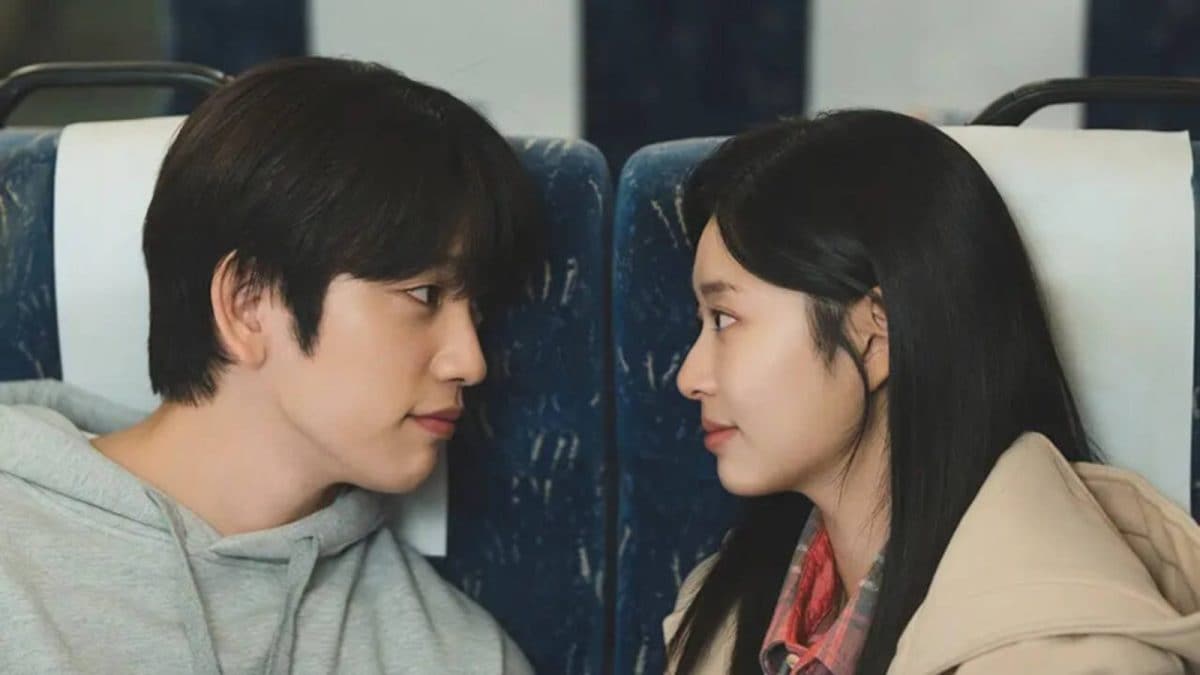
Despite the controversy, the series has not been taken down. It continues to stream on Netflix, where new viewers can still discover the tale of Yeon Tae‑Seo and Mo Eun‑Ah. The plot follows them as they navigate adult life, dealing with personal struggles, old wounds, and the process of healing together. For many fans, the core of the drama – the emotional connection and the theme of reconnection – remains compelling.
And for those who are still worried about the drunk‑driving bits, Netflix now has a brief note in the description panel that mentions the series contains scenes of “alcohol consumption and driving,” which acts as a subtle heads‑up for viewers who might be sensitive to that content.
All things considered, the drama stands as an example of how a piece of entertainment can spark broader discussions. Whether you’re a fan who loves the chemistry between Park Jinyoung and Kim Min‑ju, or a viewer who’s concerned about the messages being sent, the conversation is ongoing. It’s a reminder that media, even when it’s meant for pure entertainment, carries a weight that can influence real‑world attitudes – something both Korean and Indian creators seem to be taking more seriously these days.