Why the Bajau People Talk About No Borders
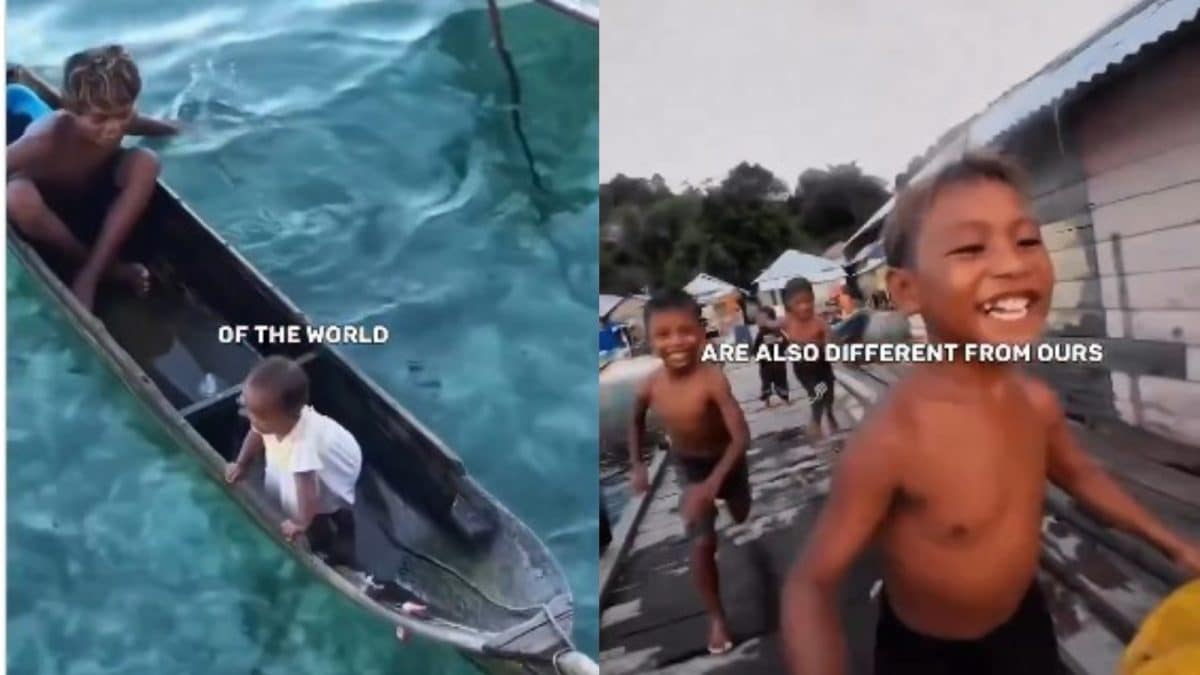
So, a short video that went viral on X (the platform formerly known as Twitter) brought the Bajau people back into the spotlight. The clip was titled something like “No Country, No Borders – Just Ocean,” and it instantly reminded me of those documentaries we watch on weekends, where the camera follows a group that lives completely apart from the usual idea of a nation‑state. The Bajau people are described as the world’s last true sea nomads, and the footage really captures how their lives are stitched together by water, not by lines on a map.
When I first saw the video, I thought of the backwaters of Kerala – we have houseboats, we have people who spend nights on the water – but even that feels far less permanent than the Bajau way of life. The Bajau people do not have a fixed address; they do not have a ‘home’ that lives on land. Instead, the ocean itself is like a giant, ever‑moving village. For them, the idea of being born on a boat is not a novelty; it’s the norm.
Growing Up on the Waves
Imagine waking up to the sound of waves gently rocking your sleeping area, the sunrise painting the sea amber and gold, and the next day you have to learn how to navigate a tiny wooden craft without any GPS. That is a typical morning for the Bajau people. From a very early age, the Bajau children are taught how to swim, how to read the wind, and most importantly, how to dive – and not just a little splash dive, but deep, breath‑holding dives that would make most of us gasp.
In most Indian coastal villages, children learn to swim before they learn to walk, but they still spend most of their time on land. The Bajau people, on the other hand, consider the sea as both playground and kitchen. Their diet is almost entirely fish, caught fresh from the waters that surround their floating homes. I can picture the scene: a group of Bajau children, sitting on a boat, waiting patiently as an experienced diver returns with a bag full of glimmering fish, the water still rippling around them.
What fascinates me is that the Bajau people have no strong attachment to either Indonesia or Malaysia. In conversations with some travelers who have visited the region, they often say the Bajau people see themselves as citizens of the sea, not of any particular country. This perspective is unbelievably different from the way we normally think about nationality – something that we teach in school from the first day.
Diving Without Gear – A Way of Survival
One of the most talked about facts about the Bajau people is that they can dive more than 30 metres without any equipment. Yes, you read that right – no scuba tanks, no fins, just the ability to hold their breath and move effortlessly. Some sources claim that Bajau divers pierce their eardrums when they are children, which supposedly helps them equalise pressure better. Whether that is true or just a myth passed down through generations, the result is the same: the Bajau people have an incredible breath‑holding capacity that many of us would consider superhuman.
When I tried my hand at breath‑holding during a beach holiday in Goa, I could barely manage 30 seconds before the urge to gasp hit me. The Bajau people, however, can stay underwater for minutes. There’s a documentary where a Bajau diver stayed submerged for over three minutes while catching fish, and I could still picture that scene – the diver’s eyes calm, moving slowly, as if the water were a familiar hallway.
The training starts early. A typical Bajau child's day might involve being tossed gently into the sea by an elder, then learning to float, then gradually staying underwater a little longer each time. It’s almost like learning to ride a bicycle; you wobble at first, then you get the hang of it, and within a few years you’re doing loops. The community says especially that the Bajau children's lungs become more efficient, and their spleens grow bigger, which helps recycle oxygen during long dives.
How Their Bodies Adapted to the Deep
Science has actually taken an interest in the Bajau people. Researchers have measured their spleen size and found that it is about 50% larger than that of other people living on land. This bigger spleen can release extra red blood cells when the body senses low oxygen – a perfect trick for someone diving deep without a tank.
Another fascinating adaptation is the way they see underwater. Most of us open our eyes under water and everything turns hazy, but the Bajau people have been observed to have clear vision even a few metres below the surface. Some scientists think that the lens in their eyes might be slightly flatter, reducing refraction, or that their corneas have a different curvature. The exact mechanism is still a mystery, but the fact remains – they can spot a fish swimming just a few metres away without any goggles.
From an Indian point of view, it reminds me of how some fishermen in Tamil Nadu have learned to read the surface ripples to locate schools of fish. But the Bajau people have taken that intuition to a whole new level – they literally become part of the water.
Modern Pressures and Changing Tides
The story of the Bajau people is not just a romantic picture of nomadic freedom. Like many traditional communities, they face new challenges that threaten their way of life. Overfishing, pollution, and the growth of tourism are making the waters less bountiful. In some parts, governments have started to push for formal citizenship, which comes with land‑based identity documents and fixed addresses. While that could bring benefits like better education and healthcare, it also means the Bajau people might have to give up their floating homes.
On the other hand, I have read about NGOs that work with the Bajau people to build better boat‑schools, where children can learn reading and writing while still sleeping on water. It’s an interesting compromise – keeping the nomadic lifestyle but adding a layer of modern education.
In India, we see a similar trend with the nomadic groups of Rajasthan or the tribal communities in the Andaman islands. There is always a tug‑of‑war between preserving culture and integrating into the broader economy. The Bajau people sit right at the centre of that debate, floating between tradition and the inevitable push of the modern world.
Personal Reflections – What the Bajau Teach Us
Watching the viral video, I felt a strange mix of awe and humility. The idea that a whole community can live without a “country” felt almost utopian. Yet, the Bajau people have shown that being attached to a piece of land is not the only way to belong. For many of us, especially those of us raised in bustling metros like Mumbai or Delhi, the notion of living on a boat is both exciting and slightly terrifying. I can’t help but imagine myself trying to navigate the morning chores – cooking breakfast on a moving platform, making sure the net is properly set for the day’s catch, and sleeping with the gentle sway of the sea as the lullaby.
When I think of the weekly market trips they make to small coastal towns, I realise how interconnected the Bajau people are with nearby land communities, even though they claim no national allegiance. They trade fish for rice, for fresh water, for small items that cannot be crafted on a boat. It’s a relationship built on mutual dependence, not on the lines drawn on a map.
One of my friends from a fishing village in Kerala once told me that the Bajau people remind us of our own ancestors who used to spend months at sea, only coming ashore when the monsoon changed. The sense of freedom, the reliance on nature’s rhythm – these are timeless human experiences.
Conclusion – A Tribe That Defies Borders
In most news cycles we get stories about conflicts, about policies, about economic numbers. Then, out of nowhere, a short video shows a community that lives entirely on water, unbound by any nation. The Bajau people, often called the world’s last sea nomads, continue to teach us that borders are a human construct, while the ocean is a shared, limitless home.
Whether it is their incredible physical adaptations, their deep cultural ties to the sea, or the modern challenges they face, the Bajau people remain a living reminder that human life can adapt to almost any environment. Their story, captured in that viral clip and now being discussed far beyond the shores of Indonesia and Malaysia, invites us to think about our own relationship with the places we call home.
And as we watch the waves roll over the tiny wooden boats, we might just feel a little bit of that endless horizon within ourselves – a reminder that sometimes, the best way to belong is to simply drift, without borders, with the ocean as our only country.
Israel Iran War News
Iran US Ceasefire