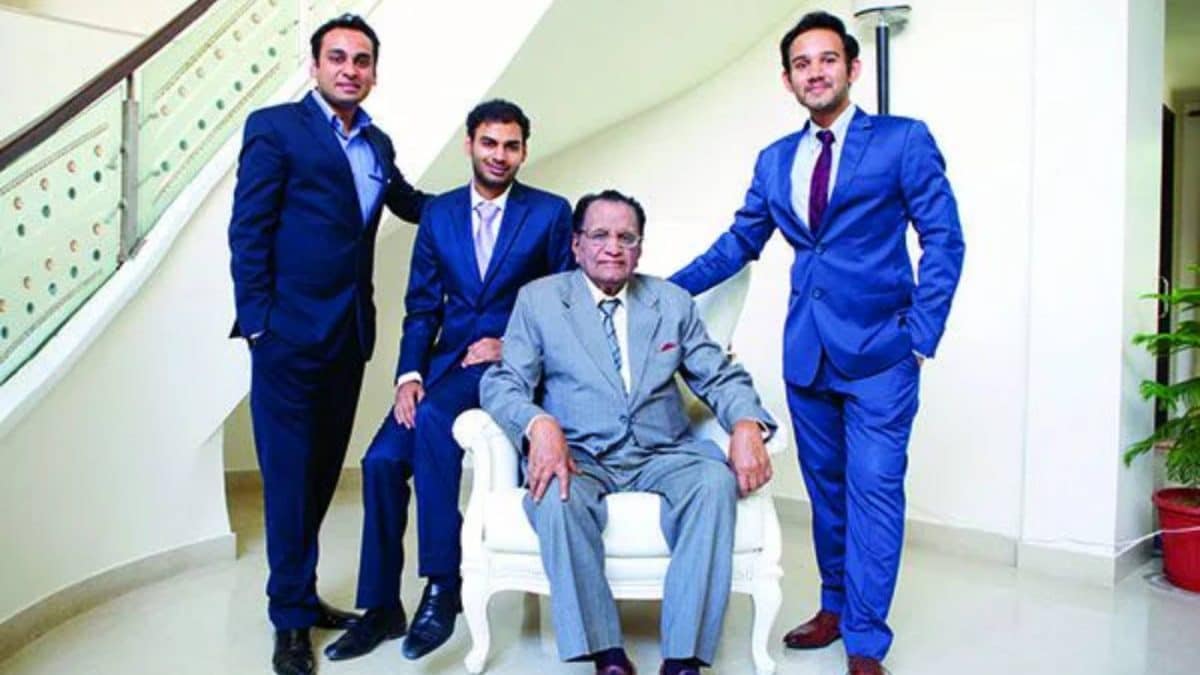
From selling policies to sowing tractors: a quick snapshot
Honestly, when I first heard about a 93‑year‑old man becoming a billionaire, I thought it was some kind of prank. But it’s true – Lachhman Das Mittal, who used to sit behind a small desk selling LIC policies, later started a tractor company that now ships machines to over 100 countries. It feels like a Bollywood plot, yet it’s real life. The upshot? Age really doesn’t lock you into a single story; you can rewrite it any time you want.
Early days – the insurance chapter
Mittal grew up in a modest Punjabi household where the idea of a big business was as distant as a holiday in the Himalayas. After finishing school, he took up a job with the Life Insurance Corporation – LIC – the big, government‑run insurer that most Indian families trust for their life cover. He started as an agent, knocking on doors in villages and small towns, showing people the benefits of a policy. The work was tough – early mornings, long drives, and convincing folk who were more used to planting rice than reading fine print.
In many ways, those years shaped his later success. He learned how to talk to people, how to understand their worries, and how to build trust – all skills that would later help him sell tractor ideas to farmers. I still remember my uncle, who was also an LIC agent, saying that you need patience like a farmer waiting for monsoon. Mittal took that to heart.
Retirement – not the end, just a pause
When Mittal turned about sixty‑something, the usual expectation was that he’d finally sit back, enjoy tea with his grandchildren, maybe do a little bhajans. Instead, he felt a restlessness. He’d spent decades helping families think about the future, and now he wanted to create something tangible with his own hands.
He started looking at the agricultural sector, because, let’s face it, farming is the backbone of India. He noticed that many small farmers were stuck with old, inefficient machines, or even worse – no machines at all. The result? Low productivity and endless backbreaking labour. He thought, “If I can bring a decent, affordable tractor to them, maybe I can make a real difference.” That spark was the seed for what would become Sonalika.
People around him were skeptical. A retired insurance guy? Starting a manufacturing unit? It seemed like a tall tale. Yet, Mittal had his own version of the saying – “when you have a fire in the belly, you find a way to keep it burning.”
Planting the Sonalika dream
In the early 80s, Mittal, together with a few trusted friends from his LIC days, decided to set up a small workshop in Hoshiarpur, Punjab. They started with a modest capital – just enough to buy a piece of land, a few machines, and hire a handful of workers. The first days were hard; they had to learn about engine design, metal casting, and a whole lot of technical jargon that didn’t come from selling insurance policies.
But here’s where his earlier experience helped. He approached the local farming community, listened to their pain points, and used that feedback to design a tractor that was robust yet affordable. He also negotiated with suppliers, leveraging the relationships he had built over decades of business. It reminded me of the time my neighbour, also a retired teacher, negotiated with local vendors for a better price on a water pump for his garden. That personal touch and negotiation skill made a huge difference.
The first Sonalika tractor rolled out modestly – a simple, 30‑horsepower machine, but it was sturdy and could handle the cracked fields of Punjab. Farmers started using it, and word spread quickly. In a country where “word‑of‑mouth” still means a lot, that was the beginning of a brand.
Growth – from a local workshop to a global player
Over the next two decades, Sonalika kept expanding. They added more models, ranging from low‑powered units for small farms to high‑powered tractors for bigger operations. The company also invested heavily in research & development, often sending engineers abroad to learn the latest technologies – a move that was quite forward‑thinking for an Indian firm at that time.
What’s interesting is that while many Indian manufacturers were still focused on domestic sales, Sonalika began looking at exports early on. They entered markets in Africa and South America, where the same need for affordable, reliable tractors existed. By the time Mittal was in his eighties, Sonalika was not just a name in Punjab, but a recognised brand in many developing nations.
All this growth translated into massive revenues – enough to push Mittal’s personal net worth into the billionaire club. Estimates place his wealth at several billions of dollars, making him the oldest billionaire in India. It’s wild to think that a man who once handed out life‑insurance brochures now owns a fortune that most of us can only dream of.
The billionaire milestone – a record broken at 93
When the financial magazines finally listed Mittal among the world’s billionaires, they highlighted his age – 93 – and the sheer surprise of his story. The headline read something like, “From LIC Agent to India’s Oldest Billionaire.” That note resonated with many, especially retirees who thought their best days were behind them.
Mittal himself, in a short interview, said something very simple: “I never believed there was an age limit for working. If you still have energy, keep going.” His humility was evident; he didn’t boast about his wealth, but rather talked about how many farms he could help, how many families could earn a better living.
It’s a reminder that wealth, in his view, is not just personal – it’s about impact. The factories he built also provided jobs for thousands, and the tractors he exported helped farmers in Africa increase harvests, which in turn boosted local economies.
What we can learn – a few take‑aways for everyday people
First, never underestimate the power of listening. Mittal’s early years of talking to families about life insurance taught him how to understand real needs. When he turned to tractors, he used the same listening skill.
Second, age is just a number. Whether you are 25 or 70, if you have an idea and the will to work on it, you can still make a mark. I recall my aunt, who started a boutique at 60, and she’s still running it successfully. The same principle applies.
Third, start small but think big. The first Sonalika unit was tiny, but the vision was global. This incremental approach is why many startups in India, especially in the tech space, begin in a garage and later become unicorns.
Lastly, give back. Mittal’s story isn’t just about riches; it’s about the tractors that helped a farmer in Gujarat or a smallholder in Kenya. Success feels sweeter when it lifts others.
Final thoughts – a story that still inspires
Every time I hear about Saga stories like Mittal’s, I’m reminded of the proverb “Uchaa kaale baadal bhi badalte hain” – even the sky changes colours. It tells us that life can surprise us at any stage. If a man who started his career selling life insurance can, after retirement, build a global tractor empire and become a billionaire at 93, then the possibilities are endless for all of us.
So, next time you feel it’s too late to chase a dream – remember Lachhman Das Mittal, his old LIC desk, and the first Sonalika tractor humming in a small workshop. That’s where inspiration lives – in the everyday, in the perseverance, and in the belief that we can always start something new, no matter the age.