From Kingmakers To The Margins? How Three Christian Votes Shaped Pakistan’s 1947 Borders
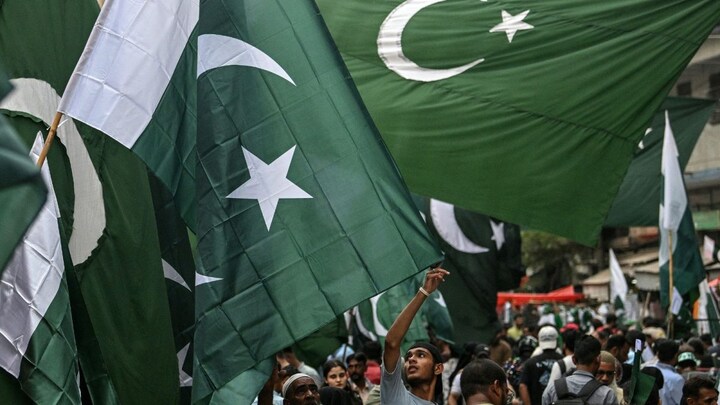
More than seven decades later, the condition of Christians in Pakistan starkly illustrates how far the promise of protection for religious minorities has fallen short.
The Pivotal Vote that Determined Lahore’s Destiny
History often hinges on the narrowest of margins. In the decisive moment when the Punjab Assembly confronted the question of whether the province would join a newly conceived state or remain within a different political entity, the balance of power rested on a single, razor‑thin tie. The assembly found itself deadlocked, with an equal number of delegates supporting accession to one side and the opposite side. The stalemate was broken when the Christian Speaker SP Singha exercised the casting vote in favour of the movement that would become Pakistan. The arrival of two additional Christian delegates, Fazal Elahi and Cecil Gibbon, shifted the tally further, turning the outcome into a clear majority for the Pakistan option.
This shift meant that Lahore, the historic capital founded by Maharaja Ranjit Singh, and the surrounding districts with Muslim majorities, were incorporated into Pakistan rather than remaining within the territory that would later become India. The vote of three Christian delegates—SP Singha, Fazal Elahi, and Cecil Gibbon—served as the fulcrum on which the eastern boundary of the new state turned.
Why the Christian Community Aligned with the Pakistan Vision
The Christian community of Punjab had, over preceding years, cultivated a pattern of support for the Muslim League. The appeal lay in the promise of a secular political order that seemed preferable to the entrenched caste structures perceived within the other major political formation. During the 1946 electoral campaign, Christian organisations raised slogans endorsing the idea of a separate Muslim homeland, welcomed visits from the founder of the Muslim League, Muhammad Ali Jinnah, and publicly opposed any division of Punjab that might diminish Christian influence.
Scholarly analysis by Taylor & Francis records that, although the All‑India Conference of Indian Christians initially opposed the partition, many Punjabi Christians chose a pragmatic path by aligning with Muhammad Ali Jinnah. The most compelling factor, according to contemporary accounts, was a guarantee of secularism. Muhammad Ali Jinnah assured the Christian community that, under a Pakistan built on secular principles, religious minorities would enjoy “all the rights” promised in foundational documents. This assurance fostered a belief that a Muslim‑led state would be better positioned to protect Christian interests than a Hindu‑dominated polity perceived as bound by caste hierarchies.
In addition to the promise of rights, the Christian community saw an opportunity to eliminate separate electorates—a system that had historically marginalized minority voices. By supporting the Pakistan proposal, Christian leaders hoped that their numbers would be counted alongside the Muslim majority in the upcoming boundary commission, thereby ensuring a fairer allocation of political representation for districts such as Lahore and Gurdaspur.
The Immediate Aftermath: Christian Participation in Nation‑Building
Following the successful vote, the newly formed state recognised the contribution of the Christian community. Early Pakistani policy granted Christians a prominent place in the social fabric, with representation in legislative bodies, educational institutions, and health‑care initiatives. The publication The Caravan notes that, in the first decades after independence, Christians played an active role in shaping the nation’s educational and medical infrastructure, often serving as teachers, doctors, and civil servants.
These early contributions created an expectation among the Christian community that the constitutional promise of equal citizenship would translate into tangible protection under law. The community envisioned a future where religious identity would not preclude full participation in civic life.
Contemporary Realities: From Political Agency to Legal Vulnerability
Fast forward to the present day, and the lived experience of the Christian community in Pakistan tells a markedly different story. Recent judicial decisions have exposed stark gaps between constitutional guarantees and actual protection for minorities. A high‑profile case involving a thirteen‑year‑old Christian girl, Maria Shahbaz, illustrates the depth of the problem. A Pakistani federal court ordered the return of Maria Shahbaz to a man accused of abducting her, despite compelling evidence indicating forced conversion to Islam and an underage marriage.
Legal scholars and human‑rights organisations argue that the ruling contravenes Pakistan’s own child‑protection statutes, which set the legal marriage age at eighteen. The decision has ignited a national conversation about the vulnerability of Christian and Hindu girls to forced conversions and marriages, and the capacity of the justice system to safeguard their rights.
Social media commentary from observers highlights the irony that the same three Christian delegates—SP Singha, Fazal Elahi, and Cecil Gibbon—whose votes once secured Lahore for Pakistan now serve as a reminder of how the community’s political leverage has eroded. The narrative has shifted from one of agency and influence to one of marginalisation and insecurity.
Persistent Challenges: Violence, Discrimination, and Institutional Barriers
Violence against Christians remains a recurring issue across the country. Reports of attacks on churches, desecration of Christian graves, and targeted intimidation of Christian professionals continue to surface. While the state has, at times, condemned such acts, the implementation of protective measures is often inconsistent.
Legal obstacles also persist. Blasphemy laws, though originally intended to protect all faiths, are frequently applied in ways that disproportionately affect Christians. The fear of false accusations creates a climate of self‑censorship, limiting the ability of Christians to exercise freedoms that were once promised at the time of the historic vote.
Economic marginalisation compounds these challenges. Christian families disproportionately occupy low‑income occupations, and barriers to higher education and professional advancement exacerbate cycles of poverty. The early promise of equal citizenship, underscored by the commitment of SP Singha, Fazal Elahi, and Cecil Gibbon, appears increasingly distant in the face of these entrenched systemic inequities.
Looking Forward: The Need for Renewed Commitment to Minority Rights
The stark contrast between the historic moment when three Christian votes determined the fate of Lahore and the contemporary struggles of the Christian community calls for urgent reflection. Legal reforms that align statutory provisions with constitutional guarantees are essential. Strengthening mechanisms that protect children from forced conversion and underage marriage would address one of the most pressing human‑rights concerns highlighted by the Maria Shahbaz case.
Beyond legislative change, societal attitudes must evolve. Educational curricula that accurately portray the contributions of the Christian community to the nation’s foundation could foster greater understanding and respect. Interfaith dialogue initiatives, supported by both civil society and governmental bodies, could serve as platforms to bridge divides and promote mutual tolerance.
In remembering the pivotal role of SP Singha, Fazal Elahi, and Cecil Gibbon, Pakistan has an opportunity to reaffirm the original vision of a secular state that protects all its citizens, irrespective of creed. The path from kingmakers to the margins need not be irreversible; it can become a catalyst for renewed commitment to the ideals of equality and justice.