Nasa shares inaugural Artemis II astronaut images of Earthrise and lunar solar eclipse
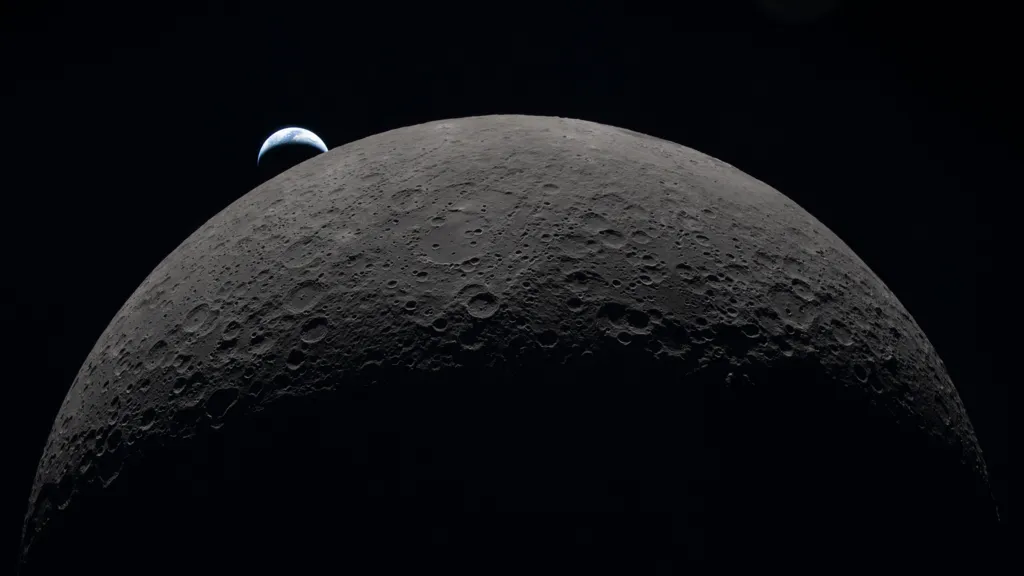
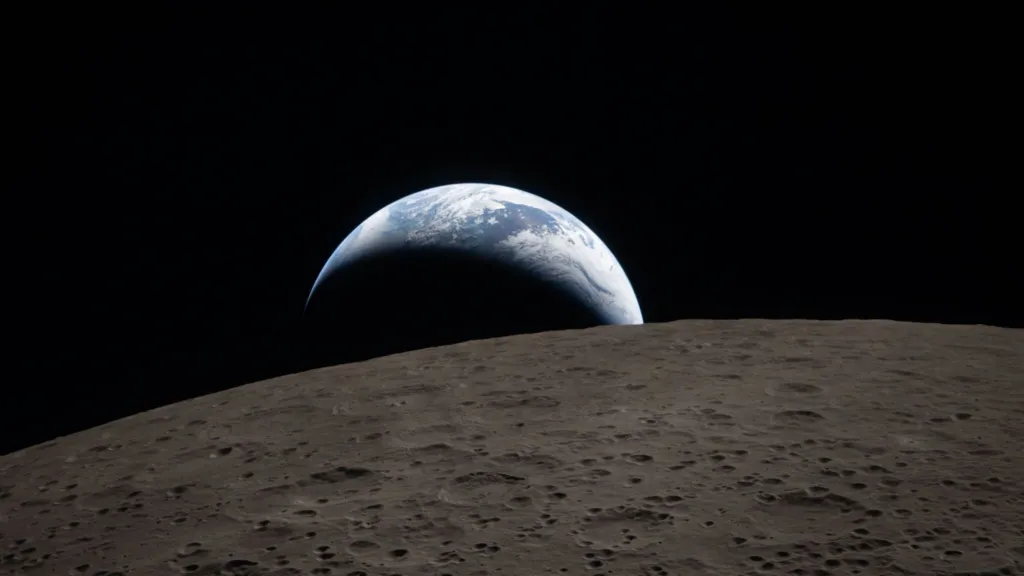
Artemis II astronauts captured an Earthrise over a cratered Moon landscape and a solar eclipse caused by the Moon obscuring the Sun, marking the first photographs released from the mission’s Moon fly‑by.
Background of the visual release
Nasa has made public the earliest visual documentation taken by Artemis II astronauts during the spacecraft’s passage around the Moon. The images constitute the first photographic evidence of the perspective that astronauts experienced while gliding past the lunar surface on the return leg to Earth. Nasa provided the two pictures without indicating which Artemis II astronaut operated the camera aboard the vehicle.
First image: Earthrise beyond a cratered Moon horizon
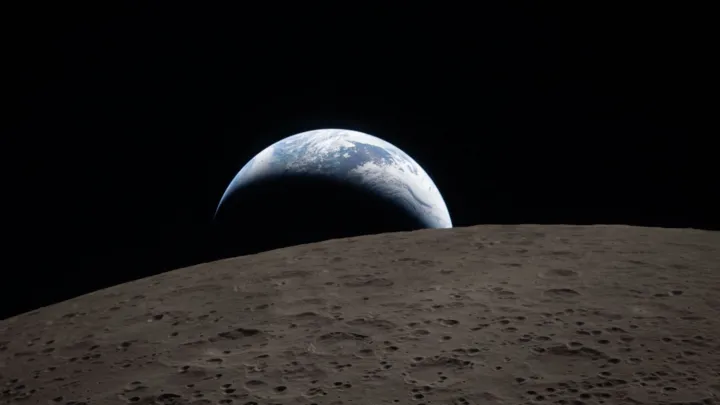
The initial photograph portrays Earth emerging over a stark, crater‑scarred Moon horizon. In the frame, the blue‑white marble of Earth appears as a luminous disk, its cloud formations softly illuminated against the dark backdrop of space. The lunar surface below displays a mosaic of impact craters, ridges, and shadows that testify to the rugged topography of the Moon. Light from the Sun reflects off the edge of Earth, creating a delicate halo that accentuates the sense of depth between the two celestial bodies.
Artemis II astronauts observed this striking view as the spacecraft traversed the region where the Moon’s far side begins to disappear from view. The perspective captured by the camera mirrors the iconic Earthrise photographs taken during earlier lunar missions, yet this rendition is distinctive because it is recorded from a modern crewed vehicle traveling at a different orbital altitude and speed. The composition underscores the juxtaposition of a thriving world and a barren satellite, reinforcing a visual reminder of humanity’s place within the solar system.
The image also conveys subtle details of the lunar environment. Fine dust, known as regolith, coats the crater rims, scattering faint light that adds texture to the otherwise stark scene. The curvature of the Moon is evident, hinting at the enormity of the body that dominates the foreground. The balance of light and darkness in the photograph creates a dramatic contrast that emphasizes both the fragility of Earth’s atmosphere and the timeless austerity of the Moon’s surface.
Across scientific and public audiences, this Earthrise photograph invites contemplation about the shared responsibility of stewardship for Earth, as it appears as a fragile oasis suspended above an ancient and immutable Moon. The visual record serves as a bridge between scientific observation and artistic inspiration, inviting viewers to reflect upon the planetary bond highlighted by the view.
Second image: Solar eclipse as the Moon eclipses the Sun
The second photograph presents a dramatic solar eclipse formed when the Moon interposes itself directly between the Sun and the spacecraft. Within the frame, the luminous rim of the Sun is only partially visible, casting a delicate, bright corona that outlines the silhouette of the Moon. This momentary alignment creates a striking visual effect, with the Sun’s intense glare softened by the Moon’s opaque disc.
Artemis II astronauts witnessed this celestial event while the spacecraft continued its trajectory past the Moon. The eclipse image captures the transition from full sunlight to a fleeting dimming, a phenomenon that illustrates the precise geometry of the Earth‑Moon‑Sun system. The contrast between the bright corona and the surrounding darkness emphasizes the intricate dance of orbital mechanics that governs such alignments.
From a technical standpoint, the photograph demonstrates the capability of modern imaging equipment aboard the Artemis II vehicle to capture high‑contrast scenes in the harsh environment of space. The camera’s exposure settings were evidently adjusted to accommodate the bright solar limb while preserving detail in the darker regions surrounding the eclipse. The resulting image retains crisp edges along the Moon’s profile, highlighting the rugged limb that defines the lunar silhouette.
Beyond its aesthetic appeal, the eclipse image reinforces the scientific value of in‑situ observations of solar phenomena from a perspective that differs from Earth‑based viewing. The view from the spacecraft provides a unique angle, allowing a clear line of sight unimpeded by Earth’s atmosphere. This viewpoint offers insight into solar corona structures and the interplay of solar radiation with the lunar environment, albeit within the constraints of a brief observational window.
Context of the photographs within the Artemis II mission
The two images released by Nasa originate from the brief interval when Artemis II astronauts performed a fly‑by of the Moon before commencing the return segment toward Earth. The mission marks a historic step in the broader Artemis program, which seeks to establish a sustainable human presence beyond low Earth orbit. Although the present release does not disclose which Artemis II astronaut operated the camera, the photographs stand as the inaugural visual record from the crew’s encounter with the Moon.
The Earthrise photograph underscores the emotional and scientific resonance of seeing Earth from a distance, a perspective historically associated with a profound shift in planetary consciousness. By viewing Earth as a solitary sphere suspended above a silent Moon, Artemis II astronauts experience a visual reminder of Earth’s fragility and unity. The solar eclipse image, meanwhile, showcases the precise orbital alignment that enabled the mission’s trajectory and serves as a testament to the meticulous planning that governs crewed deep‑space flights.
Both images contribute to the narrative of human exploration by documenting moments that combine natural wonder with engineered achievement. The Earthrise scene captures a planetary vista that has inspired generations, while the eclipse image reflects the convergence of celestial mechanics and modern spacecraft technology. Together, these photographs enrich the public’s understanding of the visual environment encountered by Artemis II astronauts during their historic journey.
Significance of the visual release for public engagement and scientific outreach
The publication of these photographs by Nasa serves multiple purposes. First, the images provide a tangible connection between the abstract concepts of space travel and the lived experience of astronauts who observed Earth and the Sun from an unprecedented vantage point. Second, the visual material supplies educators, communicators, and enthusiasts with authentic content that can be leveraged to illustrate the principles of orbital dynamics, planetary observation, and solar phenomena.
Through the Earthrise image, educators can discuss topics such as Earth’s atmosphere, cloud patterns, and the influence of sunlight on planetary climate. The photograph also invites contemplation of humanity’s shared future, encouraging discussions about environmental stewardship and the importance of preserving the blue planet that appears so delicate from space.
The solar eclipse image offers a platform to explore solar physics, the nature of the corona, and the reasons why eclipses occur. By presenting the eclipse from the spacecraft’s line of sight, learners can contrast Earth‑based eclipse observations with those obtained from outer space, highlighting the role of atmospheric scattering and the advantages of unobstructed extraterrestrial viewpoints.
Finally, the release underscores Nasa’s commitment to transparency and public participation in its exploration endeavors. By sharing unfiltered visual data, Nasa invites the global audience to partake in the awe and curiosity that accompany each step toward deeper space exploration.