Kerala Assembly Elections 2026 – Thripunithura Constituency: Principal Contenders, Electoral History and Crucial Factors
Overview of the Thripunithura Assembly Constituency
Thripunithura Assembly constituency occupies a prominent position within Ernakulam district of Kerala. Integrated into the Ernakulam Lok Sabha constituency, Thripunithura has traditionally served as a battleground for the two principal political coalitions in the state: the Congress‑led United Democratic Front and the CPI(M)‑led Left Democratic Front. Over recent election cycles, the constituency has experienced a pronounced transformation, evolving from a predominantly two‑party contest to a multi‑cornered race that now incorporates a substantial presence from the Bharatiya Janata Party under the National Democratic Alliance banner.
Principal Contenders for the 2026 Contest
The forthcoming election will feature a slate of candidates representing the major alliances as well as several independents and smaller regional parties. The candidates confirmed for the leading coalitions are as follows:
- Deepak Joy – nominated by the United Democratic Front, the Congress‑led coalition.
- K. N. Unnikrishnan – fielded by the Left Democratic Front, the CPI(M)‑led alliance.
- Anjali Nair – representing the Twenty20 party, which is aligned with the National Democratic Alliance and enjoys the backing of the Bharatiya Janata Party.
In addition to the three principal candidates, a number of independent aspirants and representatives of minor parties have entered the fray, contributing to a further fragmentation of the electorate and heightening the competitiveness of the contest.
Historical Shift Observed in the Most Recent Election
The most recent assembly election in Kerala marked a watershed moment for Thripunithura. K. Babu of the Indian National Congress secured victory with a total of 65,669 votes, translating to a vote share of approximately 40.38 percent. K. Babu outperformed M. Swaraj of the Communist Party of India (Marxist), who amassed 62,766 votes, representing roughly 38.59 percent of the total votes cast. The margin between the two leading candidates stood at 2,903 votes.
Although finishing third, Kummanam Rajasekharan of the Bharatiya Janata Party captured 45,206 votes, equivalent to a 27.79 percent vote share. This performance constituted the strongest showing for the Bharatiya Janata Party in Thripunithura to date, underscoring the party’s expanding influence in Kerala’s urban localities.
Five‑Election Overview: Winners and Vote Shares
The electoral trajectory of Thripunithura over the last five assembly elections reveals a pattern of fluctuating dominance among the principal parties:
- K. Babu (Indian National Congress) achieved a 40.38 percent vote share in the most recent election, defeating the CPI(M) contender in a narrowly contested race while the Bharatiya Janata Party emerged as a potent third force.
- M. Swaraj (Communist Party of India (Marxist)) secured victory in the election held five years prior, gathering 58,098 votes and a 39.64 percent vote share, thereby unseating K. Babu (Indian National Congress) who received 54,320 votes.
- K. Babu (Indian National Congress) reclaimed the seat in the election preceding that, obtaining 65,342 votes and a vote share close to 53 percent, establishing a margin of more than 12,000 votes over the CPI(M) rival.
- K. Babu (Indian National Congress) retained the constituency in the election held a decade earlier, amassing 58,952 votes and reinforcing Congress’s longstanding foothold.
- K. Babu (Indian National Congress) first captured the seat in the election at the start of the decade, collecting 59,248 votes and cementing a dominance that persisted for over ten years.
Evolution of Voting Patterns and Political Dynamics
For an extended period, Thripunithura was regarded as a stronghold of the Indian National Congress, a perception primarily driven by the repeated successes of K. Babu. The victory of M. Swaraj (Communist Party of India (Marxist)) in the election that followed disrupted this paradigm, signifying a breakthrough for the Left Democratic Front in a constituency that had been reliably aligned with Congress.
The subsequent surge of the Bharatiya Janata Party, as demonstrated by the vote tally secured by Kummanam Rajasekharan, introduced a new dimension to the electoral landscape. The emergence of a formidable third party has transformed Thripunithura into a triangular contest, wherein vote shares are now divided among the United Democratic Front, the Left Democratic Front and the National Democratic Alliance.
This three‑way rivalry has compelled each coalition to recalibrate its campaign strategies, placing heightened emphasis on localized issues, community outreach and the mobilization of specific voter segments that were previously taken for granted.
Demographic Profile of Thripunithura
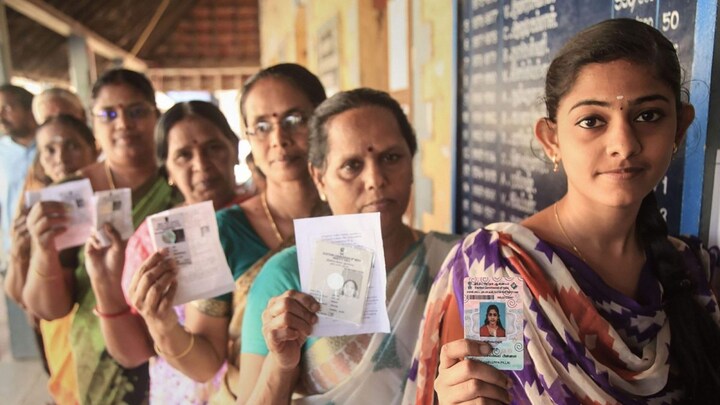
The electorate of Thripunithura is characterized by a diverse mix of urban middle‑class families, business owners, professionals and a considerable proportion of the Malayali diaspora that maintains strong ties to the region. The constituency encompasses several densely populated wards, cultural landmarks and commercial hubs that collectively shape the priorities of the voting public.
Key demographic indicators include a relatively high literacy rate, a notable presence of young voters, and religious communities that have historically exhibited varying political leanings. These factors collectively influence the policy preferences that candidates must address, ranging from infrastructure development and urban planning to employment generation and cultural preservation.
Given the urban complexion of Thripunithura, issues such as traffic congestion, public transportation efficiency, waste management and the availability of quality educational institutions often dominate the public discourse during election cycles. Candidates who articulate concrete solutions to these challenges tend to resonate more effectively with the electorate.
Strategic Considerations for the Major Contenders
Each of the principal candidates entering the 2026 contest must navigate distinct strategic imperatives to maximize voter appeal:
- Deepak Joy (United Democratic Front) must rebuild the momentum generated by the Indian National Congress in earlier elections while countering the inroads made by the Left Democratic Front and the National Democratic Alliance.
- K. N. Unnikrishnan (Left Democratic Front) faces the task of consolidating the support base that propelled M. Swaraj to victory in the past, particularly among workers, trade unions and sections of the electorate that are receptive to left‑leaning policies.
- Anjali Nair (Twenty20, National Democratic Alliance) is positioned to capitalize on the growing urban appeal of the Bharatiya Janata Party, emphasizing development‑focused narratives and leveraging the organizational strength of the NDA.
All three candidates must also address the concerns of independent voters and those aligned with smaller parties, whose support could prove decisive in a closely fought race.
Potential Impact of Independent and Smaller Party Candidates
Beyond the three marquee contestants, Thripunithura’s ballot includes a spectrum of independent aspirants and representatives of minor regional parties. Although historically these candidates have received modest vote shares, their presence can exert a critical influence by siphoning votes from the major alliances, especially in a scenario where the contest is tightly balanced.
The ability of these candidates to highlight hyper‑local issues—such as neighborhood sanitation, small‑scale business support and cultural festival funding—may attract voters who feel underserved by the larger parties. Consequently, the major contenders are likely to engage in targeted outreach to mitigate any adverse impact stemming from vote fragmentation.
Key Issues Likely to Shape Voter Behaviour
Several thematic areas are poised to dominate the electoral conversation in Thripunithura:
- Urban Infrastructure: Roads, public transit, drainage systems and the maintenance of public spaces are recurring concerns for residents who navigate the constituency’s bustling streets daily.
- Employment Opportunities: The presence of a sizable youth demographic amplifies the demand for job creation initiatives, skill development programmes and support for entrepreneurship.
- Education and Healthcare: Quality of schools, colleges and medical facilities remain paramount for families seeking long‑term stability.
- Environmental Sustainability: Given the proximity of water bodies and heritage sites, voters are increasingly attentive to policies that safeguard ecological balance and cultural heritage.
- Social Welfare: Welfare schemes targeting senior citizens, marginalized communities and low‑income households continue to influence voting preferences.
Effective articulation of concrete plans within these domains will likely be a determinant of electoral success for each candidate.
Conclusion: Anticipated Dynamics for the 2026 Election
Thripunithura stands at a crossroads where historical allegiances intersect with emerging political forces. The convergence of the United Democratic Front’s legacy, the Left Democratic Front’s ideological appeal and the National Democratic Alliance’s development‑centric narrative has cultivated a highly competitive environment.
Voter decisions in the upcoming election will be shaped not only by the individual charisma and track records of Deepak Joy, K. N. Unnikrishnan and Anjali Nair, but also by the ability of each campaign to address the nuanced concerns of an urban electorate that values pragmatic solutions and inclusive growth.
As the electoral calendar progresses, close monitoring of voter sentiment, grassroots mobilization efforts and the performance of independent candidates will be essential for forecasting the final outcome in Thripunithura.