Thousands Form Human Shields Across Iran's Power Plants, Bridges As Donald Trump’s Strike Deadline Nears
Donald Trump warned of attacks on Iranian infrastructure if Tehran does not meet his demands, prompting Iranian youth to assemble human chains around power plants and bridges.
Donald Trump’s Ultimatum on Iranian Infrastructure
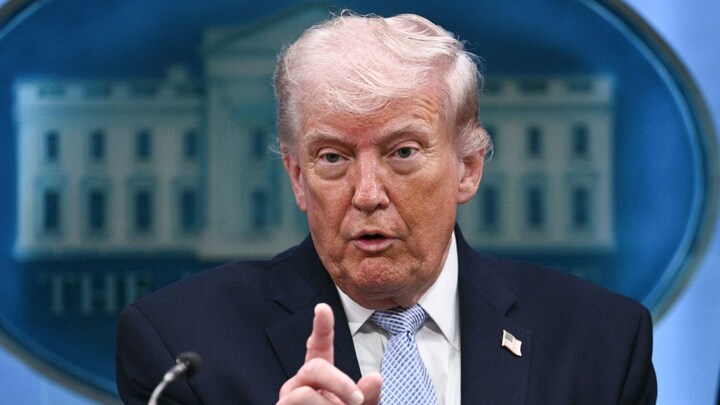
Donald Trump issued a stark warning that the United States could launch strikes against key Iranian infrastructure, specifically targeting bridges and power plants, should Tehran refuse to comply with a set of demands aimed at ending ongoing hostilities. The warning emphasized that any refusal would trigger direct action against assets vital for the functioning of Iran’s national grid and transportation network.
The declaration was framed as a leverage point designed to compel Tehran to reopen a critical maritime passage and aGree to a broader diplomatic settlement. Donald Trump’s message underscored a belief that pressure on critical civil infrastructure would force a rapid response from Iran’s leadership.
Visual Evidence from Press TV
Press TV, the state‑controlled broadcaster of Iran, released footage that showed extensive crowds of Iranian civilians gathered outside both power plants and bridges. The visual record displayed long lines of individuals holding national flags, forming what appeared to be a protective human barrier around the facilities that Donald Trump had identified as potential targets.
The camera work highlighted the scale of participation, with thousands of people arranging themselves in continuous rows, interlocking arms, and maintaining a visible presence aimed at deterring any prospective aerial or ground assault. The footage served a dual purpose: it documented the mass mobilization of civilians and communicated a clear political message of defiance against any foreign aggression.
Origin of the Human Chain Initiative
According to Rahimi, a senior official responsible for coordinating the civilian response, the concept of forming a human protective ring originated from within the youth sector of Iran. Rahimi explained that a group of university students, emerging artists, and youth‑driven organizations collectively proposed the strategy of establishing a human chain surrounding Iran’s power plants.
Rahimi stated, “A number of university youth, young artists, and youth organisations proposed that we form a human ring or human chain around the country’s power plants.” The statement reflected an intention to showcase a unified front, emphasizing the determination of the younger generation to safeguard critical national infrastructure.
The campaign received the official title “Human Chain of Iran’s Youth for a Bright Future.” The phrasing of the title was designed to highlight optimism, national pride, and a forward‑looking vision that contrasted the threat of external military pressure.
Throughout the campaign, participants held signs bearing messages of peace, unity, and resilience. The presence of flags — both the national flag of Iran and symbols representing various youth groups — reinforced the notion that the movement was both patriotic and inclusive.
Donald Trump’s Reiteration of the Threat
Following the initial warning, Donald Trump reiterated the severity of the situation in a subsequent public statement. Donald Trump warned that “a whole civilisation will die tonight” if Iran failed to comply with the demand to reopen a strategic maritime corridor and to accept a negotiated settlement.
Donald Trump shared the warning on the social‑media platform Truth Social, using emphatic language that framed the impending deadline as a decisive moment in global history. The post read in full: “A whole civilization will die tonight, never to be brought back again. I don’t want that to happen, but it probably will. However, now that we have Complete and Total Regime Change, where different, smarter, and less radicalized minds prevail, maybe something revolutionarily wonderful can happen, WHO KNOWS? We will find out tonight, one of the most important moments in the long and complex history of the World. 47 years of extortion, corruption, and death, will finally end. God Bless the Great People of Iran!”
The language employed by Donald Trump combined apocalyptic imagery with a sense of anticipated transformation. The reference to “Complete and Total Regime Change” was presented as a justification for the heightened pressure, suggesting that a shift in governance would alter the calculus of regional stability.
Interpretation of the Human Shield Strategy
The decision to form a human shield around power plants and bridges can be understood as a tactical response rooted in both symbolic and practical considerations. Symbolically, the act of thousands of civilians physically encircling critical infrastructure sends a powerful message of collective ownership and protection of national assets. Practically, the presence of a dense civilian population complicates any potential military operation, as the prospect of civilian casualties would generate international condemnation and could undermine the legitimacy of any strike.
Analysts note that the use of civilian human chains has historical precedents in various conflicts, where non‑combatants gather to deter aggression. In the context of Iran, the human chain was presented as a peaceful, non‑violent form of resistance, deliberately designed to avoid escalation while still conveying a resolute stance.
Rahimi emphasized that the initiative was voluntarily undertaken, without coercion from any governmental body, reinforcing the narrative that ordinary citizens were willing to risk personal safety for the broader cause of national sovereignty.
Implications for Regional Stability
The interplay between Donald Trump’s threat and the Iranian youth’s human shield campaign introduces a complex dynamic into the broader geopolitical landscape. On the one hand, Donald Trump’s warning signals a willingness to employ direct military action against infrastructure that is essential for civilian life. On the other hand, the mass mobilization of Iranian civilians demonstrates a domestic resolve that could deter external actors from proceeding with an attack that would inevitably result in widespread civilian harm.
Observers caution that any escalation could have cascading effects on neighboring nations, trade routes, and energy markets. The strategic importance of the maritime corridor mentioned by Donald Trump, coupled with the centrality of power plants to Iran’s electricity supply, underscores the potential for significant disruption should a strike be executed.
Furthermore, the rhetoric used by Donald Trump — framing the deadline as a “most important moment in the long and complex history of the World” — elevates the situation from a regional dispute to a global moral test, thereby attracting heightened international scrutiny.
Public Sentiment and International Reaction
Within Iran, public sentiment appears to be polarized. Many participants in the human chain expressed confidence that their collective presence would protect the targeted sites, while others voiced concerns over the possibility of violence. The imagery broadcast by Press TV highlighted a narrative of unity, yet commentary on social platforms revealed a spectrum of opinions, ranging from staunch support for the protective effort to anxiety about potential retaliation.
Internationally, human‑rights organizations have called for restraint on all sides, urging Donald Trump and the United States to consider the humanitarian impact of any strike on civilian infrastructure. These entities have reiterated that attacks on utilities and transport links contravene established norms of armed conflict and could constitute violations of international law.
Diplomatic channels have reportedly been activated by several governments seeking to mediate the escalating tension. The emphasis placed on a “bright future” by the Iranian youth campaign reflects an appeal to the global community to prioritize peaceful resolution over military intimidation.
Conclusion
The standoff between Donald Trump’s ultimatum and the Iranian public’s human shield effort encapsulates a high‑stakes confrontation that intertwines military threat, civilian resistance, and diplomatic maneuvering. While Donald Trump continues to assert that failure to meet the stated demands will result in decisive action, the mass mobilization of Iranian youth under the banner of the Human Chain of Iran’s Youth for a Bright Future underscores a determined civilian resolve to protect essential infrastructure at all costs.
As the deadline approaches, the world watches to see whether diplomatic engagement will prevail, whether the human shield will succeed in its protective aim, or whether the threatened strikes will materialize, potentially reshaping the political and humanitarian landscape of the region.