White House Rejects Nuclear Option Against Iran After Donald Trump’s “Civilisation Will Die” Warning
Official Position on Nuclear Use
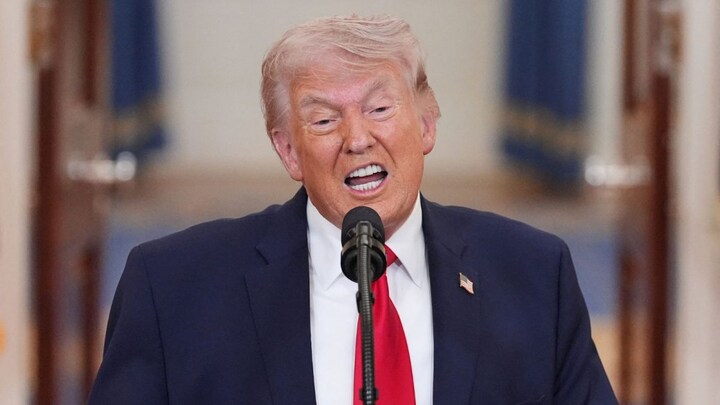
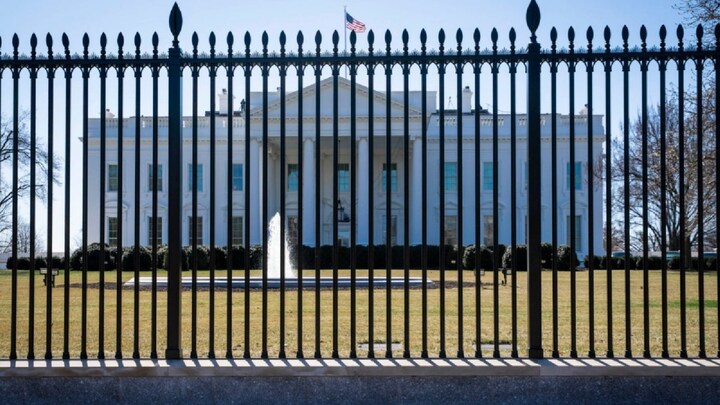
The White House has issued a clear and unequivocal statement that nuclear weapons will not be employed against Iran. This declaration comes at a moment when Donald Trump has issued an alarming warning that Iran’s entire civilisation could be extinguished tonight if a deadline for progress on peace talks is not met.
Donald Trump’s warning, delivered in a public forum, specifically mentioned that failure to meet a stipulated deadline would trigger catastrophic consequences for Iran. The warning has reverberated across diplomatic circles, prompting immediate concerns about the possible trajectory of U.S. policy in the region.
Amid the heightened rhetoric, the White House responded swiftly on the social media platform X, stating that no implication of nuclear weapon usage has ever been made by any member of the administration. The response emphasized that references to “tools” in the national security toolkit do not include nuclear options, and that any suggestion to the contrary is inaccurate.
Comments from JD Vance on National Security Tools
JD Vance, a senior official in the United States government, recently remarked that the United States possesses a range of options that have not yet been employed in the context of Iranian actions that JD Vance described as “economic terrorism.” JD Vance stressed that the President holds the authority to deploy any of these tools should Tehran continue on a path deemed unacceptable.
JD Vance’s remarks were interpreted by some observers as a possible reference to extreme measures, which prompted the White House to issue a clarification. In the clarification, the White House reiterated that the term “tools” was never intended to imply nuclear weapons and that no such option is being contemplated.
Uncertainty Surrounding the Diplomatic Deadline
As the deadline approaches, uncertainty looms over whether Washington and Tehran will be able to reach a mutually acceptable understanding. The Wall Street Journal reported that negotiators on both sides are increasingly doubtful that Iran will consent to reopen the Strait of Hormuz before the deadline expires.
Parallel to the talks, diplomatic actors in Pakistan are reportedly working to construct a peace proposal intended to break the deadlock. Pakistani officials have been described as engaging in last‑minute diplomatic initiatives aimed at forging a framework acceptable to both Washington and Tehran.
Sources cited by Gree warned that any military retaliation by Saudi Arabia could jeopardise the fragile negotiations. Such a scenario could potentially draw Pakistan into direct involvement because of existing defence commitments between Pakistan and Riyadh.
Compounding the diplomatic impasse, Iran’s state‑run outlet Tehran Times declared that diplomatic and indirect channels with the United States remain closed. Tehran Times asserted that no functional avenue for dialogue exists at this time, despite the heightened public rhetoric.
Potential Regional Fallout
The prospect of a breakdown in negotiations carries significant implications for the stability of West Asia. The Strait of Hormuz, a critical chokepoint for global energy shipments, could become a flashpoint if Iran chooses to maintain a closure or limited access stance. Any disruption to shipping through the strait would have ripple effects on international markets and could trigger a wider security crisis.
Saudi Arabia’s potential military response, as highlighted by Gree sources, introduces an additional variable that could expand the conflict beyond the bilateral United States‑Iran arena. Saudi Arabia’s strategic partnership with the United States and its own regional ambitions mean that any escalation could quickly involve multiple state actors.
Pakistan’s defence commitments with Riyadh add a layer of complexity to the diplomatic calculus. Should Saudi Arabia pursue military action, Pakistan could face pressure to align its response with Riyadh’s objectives, thereby widening the scope of any confrontation.
White House’s Strategic Messaging
The White House’s decision to emphatically reject the nuclear option appears intended to reassure both domestic and international audiences that the United States remains committed to conventional diplomatic and security approaches. By distancing itself from nuclear rhetoric, the White House aims to prevent the escalation of fear that could otherwise destabilise already fragile alliances.
In the public statement posted on X, the White House specifically repudiated any implication that the United States would consider nuclear weapons in response to Iranian actions. The wording of the statement underscores a clear policy line: nuclear weapons are not part of the current strategic toolkit for dealing with Iran.
The White House’s messaging also serves to counteract speculation generated by JD Vance’s comments. By clarifying that “tools” do not reference nuclear weapons, the administration seeks to narrow the interpretive gap that could otherwise fuel further rhetorical escalation.
Analysis of Donald Trump’s Warning
Donald Trump’s stark warning that Iran’s “whole civilisation will die tonight” carries a dramatic tone that diverges from typical diplomatic language. The language suggests an imminent and total collapse, a scenario that raises alarm among international observers.
By framing the deadline in such apocalyptic terms, Donald Trump appears to be exerting pressure on Tehran to make rapid concessions. The warning also serves a domestic political purpose, demonstrating a hard‑line stance that may resonate with certain constituencies.
However, the warning has been met with skepticism from diplomatic experts who argue that such hyperbole risks undermining the credibility of United States negotiations. The warning’s impact on Iranian decision‑making processes remains uncertain, especially in light of Tehran Times’ declaration that diplomatic channels are closed.
Implications for Future Negotiations
The current impasse underscores the difficulty of achieving a durable diplomatic solution in a region marked by deep‑seated mistrust. The refusal by the White House to consider nuclear options may limit the leverage that the United States can exert, but it also preserves a baseline of strategic stability.
Future negotiations will likely need to address the underlying concerns that have fueled accusations of “economic terrorism” and the broader geopolitical contest for influence in West Asia. Any successful framework must incorporate assurances that satisfy both Washington’s security objectives and Tehran’s regional aspirations.
Stakeholders such as Pakistan, Saudi Arabia, and other regional actors will continue to play pivotal roles, either as mediators or as participants in any escalatory scenario. Their involvement will shape the trajectory of diplomatic efforts and the potential for a peaceful resolution.