Has Artemis II shown we can again land on the Moon?
Artemis II’s near‑flawless test flight demonstrates progress, but does it prove NASA is ready for a lunar landing?
Overview of Artemis II performance so far
NASA’s Artemis II mission has passed every major test since launch, with the Space Launch System, the Orion capsule and the four crew members performing beyond the expectations of engineers.
The first six days of the flight have demonstrated that the Orion capsule operates as designed while humans are on board – a condition that no ground‑based simulator could ever reproduce.
Perhaps the most significant achievement, however, stems from the actions of the Artemis II crew members Reid Wiseman, Victor Glover, Christina Koch and Jeremy Hansen, whose presence in space has generated a renewed sense of hope, agency and optimism for a world in need of inspiration.
The lingering question remains: is a Moon landing by the target year truly attainable after the results of Artemis II?
Key lessons learned from Artemis II
A few days after the Space Launch System arrived at the launch pad at Kennedy Space Center, the most important lesson about Artemis II had already been learned.
Following two scrubbed launches in February and March because of separate technical issues, NASA Administrator Jared Isaacman warned that “launching a rocket as important and as complex as the Space Launch System every three years is not a path to success.”
The previous uncrewed Artemis I mission had lifted off in the earlier launch window.
Jared Isaacman emphasized that NASA must stop treating each Space Launch System rocket “like a work of art” and begin launching with the frequency required for a serious, sustainable program.
That declaration effectively signaled that repeating the same lessons every three years could no longer be tolerated.
When judged against that ambition, Artemis II has delivered more than even the most optimistic observers dared to hope for during the six days since Reid Wiseman, Victor Glover, Christina Koch and Jeremy Hansen lifted off.
The short answer: Artemis II has exceeded expectations in virtually every measurable way.
The Space Launch System delivers the required performance
The Space Launch System generated 8.8 million pounds of thrust at liftoff and, by every engineering metric, performed exactly as planned. Each phase of ascent – maximum dynamic pressure, main engine cut‑off and booster separation – was reported by mission control as “nominal.”
Two of the three planned trajectory correction maneuvers on the way to the Moon were cancelled because the flight path was already so accurate that the corrections were unnecessary. Dr Simeon Barber, space scientist at the Open University, summed the achievement up succinctly: “Credit to the team – they got it right the first time.”
Approximately 36 hours after launch, Orion executed the critical translunar injection burn, firing its main engine for five minutes and fifty‑five seconds. The burn placed the Orion capsule on a looping trajectory toward the Moon that required no further major maneuvers.
Dr Lori Glaze, head of the Artemis programme, described the translunar injection burn as “flawless.”
Human interaction with Orion
The official purpose of Artemis II is to put people inside Orion and discover what happens when humans interact with a deep‑space vehicle. The outcomes observed so far align precisely with mission expectations and illustrate phenomena that could not have been captured in a simulator.
Minor issues have surfaced during the flight. A toilet‑related problem required a temporary workaround. A water dispenser malfunction forced the crew to bag water as a precaution. A brief loss of redundancy in one of the helium systems was reported at an early press conference and subsequently resolved without impact on mission safety.
Dr Simeon Barber highlighted the significance of these occurrences: “This is all about putting humans in the loop – these humans who press buttons, exhale carbon dioxide, desire temperature control and need to use the toilet. It is about how the system works with those humans on board.”
Engineers monitoring Orion’s carbon‑dioxide removal system through back‑to‑back exercise sessions, as well as tests that deliberately disabled certain thrusters, are building a compelling case that Orion is safe enough to carry astronauts to the lunar surface.
Dr Simeon Barber’s overall assessment was blunt: “Orion itself seems to have worked pretty well, actually – certainly all the propulsion stuff, which is the real critical stuff.”
Scientific observations versus public perception
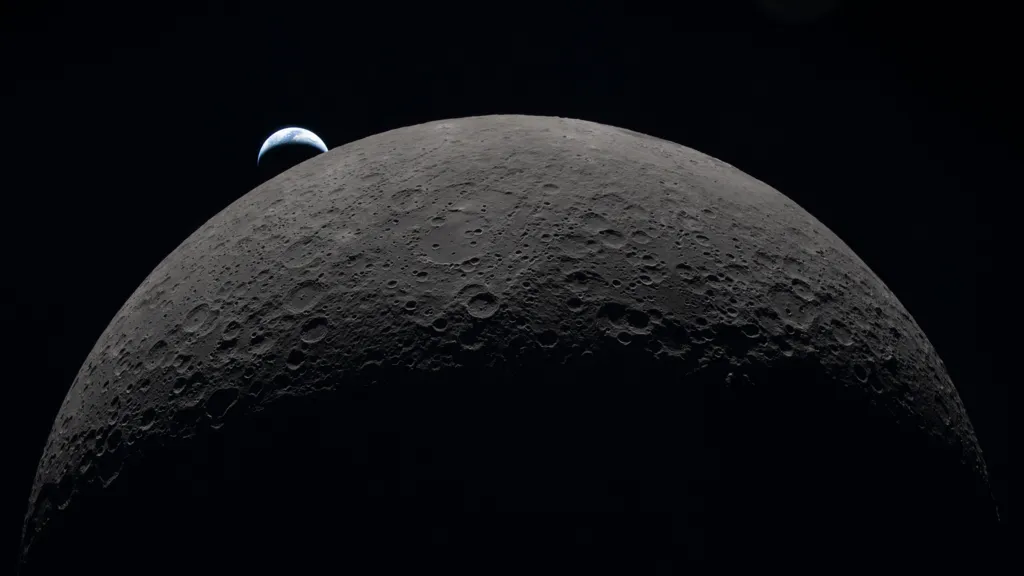
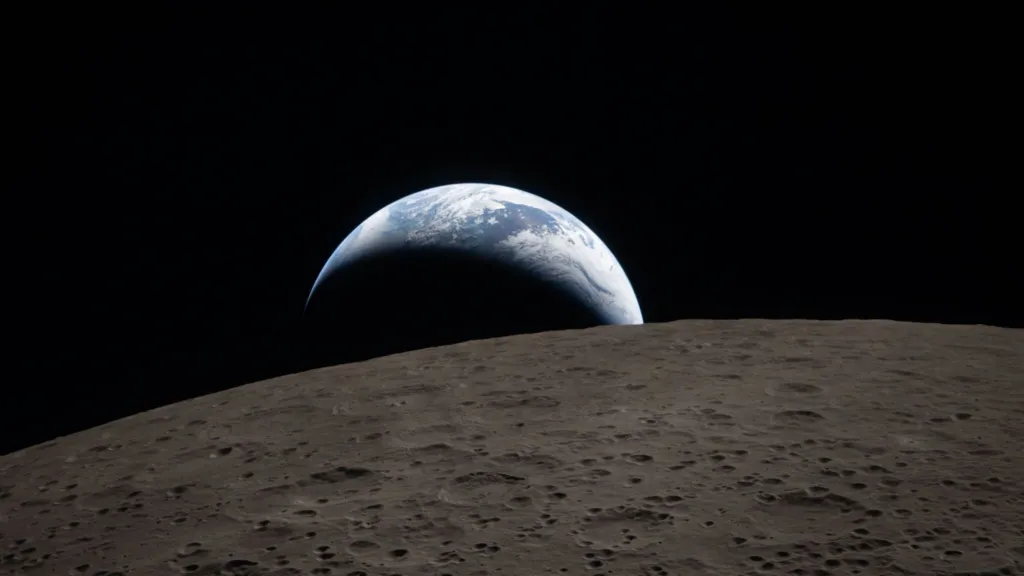
NASA has emphasized the scientific value of the Artemis II flyby. The crew recorded observations of roughly 35 geological features in real time, noted colour variations that could hint at mineral composition, and witnessed a solar eclipse from deep space – an experience that Victor Glover described as “just looks unreal.”
One image that captured particular attention was the Orientale basin, a 600‑mile crater on the Moon’s far side, observed in full for the first time by human eyes.
Professor Chris Lintott of Oxford, co‑host of “The Sky at Night,” offered a more measured view: “The artistic value of the images returned from Artemis and its crew is significant, but their scientific value is limited.”
Recent robotic missions – India’s Chandrayaan‑3 landing near the lunar south pole in 2023 and China’s Chang’e‑6 sample‑return mission from the far side in 2024 – have already mapped the terrain in extraordinary detail.
The most affecting moment of the Artemis II flight did not arise from an instrument but from an unscripted human exchange. As the crew eclipsed the distance record set by the ill‑fated Apollo 13 mission in 1970, Mission Specialist Jeremy Hansen called down to Mission Control in Houston.
Jeremy Hansen identified a bright spot on the nearside‑farside boundary, describing it as “a crater on the nearside‑farside boundary – a bright spot to the northwest of Glushko crater.”
“We lost a loved one,” Jeremy Hansen said, his voice thickening. “Her name was Carroll – the spouse of Reid Wiseman, the mother of Katie and Ellie. And we would like to call it Carroll.” A pause of forty‑five seconds followed. Reid Wiseman began to weep. The four crew members embraced. Back on Earth, Reid Wiseman’s daughters were watching from Houston.
This moment matters beyond sentiment. Space programs that cannot evoke genuine, unscripted human emotion tend not to endure. The cultural endurance of the Apollo programme stems not only from its engineering feats but also from the human stories it told about reach and courage. In that regard, Artemis II has made a comparable claim.
The forthcoming re‑entry challenge
The Artemis II mission is not yet complete. Orion is on a trajectory to splash down in the Pacific Ocean near San Diego on the scheduled recovery day.
The crucial remaining test will be re‑entry into Earth’s atmosphere – a phase that generated significant concern after Artemis I when unexpected heat‑shield damage prompted an extended investigation and delayed the subsequent flight by more than a year.
Orion will encounter the atmosphere at roughly 25,000 mph (40,000 km/h). No simulator can faithfully reproduce the stresses of that high‑velocity entry, and the outcome will define Artemis II’s legacy more decisively than any photograph of the Moon’s far side.
If the re‑entry proceeds without incident, the overall picture that emerges from Artemis II will be genuinely encouraging. The Space Launch System worked. Orion worked. The four crew members handled the systems with competence and composure. NASA has articulated a credible pathway to build on this success rather than waiting three years to start again.
While a Moon landing by the target year remains an ambitious stretch, Dr Simeon Barber suggests the timeframe is more realistically three to four years away – a judgment that is difficult to dispute.
The smooth execution of Artemis II from launch through lunar flyby has shifted the probability in the right direction. The question now is no longer whether Orion can fly; the question is whether the landers, the launch cadence, and the political will can keep pace. Orion, at least, has fulfilled its part.
Broader significance and future outlook
Artemis II is both a story of inspiration and a story of scientific endeavor. The events of the flight echo the spirit of the Apollo programme. During a period when global optimism is thin, reminiscent of the social turbulence of the 1960s, Artemis II offered a moment for humanity to remember that we share a single, fragile home – a view of the Earth that unites us.
This flight is not the end of the narrative; it is a critical test that paves the way for an eventual Moon landing – not a solitary landing, but a series of sustainable presences on the lunar surface.
In summary, Artemis II has demonstrated that the Space Launch System can deliver the required thrust, that Orion can safely transport humans through deep‑space conditions, and that the crew’s human experience adds a dimension of meaning that pure engineering cannot provide. The forthcoming re‑entry will be the final validation, after which NASA can proceed with greater confidence toward the long‑term goal of returning humans to the Moon.