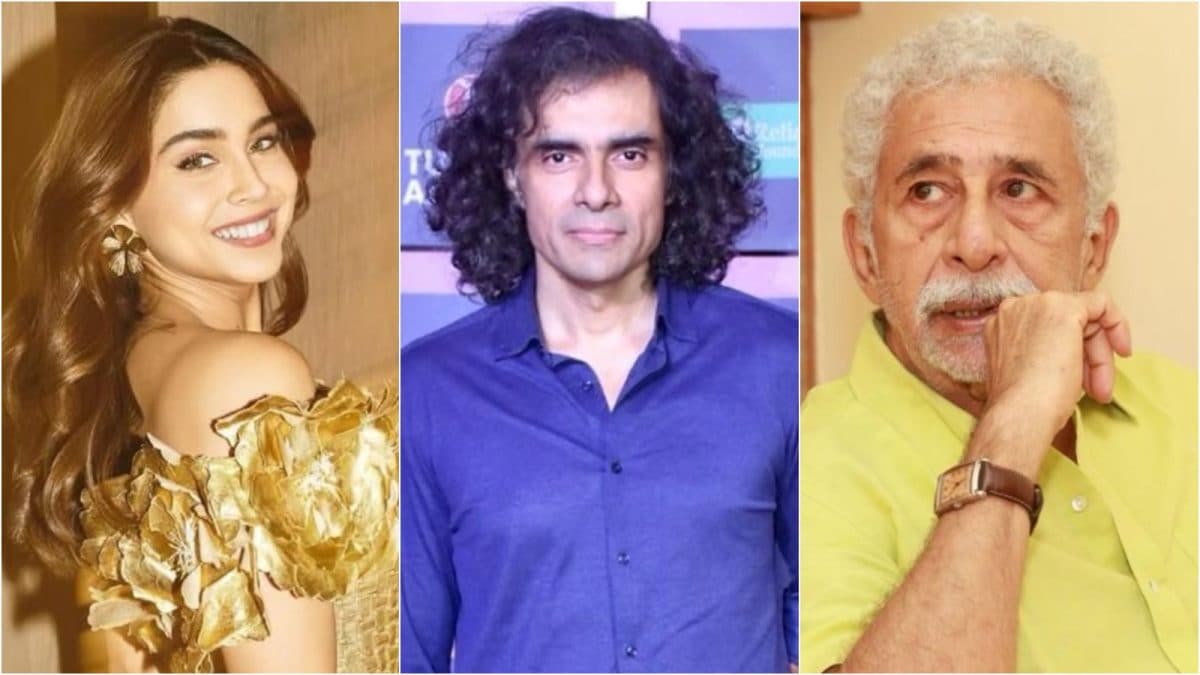
Why the casting choices matter to Imtiaz Ali
Let me tell you, when a director like Imtiaz Ali sits down for an interview, you know you’re going to get some juicy behind‑the‑scenes nuggets. I was scrolling through the latest interview on The Right Angle with Sonal Kalra, and Imtiaz opened up about the whole casting puzzle for his upcoming movie Main Vaapas Aaunga. He’s the kind of filmmaker who loves to dig deep into human emotions – think of the restless love in Jab We Met, the identity crisis in Tamasha, and the soul‑searching music‑driven journey in Rockstar. Those movies have left a mark on a lot of us, and now he’s gearing up for another story that promises to tug at heart‑strings.
What struck me most was how he described his thought process. He didn’t just pick actors because they were famous; he wanted each of them to live inside a very specific skin, to bring out something that felt fresh yet authentic. And that’s exactly what he shared about each of the four main players – Naseeruddin Shah, Diljit Dosanjh, Sharvari Wagh and Vedang Raina.
Getting Naseeruddin Shah on board for a 95‑year‑old Sikh
First up, the legendary Naseeruddin Shah. Imtiaz said that the role he had in mind was “finely calibrated”, meaning it needed a subtlety that only a master could pull off. The character is a 95‑year‑old Sikh gentleman who surprisingly finds himself in the most intense experience of his whole long life. Imagine a man in his mid‑nineties, still wearing a turban, walking the streets of Lahore‑style neighbourhoods, confronting memories that have been dormant for decades – that’s the kind of nuanced performance Imtiaz wanted.
He confessed, “I spoke to Naseer because it is a finely calibrated role, a 95‑year‑old Sikh going through the most intense experience of his life. That role led to Naseeruddin Shah, who I don’t remember ever playing a turbaned Sikh gentleman. I wanted it to feel fresh and charming, and thankfully, he didn’t say no.” You can hear the excitement in his voice, almost like a kid telling you about a new video game he’s about to play.
Talking about fresh charm, Imtiaz remembered that Naseeruddin had never before taken up a character that involved a Sikh turban – a visual that can instantly change an actor’s aura. By giving this veteran a new visual identity, the director believed the audience would see a side of Naseer that they hadn’t imagined before. And honestly, that’s a smart move – we love seeing familiar faces in unfamiliar roles; it keeps the cinema experience lively.
Now, think about the Indian audience. Many of us grew up watching classic films where seniors play dignified, calm roles. seeing a 95‑year‑old Sikh grappling with life‑changing dilemmas is both respectful and stirring. Imtiaz’s choice to place such a heavy emotional load on Naseer is a testament to his belief in the actor’s ability to balance gravitas with a touch of everyday humanity.
Finding the younger version – why Vedang Raina fits the bill
Next, the director moved on to the younger counterpart of Naseer’s character. This is where Vedang Raina’s name popped up. Imtiaz explained that when he was looking for someone to play the hero’s younger incarnation, he needed a face that could realistically age into Naseer’s 95‑year‑old look.
He said, “For the younger parts, Vedang had the face and charm to grow up to be Naseer at 95, and I was looking for someone who could play his character 78 years ago.” In simple words, Vedang was the perfect seed that could blossom into the same tree as Naseer’s seasoned bark. It’s like planting a sapling that you know will become a massive banyan tree years later – you can already feel the shade it will offer.
Now, Vedang isn’t a newcomer; he’s been part of several TV shows and a few short films, but Imtiaz’s comment points out that his natural charisma is what made him stand out. He has the kind of subtle smile that can convey a world of feelings without saying a single word – something that is crucial when you’re playing a character who will later become a 95‑year‑old with a thousand stories behind his eyes.
What I found interesting is how Imtiaz compared the two actors. He wasn’t just looking at talent; he was considering visual continuity, the ageing process, and the emotional thread that would connect a 30‑year‑old Vedang with a 95‑year‑old Naseer. That level of detail shows how much the director values a seamless storytelling experience.
Sharvari Wagh – a 1940s cinema vibe
Moving on to the female lead – Sharvari Wagh. Imtiaz’s description of her look was almost poetic. He wanted a “look inspired by 1940s cinema, westernised, pristine, yet slightly foreign”.
He admitted, “For Sharvari, I wanted a look inspired by 1940s cinema, westernised, pristine, yet slightly foreign, and she fitted the bill completely.” In the Indian context, imagine the glamour of classic Bollywood heroines – big eyes, graceful poise, but with a hint of modernity that makes them relatable to today’s audience. Sharvari’s features apparently ticked all those boxes.
When Imtiaz mentioned “slightly foreign”, he wasn’t talking about skin colour but about a subtle aura that made her appear timeless, like a character who could have walked right out of an old black‑and‑white film yet still fits comfortably in a contemporary setting. This creates an interesting visual contrast against the older characters played by Naseer and Vedang.
The director’s emphasis on “westernised” also nudges us towards a visual language that blends Indian classic aesthetics with a touch of international sophistication – think of a heroine who could sit at a café in Delhi wearing a vintage saree paired with chic sunglasses. That picture stuck in my mind, and I could easily see why Imtiaz was drawn to this notion.
Sharvari, of course, has already impressed audiences in her earlier projects with her natural screen presence, and it’s reassuring that a director of Imtiaz’s calibre finds her suitable for such an evocative visual canvas.
Diljit Dosanjh – the story that grew around him
Now, perhaps the most intriguing part of the interview was the story of how Diljit Dosanjh entered this film. Imtiaz reminisced about a time he was working with Diljit on the music‑driven project Chamkila. He said, “I had this itch of an idea while working with Diljit on Chamkila. I was thinking about this story, but I had not approached him or discussed it in detail. Only much later, as the story took shape, I realised it was increasingly reflecting who Diljit is.”
This is a classic example of a director letting the narrative breathe and then seeing which actor naturally aligns with its core. Diljit, known already for his versatility – from singing romantic ballads to playing gritty characters – seemed to resonate with the evolving script. Imtiaz felt that as the idea matured, it began to mirror Diljit’s own personality, which made the casting feel almost inevitable.
For many of us who love Punjabi folk and modern pop, Diljit is a household name. Seeing him in a romantic drama that’s not just a love story but also a deep exploration of identity adds another layer to his repertoire. Imtiaz’s comment also suggests that the film might include nuanced cultural references that Diljit can naturally bring to life, given his Punjabi roots and his comfort with playing both earnest and flamboyant characters.
The part about “the story reflecting who Diljit is” struck a chord with me, because it’s like saying the script grew around the actor, rather than the actor being forced into a pre‑written shape. It hints at a collaborative, almost organic creation process where the director listens to the actor’s vibe and lets the narrative evolve.
What does this mean for the audience?
All these casting insights are not just background trivia – they set up certain expectations for the viewers. For fans of Imtiaz Ali, we already know that his films often journey through the emotional inner worlds of their protagonists. Adding Naseeruddin Shah’s gravitas, Diljit’s charismatic presence, Sharvari’s vintage yet fresh aura, and Vedang’s youthful earnestness creates a balanced ensemble that can appeal to a wide spectrum of the Indian audience.
Imagine sitting in a theatre in Mumbai or a small town in Kerala, and you see a 95‑year‑old Sikh played by Naseer, an earnest young man played by Vedang, a glamorous Sharvari stepping out like she’s from an old Bollywood poster, and Diljit puffing out his trademark swagger. The mixture itself feels like a tapestry of Indian cinema’s past, present, and future.
This construction also reflects a thoughtful approach to representation. The Sikh community is often under‑represented in mainstream dramas, and giving Naseer such a pivotal role can spark conversations about generational experiences, cultural heritage, and the changing face of India.
Meanwhile, Diljit’s character will probably bring in the vibrant Punjabi energy that many viewers love, while Sharvari’s retro look may remind older audiences of the golden era, making the film a nostalgic ride for them as well.
All in all, Imtiaz appears to be weaving multiple threads – historical, cultural, emotional – into a single narrative fabric. If his previous movies are any indication, the result is likely to be a film that stays with you long after the credits roll.
First looks, fan buzz, and the upcoming clash
Since the first looks were released, the buzz has been undeniable. Posters and stills featuring the four actors have been splashed across social media platforms, street billboards, and even on auto‑rickshaws in Delhi. You can tell the excitement because people keep sharing memes, creating fan‑made posters, and arguing over who looks the most convincing in the role. I’ve also seen groups on WhatsApp discussing how great it would be to see Naseer in a turban – a sight that hasn’t been common in mainstream films.
The film is set to hit the theatres soon, and the timing is interesting because it will share the release window with another big Bollywood entertainer starring Varun Dhawan, Pooja Hegde, and Mrunal Thakur. While that film promises high‑octane action and romance, Main Vaapas Aaunga, as described by Imtiaz, leans more towards a soulful romantic drama. This kind of clash often gives the audience a choice between light‑hearted entertainment and something deeper, and it’s great for the industry.
In everyday life, Indian movie lovers love to compare the two – going to the mall to see which poster is bigger, chatting over tea about who will win the box‑office battle. It’s a fun ritual that adds a layer of community to the whole movie‑watching experience.
Imtiaz Ali’s storytelling philosophy in a nutshell
One recurring theme in the interview was Imtiaz’s belief that a story should be lived, not just told. He often mentions that his characters need to feel like real people, making mistakes, having moments of doubt, and searching for identity. This belief is evident in his casting choices for Main Vaapas Aaunga.
Take the example of the 95‑year‑old Sikh. It’s not just an age number; it’s a representation of a life full of memories, cultural shifts, and personal battles. By casting an actor who can delicately portray that weight, Imtiaz makes sure the audience connects with the character on a personal level.
The same logic applies to Sharvari’s vintage look. It isn’t merely a design decision, but a way to embed the past into the present, giving the viewer a sense of timelessness. And Diljit’s involvement shows how the director is open to letting the story grow around an actor’s natural traits, rather than forcing an ill‑fitting role onto someone.
All of this resonates with us because we’ve all seen films where the casting feels off – like when a glamorous actor is placed in a gritty, realistic setting without proper preparation. Imtiaz’s approach avoids that pitfall. He’s kind of like a craftsman who chooses the right tool for each part of the workbench.
Personal takeaway – why I’m excited
Honestly, after reading through Imtiaz’s explanations, I feel a personal connection to the project. The idea of seeing an elderly Sikh navigating an intense life event reminds me of my own grandfather’s stories of partition and how they shaped our family’s identity. When I think of Sharvari’s retro vibe, I’m taken back to watching old black‑and‑white Hindi movies with my mother, the kind of films that had simplistic dialogues but profound emotions.
And Diljit – well, who doesn’t love his voice? The thought that the story might echo his own journey, from a small town in Punjab to Bollywood stardom, is inspiring. It’s like watching a friend’s dream unfold on screen.
All these elements combined make the film feel like more than just a weekend watch; it feels like a little cultural mirror reflecting different facets of Indian society. That’s why I’m counting down the days until the cinema doors open, popcorn in hand, ready to experience this blend of old‑world charm and modern storytelling.
In the end, the whole casting journey that Imtiaz Ali revealed is a reminder that cinema is a collaborative art – directors, actors, writers, and even the audience all play a role in shaping how a story lives. And when it’s done with care, as seems to be the case here, the result can be something truly memorable.