- Nibandh Vinod
- Trending Desk
Why National Science Day matters to me
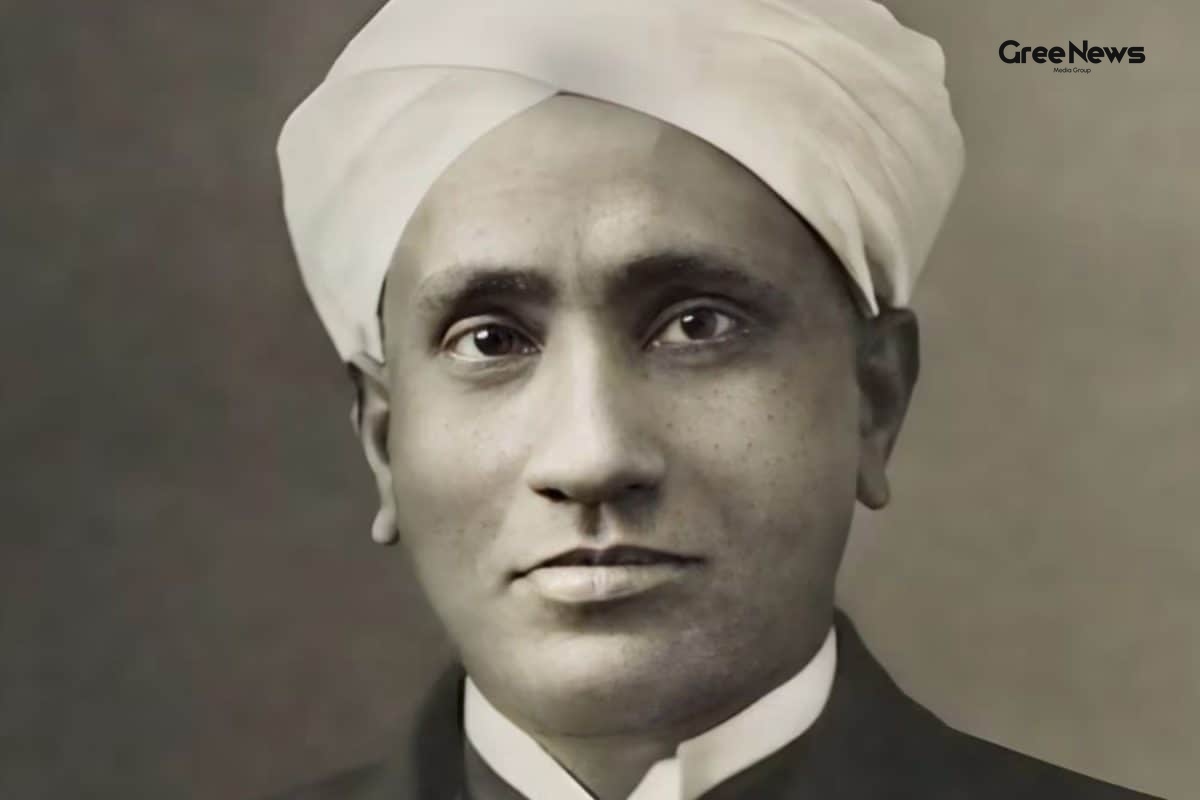
Every year on the 28th of February, I look forward to National Science Day like I wait for my birthday it’s that special blend of pride and curiosity. The day was chosen to honour the amazing work of Sir Chandrasekhara Venkata Raman, the physicist who discovered the Raman Effect back in 1928. You know, the same Raman whose experiments with light changed the way scientists around the world understand how photons behave when they pass through a transparent material? His discovery not only fetched him the Nobel Prize in Physics in 1930 but also put Indian science on the global map. When I first heard about the Raman Effect in school, I was hooked it felt like a secret code that nature whispered to us, and that feeling stays with me every time I hear about the latest news India is buzzing about.
National Science Day is more than a day off from regular classes; it’s a chance to see how science seeps into everyday life. From the smartphone apps that tell us when to water our plants, to the medical diagnostics that catch diseases early, the influence of scientific breakthroughs is everywhere. That’s why this day feels like a celebration of the invisible forces that shape our lives, and why I find myself sharing the story with friends and family after all, isn’t it great to brag that India’s own Raman won a Nobel?
National Science Day 2026: History and Significance A Personal Walkthrough
Sir C.V. Raman made his landmark discovery while stationed at the Indian Association for the Cultivation of Science in Kolkata. He was studying how light scatters and loses energy when travelling through a clear substance, an observation now famously known as the Raman Effect. Back then, such experiments were done with rudimentary equipment, yet the insight was profound it opened new doors to material analysis and spectroscopy that we still rely on today.
Fast forward to 1986, when the National Council for Science and Technology Communication (NCSTC) approached the Government of India to officially declare 28 February as National Science Day. The request was approved, and the first celebration kicked off in 1987. Since that time, the day has been marked across every state, city, and village, each adding its local flavour.
What always amazes me is the underlying goal of these celebrations to spread awareness about how science impacts our day‑to‑day activities and to highlight the achievements of Indian scientists. It also serves as a gentle nudge for youngsters, urging them to consider a future in research and innovation. The day’s agenda usually includes knowledge‑sharing sessions, debates on fresh ideas, and outreach programs that connect the public with cutting‑edge technology. In most cases, these activities showcase how scientific progress fuels improvements in health, education, communication, and countless other sectors.
Theme for 2026: Women in Science Catalysing Viksit Bharat
This year’s theme “Women in Science Catalysing Viksit Bharat” struck a chord with me instantly. It underscores the role women scientists play in steering India towards a developed future. The government’s choice of this theme is a strategic move to inspire more girls to pursue scientific careers. I’ve seen it first‑hand in my niece’s school, where a female astronaut from ISRO gave a talk that made the entire class sit up straight and listen. Many people were surprised by the enthusiastic response, proving that when you showcase role models, interest blooms naturally.
The theme also ties neatly into the larger narrative of gender equality in the country. By spotlighting women researchers, the day sends a powerful message: science isn’t a gender‑specific arena; it’s open for anyone with curiosity. As a result, the celebrations this year are peppered with panels featuring women from diverse fields from aerospace engineering to quantum computing each sharing stories that are both inspiring and relatable.
How Schools and Colleges Celebrate My Own Experience
Across the nation, schools, colleges, and research centres mark the day with a kaleidoscope of activities exhibitions, quizzes, poster competitions, and model displays. At my alma mater, IISER Pune, I remember attending a science show where students built tiny robots that could sort colored beads. The excitement was palpable; you could hear the hum of conversations about “what if” and “how can we improve?” It was a perfect example of breaking news about grassroots innovation spreading like wildfire.
In many districts, events focus on sustainable projects such as solar‑powered water purifiers, robotics for waste management, or DIY models of space rockets. I once visited a rural community where a mobile science van set up a mini‑lab. The kids gathered around a simple experiment that demonstrated the Raman Effect using a laser pointer and a glass of water. Their eyes widened, and a few of them said they wanted to become scientists. That moment captured the very essence of National Science Day turning abstract concepts into tangible experiences.
Film screenings also play a big role. Short documentaries on icons like APJ Abdul Kalam are shown to spark the imagination. Many people were surprised by how the film resonated with students from non‑urban backgrounds, proving that inspirational stories truly have a viral quality.
India’s Scientific Achievements in 2025 What Looks Promising for 2026
India’s Growing Global Standing
One of the most encouraging signs for us is India’s climb up the global innovation rankings. In the Global Innovation Index 2025, we secured the 38th spot, a clear indication that the country’s research ecosystem is gaining momentum. Moreover, we ranked 6th worldwide in intellectual property filings according to the World Intellectual Property Organization (WIPO). This surge in patents reflects a vibrant start‑up culture and an increasing focus on home‑grown technologies.
Our position in the Network Readiness Index also improved, signalling better usage of digital and communication technologies across the nation. In research publications, India now stands third globally, a testament to the sheer volume of academic output coming from our universities and institutes.
ISRO’s Major Milestones A Personal Take
ISRO has been on a roll, and the highlights are nothing short of awe‑inspiring. Over the past year, the agency logged more than 200 key achievements. The one that caught people’s attention the most was the successful Space Docking Experiment (SpaDeX) in January, where two satellites performed a controlled docking maneuver in orbit. This placed India among an elite group of nations capable of such advanced space operations.
Another milestone was the 100th launch from the Satish Dhawan Space Centre. I remember watching the live stream with my family; the excitement was palpable. The government also Green‑lighted a third launch pad to support upcoming missions, including the ambitious Gaganyaan human spaceflight programme. Meanwhile, the Aditya‑L1 solar mission continues to beam valuable data about the Sun, adding to global scientific knowledge.
In July 2025, astronaut Shubhanshu Shukla returned after an 18‑day stint aboard the International Space Station. His mission was a crucial stepping‑stone toward India’s future crewed flights, and the whole country followed his journey with bated breath.
Progress in Semiconductors and Computing
India has taken significant strides in hardware development as well. The launch of DHRUV64, our first fully indigenous 64‑bit microprocessor built by C‑DAC, was a proud moment for many of us in the tech community. ISRO also introduced Vikram 3201, a processor specially designed for space missions, showcasing the capability to develop mission‑critical hardware locally.
Under the India Semiconductor Mission, several new projects aimed at strengthening chip manufacturing have been approved. The National Supercomputing Mission has added dozens of high‑performance systems across the country, supporting research in climate modelling, drug discovery, and material science.
Artificial Intelligence Expands into Everyday Life
AI, once a buzzword, has started to seep into practical applications in 2025. In agriculture, AI‑driven monsoon forecasts were sent to farmers via SMS, helping them decide when to sow or harvest. In healthcare, tools like MadhuNetrAI helped detect diabetic eye disease at early stages, potentially saving countless lives.
India also unveiled BharatGen, a multilingual AI model trained to understand and respond in Indian languages. This model powers a range of services for farmers, small shop owners, and ordinary citizens seeking quick answers, making AI truly inclusive.
Quantum Computing Breakthroughs
The National Quantum Mission bore fruit when Bengaluru‑based startup QpiAI launched a 25‑qubit quantum computer named QpiAI‑Indus. Later, they rolled out a 64‑qubit processor called “Kaveri,” marking a leap forward in advanced computing capabilities.
Investing in Research and Youth The RDI Scheme
The government’s Research, Development and Innovation (RDI) Scheme, backed by a Rs 1 lakh crore fund, aims to boost private sector investment in scientific research. Alongside, the Anusandhan National Research Foundation (ANRF) was launched to improve coordination between universities and industry, bridging the gap between academia and real‑world applications.
Outreach programmes have also expanded beyond metros. National Science Day events now feature mobile science vans, student competitions, and the INSPIRE‑MANAK scheme, encouraging young minds from every corner of India to explore science and innovation.
What Lies Ahead My Hopes for the Future
Looking ahead, I’m hopeful that the spirit of National Science Day will continue to inspire, especially among the younger generation. The theme this year has already sparked new conversations; I’ve seen teachers incorporate stories of women scientists into their curriculum, and families discussing AI tools over dinner. If we keep feeding that curiosity, the next breakthrough might just come from a school lab in a small town, turning the latest news India is buzzing about into a global milestone.
In most cases, the key to sustaining this momentum is collaboration between government bodies, private firms, and everyday citizens. When it all clicks, we get not just scientific progress but a more inclusive, empowered society. That, to me, is the real celebration of National Science Day a day that reminds us science is not just for the elite, but for every person who dares to ask ‘why’ and works towards a better Bharat.