- Buzz Staff
With no lights, no shifts and almost no human involvement, these fully automated factories are boosting efficiency while raising tough questions about jobs
Honestly, when I first read about China’s so‑called “dark factories”, I thought someone was pulling a prank. Imagine a huge factory floor that never really shuts down, yet there’s not a single worker in sight. No night shift, no coffee break, not even a flicker of light because, well, there’s nobody there to need it.
It’s not just a story for the tech‑geeks it’s a piece of breaking news that’s catching a lot of attention across the sub‑continent. If you’re scrolling through trending news India, you’ll see lots of posts about how these silent plants are changing the manufacturing playbook.
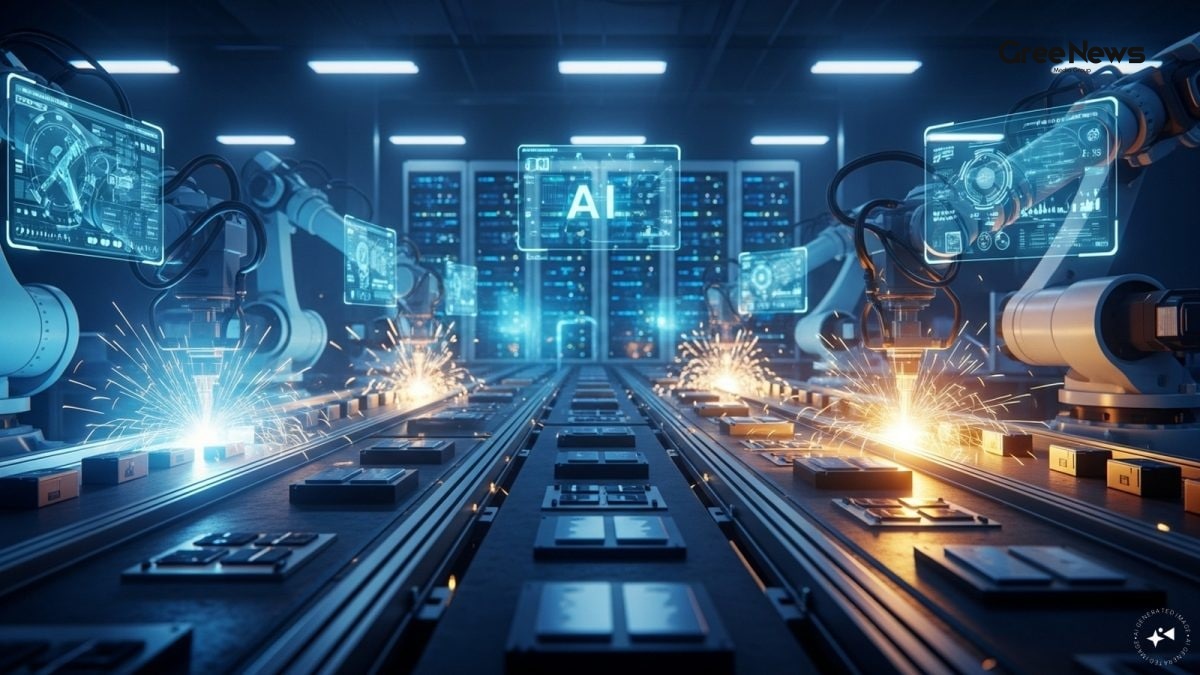
So, what exactly does a “dark factory” look like? Picture rows of robotic arms moving with the precision of a dancer, AI algorithms constantly scanning for defects, and driver‑less trucks humming quietly as they shuttle components from one end of the building to the other. All of this happens under a blanket of darkness literally. Since there are no human eyes on the line, the need for overhead lighting disappears. The whole operation runs on sensors, cameras and data streams, not on human supervision.
What really blew my mind was the sheer scale of continuity these plants achieve. There’s no need to rotate shifts, no lunch breaks, no overtime calculations. The production line just flows, 24/7, delivering a steady stream of products. For a company, that kind of reliability is a golden ticket higher output, tighter consistency, and less human‑error risk.
Now, why is China banking heavily on this model? The answer sits at the intersection of rising wages and a shrinking workforce. Over the past few years, factory wages have been ticked up, and many young Indians and Chinese alike are steering away from the gritty world of assembly lines. They’re opting for service‑sector jobs, start‑ups, or gig‑economy work instead. Face it a twelve‑hour shift in a noisy, cramped factory doesn’t sound that appealing when you can earn a comparable salary from a coffee shop or even an online freelancing gig.
Adding to that, the global market is getting fiercer. Every day there’s new competition from Southeast Asian manufacturers, and the pressure to cut costs while keeping quality high is intense. Automation offers a way out: you can keep the output high but cut down on human labour expenses. That’s why you’ll often see headlines describing these plants as the answer to the “China‑manufacturing‑cost‑crisis”.
But, as with any big change, there’s a flip side. The automation boom raises serious questions about the future of jobs not just in China but worldwide. If a factory can run without humans, what happens to the millions who rely on manufacturing for their livelihood? That’s the kind of discussion that has been sparking debates in policy circles and among labour unions. It’s also the reason why many Indian entrepreneurs are keeping a close eye on this trend it could be a sign of what’s coming to our own manufacturing hubs.
From a personal perspective, I remember visiting a traditional textile unit in Gujarat where the sound of looms was an everyday background. The workers would chat, share jokes, and even sing during short breaks. The whole atmosphere was vibrant, messy, and very human. Now think of a Chinese plant where the only sound you hear is the soft whirr of servo‑motors. The contrast is stark, and it naturally makes you wonder what do we lose when we trade that human buzz for a sterile, efficient silence?
What’s fascinating is that the “dark” aspect isn’t just a gimmick; it actually offers tangible benefits. With no lighting required, energy consumption drops a bit, and the whole building can be built with less infrastructure. Moreover, the risk of accidental injuries goes down sharply because there’s no one walking around heavy machinery. Safety statistics from a few pilot projects suggest a significant dip in workplace accidents, which is a win for the industry.
And here’s a tidbit that many people miss: these factories are not completely detached from humans. Engineers, data scientists and maintenance crews are still essential they just don’t sit on the floor all day. Their role shifts to monitoring dashboards, tweaking AI parameters and performing periodic checks. In a way, the job profile moves up the skill ladder, demanding more technical know‑how.
If you’re wondering how this ties back to India, think about the recent surge in “Make‑in‑India” initiatives. The country is trying to boost local manufacturing, but the limited availability of cheap labour and increasing salary expectations are creating a bottleneck. Observing China’s dark factories could provide a roadmap on how to blend automation with cost‑effective production, especially for sectors like electronics, automotive components, and even pharmaceuticals.
Now, let’s talk about the ripple effect on consumers. With production becoming faster and cheaper, we could see a steep drop in retail prices for a variety of goods from smartphones to kitchen appliances. If you’ve ever bought a gadget and wondered why the price keeps falling, this could be one of the reasons behind that trend. The trade‑off, however, is the subtle loss of a tangible connection to the maker. When a product is assembled by invisible robots, the story behind it becomes more abstract.
There’s also an environmental angle. Some analysts argue that running factories in darkness reduces overall electricity use, but the opposite could happen if the machinery runs non‑stop without any natural downtime for maintenance. It’s a balancing act, and policymakers will need to weigh the carbon footprint against the economic gains.
What happened next is interesting a handful of Chinese tech giants announced plans to replicate the dark‑factory model across their supply chains. They claim it will cut lead times by up to 30 % and boost product quality consistency to near‑perfect levels. That kind of claim, when you see it in a press release, feels a bit like viral news because it sounds almost futuristic.
In most cases, the rollout of such factories starts with pilot projects in less labour‑intensive industries like semiconductor packaging or precision optics. Gradually, the scope expands to more labour‑heavy sectors. It’s a gradual, step‑by‑step process, but the momentum is strong, especially as other nations watch closely.
From my own experience watching a similar automation effort in a Bengaluru automotive parts plant, the transition wasn’t smooth. Workers initially feared job loss, which led to protests. However, over time, the company introduced up‑skilling programs, and many former line workers moved into roles as robot‑operators and data analysts. It’s an example of how the human side can adapt if there’s a clear pathway for learning.
Many people were surprised by this the notion that automation could actually create new, high‑skill jobs rather than just eliminate them. That’s a nuance often missed in headline‑grabbing articles about dark factories. It’s the kind of detail that makes a piece of breaking news worth digging deeper into.
To sum it up, China’s dark factories are a clear illustration of how technology can reshape entire industries. They promise higher efficiency, lower costs, and fewer workplace hazards, but they also raise critical socio‑economic questions about employment, skill development, and the human touch in production. As these silent plants continue to expand, we can expect them to influence policy debates not only in China but also in countries like India, where the manufacturing landscape is undergoing its own transformation.
So, whether you’re a student, a policy‑maker, an entrepreneur, or just someone curious about the latest trends in global manufacturing, keep an eye on these developments. They’re not just another piece of tech hype they’re a real, tangible shift that could define the next decade of production across the world.
Stay tuned for more updates, because the story is still unfolding, and every new detail adds a fresh layer to this fascinating narrative of automation, economics, and the future of work.
Israel Iran War News Iran US Ceasefire