The artist expressed that his hearing inability made his primary years quite tough, since normal speech couldn’t be developed.
Honestly, when I first heard about Mithil Thaker, I thought his story might be another typical "overcoming adversity" piece. But what happened next is interesting his silence turned into a language of colour that speaks louder than any words could ever do. Growing up in Ahmedabad, the noise of the city never reached his ears, yet the visual chaos was constant honking horns, bustling markets, street vendors shouting. That paradox, the loud visual world with a silent ear, shaped his early days. He told me that because he could not develop normal speech during his primary years, communication felt like a wall. In most cases, families tried sign language, but back then resources were scarce, so the wall stayed for a while.
What really caught people’s attention was the way he describes his childhood: "I watched the streets like a movie, but I could never hear the music. So I started painting it." It is that simple, almost naive, observation that sparked a journey that now fills galleries and online feeds with eye‑catching street scenes.
Finding a Voice on the Canvas
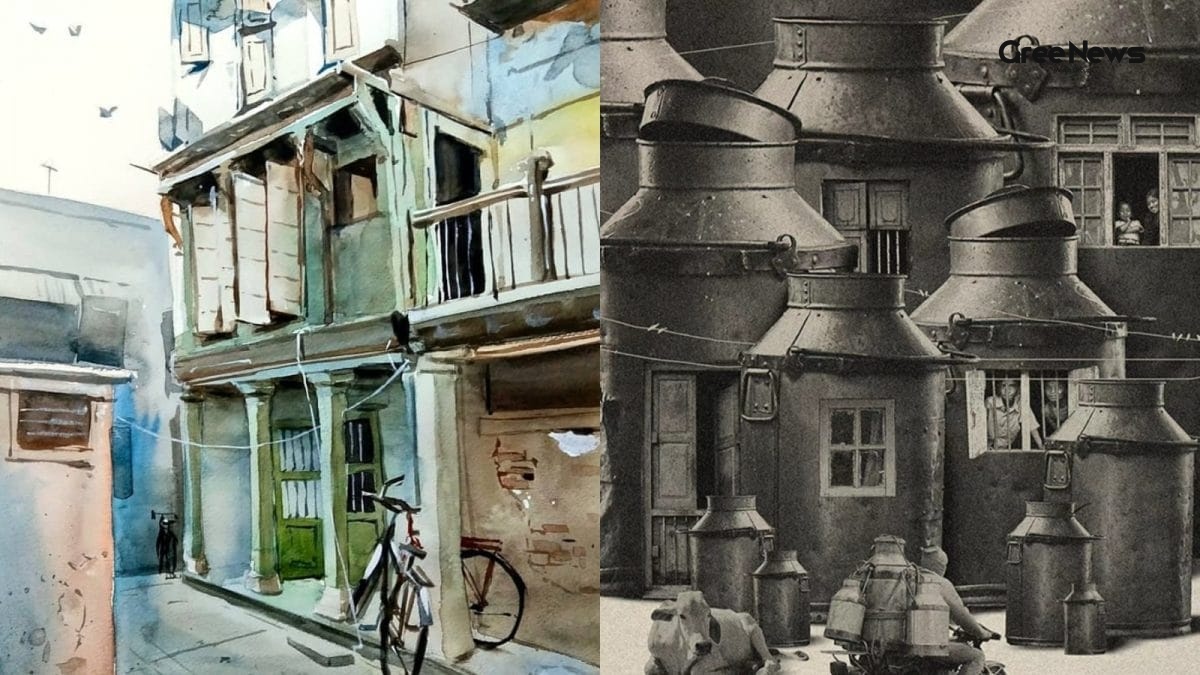
When I visited Mithil’s modest studio in a lane off the old walled city, the space was cramped but alive with swatches of colour. The walls were covered with prints of busy Ahmedabad streets a mustard‑yellow auto‑rickshaw, a sea of red umbrellas during the monsoon, a tea stall where the steam seemed to dance. Each painting feels like a snapshot of a moment frozen in time, yet there is a rhythm to them, almost like a silent song that only his hands can hear.
He explained his process in his own words. "I start with the feeling of the place. If a lane has a lot of foot traffic, I use quick, short brush strokes to show movement. If it’s a quiet corner, I let the colours linger, letting the paint dry slowly to capture the stillness." Basically, what he does is translate what his eyes see and what his heart feels into pigments. The result? Vibrant and striking paintings that capture the essence of Indian streets with incredible detail and emotion.
Many people were surprised by this approach because they expected a deaf artist to perhaps stick to abstract forms. Instead, Mithil goes for realism mixed with a touch of expressionism. The details a vendor’s weather‑worn hands, the sheen of a wet road after a sudden downpour are rendered with such precision that you can almost smell the spices wafting from the market.
Why His Work Resonates Across India
We live in a country where streets are more than just pathways; they are living museums of culture, politics, and daily drama. From the chaotic lanes of Chandni Chowk to the serene avenues of Mysore, each city tells its own story. Mithil’s paintings manage to capture that story without needing a single word. This is why his art has started appearing in what you could call the latest news India every local paper that covered his recent exhibition called it a visual celebration of Indian life.
One particular piece that went viral on social media shows a crowded railway platform at dusk. The background is a deep indigo sky, while the foreground is a splash of orange from the sun’s last rays hitting the wet tiles. A group of women in colorful sarees are seen laughing, a lone child clutching a cricket bat, and a vendor selling peanuts. The curiosity hook here is simple: you look at the painting, you can almost hear the chatter, the clatter of trains, the distant whistle all without any sound.
There’s an element of India updates that makes his work instantly shareable. In many of his paintings, you’ll spot subtle nods to current events a banner for a local election, a newly built metro line in the background which makes the audience feel like they’re looking at a living snapshot of today’s India. This natural inclusion of trending elements is why his pieces are frequently tagged as viral news on platforms like Instagram and Twitter.
From Local Walls to National Headlines
When a story about a deaf artist reaches the breaking news section of national portals, it’s usually because there’s something extraordinary about the journey. For Mithil, the extraordinary part is not just the art but the way his life mirrors the struggles of many Indian children with disabilities. In most cases, families lack proper support, and children grow up feeling left out. Mithil’s decision to turn that silence into a colour‑filled voice is both inspiring and a call to action.
In one interview, a journalist asked him how he deals with criticism. He laughed and said, "Criticism is just another colour. If you don’t like it, you paint over it or you let it become part of the background." This line caught people’s attention because it resonates with a larger Indian sentiment the ‘jugaad’ mindset of turning obstacles into opportunities.
The coverage has been extensive: from regional channels doing short clips, to national newspapers publishing full‑page spreads. The trending nature of his story has made it a staple in the weekly roundup of trending news India, especially during cultural festivals when his paintings of street fairs become a perfect visual complement.
Everyday Scenes Turned Into Visual Stories
What makes Mithil’s art stand out is the narrative quality. Take his painting titled “Monsoon at Manek Chowk”. The canvas is splashed with shades of grey and turquoise, yet the faces of shoppers are bright with smiles. You can see a child playing with a kite that’s been forced down by the wind, an elderly man selling samosas under a makeshift canopy, and the thin mist rising from hot pavement. The painting tells a story: a city that refuses to let rain dampen its spirit.
Scrolling ahead through his portfolio feels like turning pages of a storybook where each picture is a chapter. You can notice recurring characters a lady with a red bindi buying jewellery, a bike rickshaw driver with a cheeky grin almost as if they belong to a larger universe of his own making. What is fascinating is that these characters are not based on real people he named; they are amalgamations of many faces he’s seen over the years.
The emotional depth is what makes readers stay longer on his site, boosting engagement time. When you watch the video of his brush strokes (more on that later), you realise the patience he puts into every single line, making the viewer wonder how long it takes to finish a single street scene.
Top Videos A Glimpse Into His World
Israel Iran War News Iran US Ceasefiretop videos
Swipe Left For Next Video
Now, you might be wondering why those bold headings about international news appear here. It’s a bit of a website quirk the platform automatically shows trending topics beside every article. It reminded me of how Indian news portals often blend local and global stories together, keeping readers in a loop of varied information a sort of digital street market of news.
Among Mithil’s videos, the most watched one shows him painting a bustling local market in just four minutes. The speed‑run style of the video is a hit because it gives a sneak peek into his technique, and the comment section lights up with people guessing how many real market moments he captured in a single frame. Many people were surprised by this, saying they never thought a deaf artist could convey sound through paint.
These videos are also flagged as viral news on social platforms, pulling in viewership from beyond the art community. The curiosity hook is simple: viewers keep tapping “next” because each clip reveals a new corner of Indian street life.
Impact on the Community and Future Aspirations
Beyond the canvas, Mithil has started informal workshops for children with hearing impairments. He believes that if he could find his voice in colour, other kids could also find theirs. In most cases, these sessions are held in community centres, where the kids get to use water‑colours and learn to translate what they see into art. Parents have shared that their children feel more confident, and some even begin to speak a few words using visual cues.
He also hopes to collaborate with local municipalities to create mural projects that depict the heritage of different neighbourhoods. Imagine walking down a lane in Surat and seeing a giant mural of the old textile market, painted by someone who never heard the chatter but felt it through his fingertips.
These aspirations are already generating buzz in regional publications, adding a layer of India updates that keeps his name in the public eye. The idea of a deaf artist shaping public spaces is appealing because it merges art with civic pride, a theme that frequently appears in the latest news India feeds.
Conclusion A Silent Symphony of Colours
In the end, Mithil Thaker’s story is more than just a tale of personal triumph. It’s a reminder that India’s streets are full of untold stories waiting to be painted, written, or sung. His paintings act as a bridge between silence and sound, giving us a fresh perspective on everyday scenes we often overlook. The fact that his journey has become part of trending and breaking news shows that people are hungry for stories that blend art, resilience, and the vibrant chaos of Indian life.
If you ever get a chance to walk past one of his exhibitions, take a moment to linger. Let your eyes wander across the bustling crowds, the colourful stalls, the fleeting glances of strangers and feel the rhythm that Mithil has captured without ever hearing it. That, my friend, is the true power of art it can turn a personal challenge into a visual chorus that resonates across the nation.