Israel backs US‑Iran ceasefire but Benjamin Netanyahu's war goals remain unfulfilled
Benjamin Netanyahu's response to the ceasefire has been muted, contrasting sharply with the triumphal statements from the United States and Iran.
Background to the conflict and the ceasefire announcement
When Benjamin Netanyahu announced the start of the Israeli‑United States military campaign against Iran at the close of February, Benjamin Netanyahu projected confidence and determination.
The subsequent statement from the office of Benjamin Netanyahu acknowledging the ceasefire declared overnight presented a markedly softer tone. The language used by the office of Benjamin Netanyahu emphasized that the decision originated with Donald Trump.
Parallel to the subdued Israeli response, the United States and Iran issued celebratory statements, each claiming a decisive victory after five weeks of war.
In remarks broadcast on a Wednesday night, Benjamin Netanyahu described the operation as successful, yet Benjamin Netanyahu also warned that the ceasefire did not constitute the final chapter and that Israel retained additional objectives to achieve, whether through diplomatic aGreement or the resumption of hostilities.
Benjamin Netanyahu’s stated war aims
At the outset of the war, Benjamin Netanyahu articulated that the goal of the operation was to eliminate the threat posed by the Ayatollah regime in Iran. Benjamin Netanyahu added that the operation would persist for as long as required.
The stated objectives have not been fully realized. Iran’s armed forces continue to engage in combat, and the governing clerical establishment remains operational, despite the deaths of Supreme Leader Ayatollah Ali Khamenei and other senior figures in strikes conducted by the United States and Israel.
The status of Iran’s nuclear program and the stockpile of enriched uranium remains unresolved. Although Iran’s ballistic missile arsenal has suffered degradation, Iran has continued to launch missile barrages toward Israel throughout the conflict.
Benjamin Netanyahu claimed that all achievable goals have been completely accomplished. Benjamin Netanyahu pointed to strikes on Iran’s nuclear and ballistic missile production facilities and asserted that Iran’s military capabilities and leadership have been decimated.
Benjamin Netanyahu also distinguished between achievable goals and wishful goals. Benjamin Netanyahu stated that wishful goals—including regime change triggered by a popular uprising, the removal of highly enriched uranium from Iran by military force, and the complete cessation of Iran’s missile‑launch capacity—remain unfulfilled.
Political challenges within Israel
It is possible that far‑right members of the coalition government led by Benjamin Netanyahu will reject any ceasefire aGreement or the termination of hostilities, thereby creating a domestic political challenge for Benjamin Netanyahu.
A stark dispute has emerged over whether the ceasefire arrangement encompasses Lebanon. Iran and the Prime Minister of Pakistan, Shehbaz Sharif, who played a role in negotiating the ceasefire, both asserted that the deal covered Lebanon, where Israel has been fighting the Iranian‑backed armed group Hezbollah.
Conversely, the office of Benjamin Netanyahu declared that the ceasefire does not include Lebanon. The Israel Defense Forces reported that on a Wednesday the organization carried out what it described as the biggest strikes in Lebanon since the recent conflict began in March.
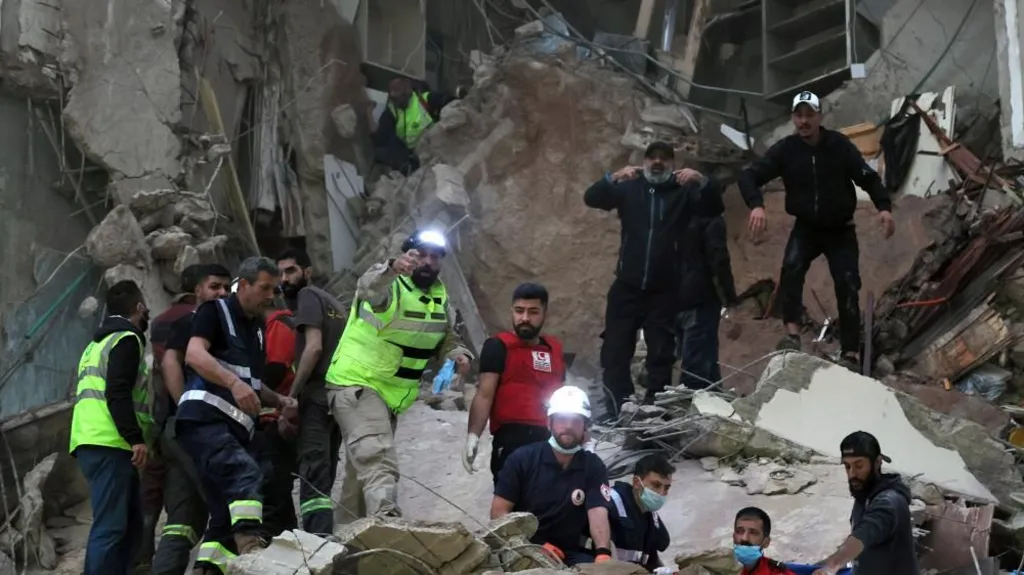
The government of Lebanon reported that the strikes resulted in at least 182 fatalities and 890 injuries across the country, including in the capital, Beirut.
Donald Trump later told a PBS journalist that Lebanon was excluded from the ceasefire aGreement because of Hezbollah. When questioned about the Israeli strikes, Donald Trump responded that the strikes were part of the deal and that “everyone knows that” and characterized the incident as a separate skirmish.
During a press conference in the late afternoon, White House press secretary Karoline Leavitt affirmed that Lebanon was not part of the ceasefire but indicated that Lebanon would continue to be discussed by the United States, Israel, and all other parties.
Iranian Revolutionary Guards’ warning and Israeli actions in southern Lebanon
The Revolutionary Guards of Iran issued a stern warning to the United States and Israel, stating that they would respond if Israel did not immediately cease aggressions against dear Lebanon.
In recent weeks, Israel has deployed ground forces into southern Lebanon and announced its intention to maintain control over territory south of the Litani River to establish what Israel calls a security buffer zone.
Israeli forces have been destroying homes and villages in the designated area, where the Israel Defense Forces assert that Hezbollah fighters are active. Hundreds of thousands of civilians have been displaced as a result. Israel has declared that displaced residents will not be permitted to return until Hezbollah has been removed.
Hezbollah launched rockets into Israel on the third day of the conflict in retaliation for the killing of Supreme Leader Ayatollah Ali Khamenei and has continued to fire rockets over the ensuing weeks.
The government of Lebanon, together with several European nations—including the United Kingdom, France, Italy, Germany, and Canada—has called for the ceasefire to apply in Lebanon.
Joseph Aoun, President of Lebanon, accused Israel of repeatedly demonstrating contempt for all international laws and norms.
Implications for the ceasefire and future stability
How Benjamin Netanyahu chooses to respond, and whether Donald Trump continues to support Benjamin Netanyahu, will be decisive for the durability of the ceasefire.
The divergent interpretations of the ceasefire’s geographic scope, particularly concerning Lebanon, have introduced uncertainty that could jeopardize the broader aGreement.
Both the United States and Israel have signaled a willingness to continue discussions with all relevant parties, yet the exclusion of Lebanon from the ceasefire as described by both Donald Trump and the office of Benjamin Netanyahu creates a point of contention with Iran, the Revolutionary Guards of Iran, and the Lebanese government.
The unresolved wishful goals outlined by Benjamin Netanyahu—regime change, the removal of highly enriched uranium, and the cessation of missile capabilities—remain sources of strategic tension.
Additionally, the internal political pressures from far‑right coalition partners in Israel may limit Benjamin Netanyahu’s flexibility in accepting a ceasefire that does not address all of Israel’s stated ambitions.
In summary, the ceasefire represents a provisional halt in active combat, but the underlying strategic objectives articulated by Benjamin Netanyahu, the divergent positions of the United States, Iran, and the government of Lebanon, and the domestic political landscape within Israel together shape the prospects for a lasting peace.