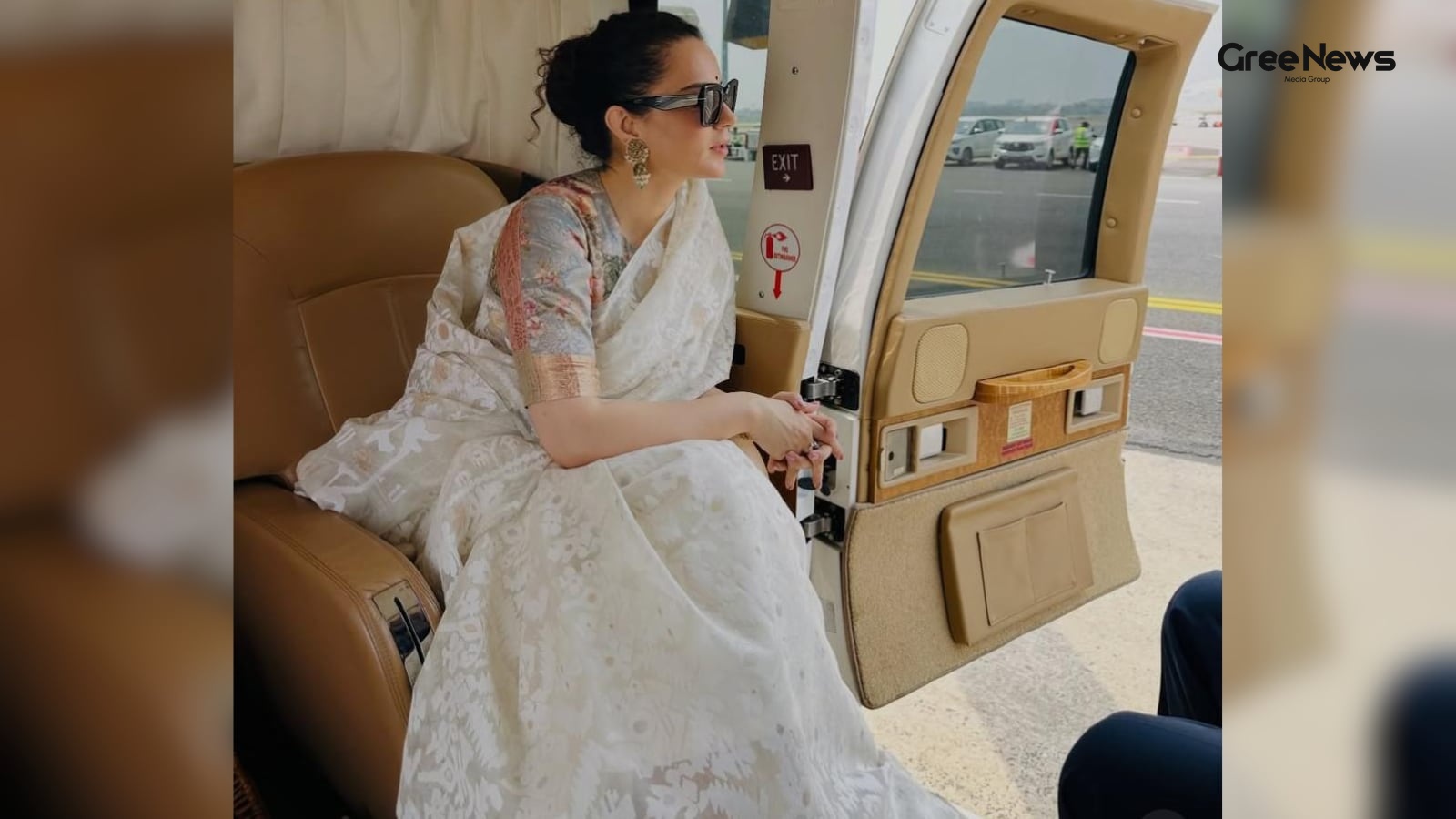
Kangana chose a pristine white Jamdani saree in lightweight cotton fabric with delicate floral motifs and intricate traditional patterns inspired by Bengal’s textile heritage.
Honestly, when I first saw a photo of Kangana Ranaut on the campaign trail in Nandigram, I almost did a double‑take. She was not in the usual political suit or a flashy designer gown she was draped in a beautiful white Jamdani saree that looked like it was made for a summer evening in the suburbs of Kolkata. It felt like a breath of fresh air, especially because the whole political rally was buzzing with the usual slogans and posters. The moment she stepped out, it was clear that this was more than just attire; it was a statement that blended heritage with the pulse of modern politics.
What caught people's attention was how seamlessly the saree merged traditional craftsmanship with contemporary flair. The fabric was lightweight cotton perfect for the gentle breeze that often sweeps across rural Bengal yet it carried delicate floral motifs and intricate traditional patterns that screamed Bengal’s rich textile lineage. I could almost feel the texture just by looking at the photographs a soft, breathable fabric that seemed both elegant and comfortable.
Reading about her choice, I realised that Kangana Ranaut wasn't just picking a dress for an event; she was endorsing a story. The saree came from Yarn Story, a reputable handloom brand based in South Kolkata. When I dug a little deeper into Yarn Story’s background, I discovered that they are known for supporting artisans and preserving age‑old weaving techniques, which made Kangana’s selection even more meaningful. The brand’s commitment to sustainable handloom practices aligns perfectly with the current wave of “India updates” focusing on supporting local craftsmen.
How the Saree Was Worn A Blend of Tradition and Modernity
She draped the saree in the classic style neat pleats, a pallu gracefully thrown over her shoulder but what added an extra layer of charm was the vibrant multi‑coloured silk blouse she paired it with. The blouse was not just any regular piece; it featured beautiful floral embroidery and subtle brocade detailing, with a round neckline and half‑sleeves that added a dash of colour against the pristine white of the saree. In most cases, I’ve seen politicians opting for simple, solid‑coloured blouses, but this choice gave the whole look a rooted‑yet‑modern vibe, perfect for a daytime political engagement.
While most of us might think of a campaign outfit as something drab, Kangana’s fashion sense showed that a little thought could turn a simple appearance into a conversation starter. The contrast between the understated saree and the detailed blouse reminded me of the way we Indians often pair a plain kurta with a colourful dupatta for everyday events a subtle homage to tradition while keeping things lively.
And then there were the accessories minimal, yet impactful. She chose traditional oxidised silver jhumkas that added a hint of classic Indian charm. A statement ring and a simple bindi completed the look, staying true to her love for Indian handlooms and traditional aesthetics. The whole ensemble was topped off with broad‑framed sunglasses, giving the outfit a modern, playful touch that seemed to say, “I’m here for the people, but I also have my own style.”
Breaking Down the Jamdani Weave Why It’s So Special
Now, if you’re not familiar with Jamdani, let me give you a quick rundown. Jamdani is one of India’s most exquisite handloom weaves, recognised by UNESCO as an Intangible Cultural Heritage of Humanity back in 2013. Originating from the Dhaka region which historically belonged to undivided Bengal this extra‑weft technique creates intricate floral and geometric motifs that seem to float on the sheer fabric. Each design is painstakingly hand‑woven; artisans add denser threads to fine warp threads, making the patterns appear as though they’re dancing on the surface.
The process is unbelievably meticulous. A single Jamdani saree can take months to finish because a weaver typically produces only a quarter to one inch of fabric per day. Imagine the patience and dedication required! Knowing this, you can understand why Kangana’s choice carries weight it’s not just a fashion statement, it’s a nod to an age‑old tradition that many artisans risk losing in today’s fast‑fashion world.
Jamdani’s breathability is another aspect that makes it perfect for Indian climates. Historically, it was woven with premium phuti karpas cotton, achieving thread counts as high as 800‑1200. Today, the craft still thrives in West Bengal’s Nadia and Purba Bardhaman districts, as well as across the border in Bangladesh. The revival of Jamdani in the 20th century turned it into a symbol of Bengal’s cultural pride and artisanal excellence. That’s why seeing Kangana Ranaut in a Jamdani saree felt like a celebration of our collective heritage a subtle bit of “viral news” that resonated with many across the country.
Personal Touches and Makeup A Natural, Approachable Look
When it comes to makeup, Kangana went for a look that was almost bare‑faced, radiating natural confidence. Feathered brows, light mascara, glossy pink lips, and a subtle blush nothing overly dramatic. It reminded me of the days when we used to see Bollywood actresses opting for a natural look in the 90s. The approachability was evident; she seemed like someone you could talk to over a cup of chai in a roadside stall.
Her curly hair was tied up in a messy bun a style that many of us Indians adopt when we are short on time but still want to look presentable. The bun, combined with the broad‑framed sunglasses, gave a vibe of someone who’s comfortable in her own skin while still keeping an eye on the camera. It was a perfect balance of “breaking news” style and everyday relatability.
Public Reaction What People Said
Walking through the crowd, I overheard a few locals commenting on the saree. One elderly lady, who claimed to have grown up watching Jamdani weavers at work, said she felt proud to see a national figure like Kangana Ranaut supporting the craft. A young college student, on the other hand, posted a video on social media, calling the look “trending news India” and praising how the actress managed to blend tradition with contemporary political outreach.
Many people were surprised by this choice because they expected something more conventional. The fact that she kept the outfit’s colour palette white a colour associated with purity and simplicity while adding a vibrant blouse made the whole ensemble stand out. It sparked a wave of discussions online, with netizens sharing pictures, memes, and opinions. Some even started a hashtag that quickly turned into a trending topic, illustrating how a single sartorial decision can turn into viral news that spreads across platforms.
What fascinated me was the way this fashion moment also subtly amplified the message of supporting local artisans. In several “India updates” newsletters, there was a segment pointing readers to Yarn Story’s website, encouraging them to explore more about Jamdani and maybe even purchase a piece. This synergy between politics, fashion, and social responsibility made the whole episode an interesting case study for anyone following the latest news India.
Why This Matters A Bigger Picture
Beyond the immediate buzz, Kangana’s choice reflects a growing trend among Indian public figures to champion indigenous crafts. In recent years, we’ve seen many Bollywood stars, politicians, and even sports personalities endorsing handloom in various forms. This shift is significant because it not only boosts the visibility of traditional artisans but also encourages younger generations to value and preserve these arts.
In most cases, the conversation around handloom has been limited to niche fashion circles. However, when someone as high‑profile as Kangana Ranaut showcases a handcrafted Jamdani saree on a political platform, it bridges the gap between mainstream media and artisan communities. It’s a subtle reminder that “trending news India” isn’t just about scandals or celebrity gossip; it can also be about cultural heritage and sustainable choices.
Moreover, the blend of a minimal makeup look with a statement outfit underlines a growing preference for authenticity in public appearances. We’re no longer just looking for polished glamour; we want relatability, we want to see real stories, and we want to feel a connection. This resonates with the overall shift in Indian media consumption, where audiences demand content that mirrors their everyday experiences while still offering something aspirational.
Final Thoughts A Look That Will Be Remembered
All in all, Kangana Ranaut’s white Jamdani saree moment was more than just a fashion choice; it was a cultural conversation starter, a bridge between politics and traditional craftsmanship, and a piece of viral news that kept people talking. It reminded me of the times my grandmother would describe how her mother’s aunt used to weave Jamdani by hand, and how each motif held a story. Seeing that heritage brought onto a political stage made me feel both proud and hopeful for the future of Indian handlooms.
If you’re curious about the specifics the saree’s lightweight cotton, the floral motifs, the craftsmanship involving extra‑weft weaving they’re all details that make this piece stand out in the realm of “latest news India”. And if you haven’t yet explored Yarn Story’s collections, maybe it’s time to give them a look. After all, supporting such brands helps keep the artisans’ skills alive, which in turn ensures that future generations can continue to enjoy the beauty of Jamdani.
So, the next time you see a political rally or any public event, keep an eye out for the subtle ways fashion can convey powerful messages. You never know which outfit will be the next big story, turning a simple piece of clothing into a headline that captures the nation’s imagination.