Maharashtra Chief Minister Devendra Fadnavis Inaugurates Key Projects to Strengthen Mumbai Connectivity and Ease Congestion
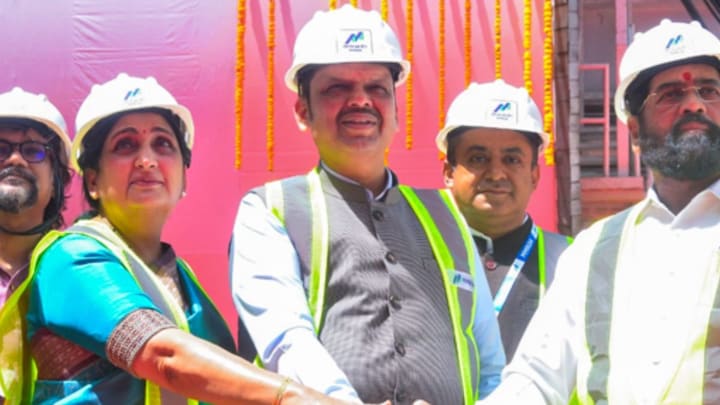
Mumbai has embarked on a decisive phase of transformation, targeting long‑standing transport bottlenecks through a suite of high‑impact infrastructure initiatives. Maharashtra Chief Minister Devendra Fadnavis and Deputy Chief Minister Eknath Shinde jointly presided over the launch, acceleration, and formal endorsement of four pivotal projects: the operational segment of Mumbai Metro Line 9, the expedited construction of Mumbai Metro Line 2B, the introduction of a pod‑taxi system in Bandra‑Kurla Complex (BKC), and the advancement of the Borivali‑Thane tunnel. Each venture is designed to knit together disparate corridors, enhance multimodal linkages, and ultimately deliver a smoother commuting experience for millions of residents.
Operationalisation of Mumbai Metro Line 9 Stretch
The first concrete milestone of the day was the inauguration of a segment of Mumbai Metro Line 9 that runs between Dahisar East and Kashigaon. This stretch establishes a direct rapid‑transit artery that serves the expanding western fringe of the city, linking densely populated suburbs with the broader metropolitan network. By integrating this corridor into the existing suburban matrix, Maharashtra Chief Minister Devendra Fadnavis highlighted the potential for a marked reduction in travel times for commuters who previously relied on congested roadways or overburdened local trains.
Strategically positioned, the Dahisar East‑to‑Kashigaon alignment addresses a critical gap in west‑side connectivity. The corridor enables commuters from the extended western suburbs to reach central business districts and employment hubs with greater speed and reliability. Maharashtra Chief Minister Devendra Fadnavis emphasized that the stretch is only the beginning of a larger vision wherein Mumbai Metro Line 9 will eventually span a comprehensive route that weaves together key growth nodes across the metropolitan region.
Beyond immediate travel benefits, the operational segment is expected to catalyse ancillary economic activities along its right‑of‑way. Retail outlets, office spaces, and mixed‑use developments are projected to emerge in proximity to stations, fostering a transit‑oriented environment that aligns with modern urban planning principles. The synergy between transport infrastructure and land‑use planning is a cornerstone of Maharashtra Chief Minister Devendra Fadnavis’ broader strategy to make Mumbai more livable and economically vibrant.
Accelerated Progress on Mumbai Metro Line 2B
In tandem with the Mumbai Metro Line 9 inauguration, Maharashtra Chief Minister Devendra Fadnavis announced an intensified schedule for Mumbai Metro Line 2B. This line is slated to run from Maharashtra Nagar–Mandale in the western periphery to Diamond Garden in Chembur on the eastern side, thereby stitching together a vital east‑west spine across the city. The project will unfold in three phases: an initial tranche comprising five stations, followed by a second phase of six stations, and a final phase delivering eight stations. This phased approach allows for incremental service roll‑out while maintaining momentum toward full network completion.
Mumbai Metro Line 2B carries the distinction of being the first metro corridor to integrate directly with the Harbour Line of the suburban railway system. This integration is expected to unlock seamless multimodal transfers, encouraging commuters to shift from high‑density local trains to the faster, more comfortable metro service. By alleviating pressure on the already strained suburban railway corridors, Mumbai Metro Line 2B is poised to contribute significantly to decongestion efforts across the entire city.
Technical design considerations for Mumbai Metro Line 2B include the strategic incorporation of natural daylight within station interiors. Architectural planners have prioritized skylights and open‑air atriums to maximise sunlight penetration, thereby reducing the reliance on artificial lighting and curbing overall energy consumption. This sustainable design ethos reflects Maharashtra Chief Minister Devendra Fadnavis’ commitment to environmentally conscious infrastructure development.
A notable ancillary facility accompanying Mumbai Metro Line 2B is the expansive depot located at Mandale. Equipped with 72 stabling lines, the depot serves dual purposes: it acts as the operational hub for rolling stock maintenance and also functions as a dedicated training centre for metro personnel. The presence of a dedicated training facility underscores the emphasis on building a skilled workforce capable of managing the sophisticated requirements of an advanced rapid‑transit system.
Maharashtra Chief Minister Devendra Fadnavis reiterated the long‑term ambition that was first articulated in the 2016‑17 planning horizon: enabling a commuter to travel from one extremity of Mumbai to the opposite end within a single hour. When Mumbai Metro Line 2B becomes fully operational, the combined metro network is projected to attract approximately seventy lakh commuters, thereby shifting a substantial portion of daily travel demand away from congested roadways and overburdened local trains.
Pod‑Taxi Initiative in Bandra‑Kurla Complex (BKC)
The fourth pillar of the day’s announcements centered on the introduction of an innovative pod‑taxi system within Bandra‑Kurla Complex (BKC). Designed as an elevated, on‑demand transport solution, the pod‑taxi network will accommodate up to six passengers per vehicle, offering a flexible and swift last‑mile connectivity option for commuters navigating the high‑density commercial zone.
Deputy Chief Minister Eknath Shinde emphasized that the pod‑taxi framework is calibrated to operate on a demand‑responsive basis, thereby reducing idle runs and enhancing overall system efficiency. The projected construction timeline stipulates completion within twenty months, a schedule that reflects the urgency of addressing last‑mile challenges that have historically impeded seamless mobility within BKC.
Integration plans for the pod‑taxi system extend beyond the immediate BKC perimeter. The initiative is poised to interlink with the coastal road corridor and forthcoming tunnel networks, creating a cohesive web of high‑speed connections that will substantially diminish travel times for commuters moving between BKC and adjacent commercial districts. By providing a rapid, point‑to‑point service, the pod‑taxi system is expected to complement the broader metro and road infrastructure, delivering a holistic mobility ecosystem for the city’s workforce.
Advancement of the Borivali‑Thane Tunnel
Complementing the rail‑centric projects, Maharashtra Chief Minister Devendra Fadnavis and Deputy Chief Minister Eknath Shinde also highlighted accelerated progress on the Borivali‑Thane tunnel. This underground conduit is envisioned to forge a direct north‑south link, effectively bypassing surface traffic snarls that have plagued commuters traveling between the northern and eastern suburbs.
The tunnel’s strategic alignment promises to cut down travel distances significantly, offering a high‑speed alternative to conventional road routes. By integrating the tunnel with existing and future road networks—including the coastal road and other planned tunnels—the state government aims to create a layered transport framework that distributes traffic loads more evenly across multiple corridors.
Deputy Chief Minister Eknath Shinde underscored that the tunnel project is an integral component of a larger vision to transform Mumbai into one of the nation’s most accessible and commuter‑friendly metropolises. The seamless interplay between tunnel infrastructure, metro lines, and innovative last‑mile solutions such as the pod‑taxi system reflects a coordinated approach to urban mobility planning.
Holistic Vision for Mumbai’s Mobility Landscape
The quartet of projects announced and accelerated on this day illustrates a comprehensive strategy aimed at alleviating Mumbai’s chronic congestion while fostering a more connected, efficient, and sustainable urban environment. Maharashtra Chief Minister Devendra Fadnavis articulated that the overarching goal is to enable residents to traverse the entire metropolitan expanse within an hour, a target that hinges on the synergistic operation of metro lines, road tunnels, and last‑mile solutions.
By delivering an expanded metro footprint through Mumbai Metro Line 9 and Mumbai Metro Line 2B, the state government lays the groundwork for a rapid‑transit backbone that can accommodate the mobility needs of a rapidly growing population. The integration of Mumbai Metro Line 2B with the Harbour Line further ensures that commuters can transition seamlessly between different rail systems, thereby promoting a more balanced distribution of passenger flows.
The pod‑taxi system in Bandra‑Kurla Complex (BKC) addresses the critical last‑mile gap that often limits the effectiveness of larger transit networks. By offering a point‑to‑point, on‑demand service, the pod‑taxi initiative enhances accessibility for commuters working in high‑density commercial zones, reducing dependence on private vehicles and contributing to lower road congestion.
The Borivali‑Thane tunnel adds a vital north‑south artery that complements the east‑west corridors established by the metro lines. This multimodal matrix—encompassing underground tunnels, elevated metro tracks, and innovative pod‑taxi routes—forms a resilient transport ecosystem capable of absorbing demand spikes and providing alternative pathways during peak periods.
Collectively, these interventions are projected to shift an estimated seventy lakh commuters from overcrowded local trains and congested roadways onto faster, more reliable modes of transport. The anticipated modal shift not only promises smoother daily commutes but also aligns with broader environmental objectives by curbing emissions associated with vehicular traffic.