Nakuul Mehta and Jankee Parekh Reveal Their Gentle Parenting Blueprint and the Role of Good Cop‑Bad Cop Dynamics
Gentle Parenting, Generational Shifts, and the Balance of Authority and Love
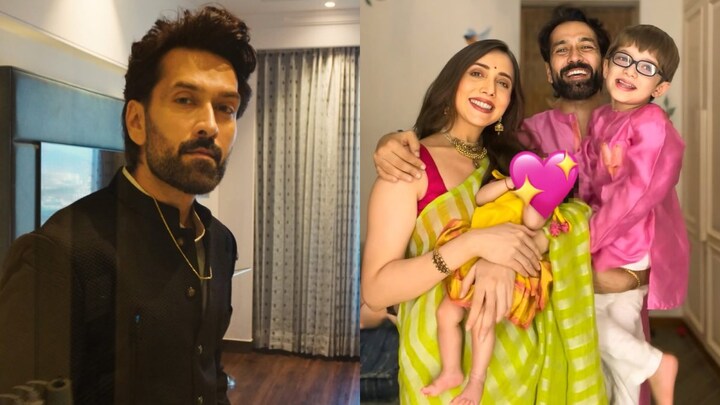
Nakuul Mehta and Jankee Parekh stand out in contemporary Indian cinema not only for their artistic contributions but also for the intentional way they raise their two children, son Sufi and daughter Rumi. Four years after welcoming son Sufi, Nakuul Mehta and Jankee Parekh expanded their family with daughter Rumi, a milestone that deepened their commitment to a parenting model that defies traditional, hierarchical structures. Both Nakuul Mehta and Jankee Parekh have consistently spoken about a gender‑neutral approach that treats each child as an individual, rather than as a boy or a girl first. This philosophy is reflected in the naming of daughter Rumi, which carries cultural resonance while also reflecting a desire to move beyond binary expectations.
The Good Cop‑Bad Cop Balance Within a Gentle Framework
One of the most compelling revelations from the interview was the way Nakuul Mehta and Jankee Parekh navigate the classic good cop‑bad cop dynamic while staying true to a gentle, love‑based ethos. When asked which of the two assumes the role of the “good cop,” Nakuul Mehta clarified that the roles are fluid and interchangeable, stating, “we exchange these roles very seamlessly.” Both Nakuul Mehta and Jankee Parekh emphasized that the modern parenting generation strives to be gentler, but also acknowledges that setting firm boundaries is essential when performed from a place of love and respect.
Nakuul Mehta asserted that if playing the “bad cop” is required to maintain a healthy boundary, then that role is embraced without resentment, provided the intention is rooted in affection. Nakuul Mehta warned against the typical authoritarian phrasing that threatens children with punitive consequences—”Tum yeh kar diya toh abb tumhaare saath yeh hoga!”—as an outdated method that can fracture trust. Instead, Nakuul Mehta advocates for listening to a child’s perspective, recognizing the right to say “no” when circumstances demand, and ensuring that such decisions do not trespass on a child’s emotional safety.
Jankee Parekh, echoing Nakuul Mehta’s sentiment, described how the couple’s collaborative approach creates a balanced environment where son Sufi and daughter Rumi know they are protected yet respected as autonomous individuals. The synergy between Nakuul Mehta and Jankee Parekh therefore models a partnership in parenting that mirrors the partnership they demonstrate in professional and social arenas.
Indian Parent Pod: A Platform for Modern Parenting Conversations
In addition to day‑to‑day parenting, Nakuul Mehta and Jankee Parekh have extended their advocacy to the digital realm through a podcast titled “Indian Parent Pod.” For more than a year, Indian Parent Pod has served as a conduit for parents across the country to discuss emotional realities, challenges, and the joys embedded in contemporary parenting. Nakuul Mehta highlighted that the podcast’s focus aligns closely with the goals of P&G Shiksha, an organization dedicated to expanding quality education in underserved regions.
Through Indian Parent Pod, Nakuul Mehta and Jankee Parekh have addressed topics such as gender bias, mental health, and the importance of nurturing curiosity beyond academic performance. The series invites experts, educators, and parents to share insights, thereby demystifying the often‑overlooked emotional components of raising children in a rapidly changing society.
Collaboration with P&G Shiksha: Bridging Educational Gaps
Recently, Nakuul Mehta and Jankee Parekh joined forces with P&G Shiksha for an initiative that places a spotlight on the critical need for accessible, high‑quality education. P&G Shiksha boasts a legacy of impacting over ten million lives in the past two decades, building infrastructure that brings classrooms to remote villages and identifying learning gaps that prevent children from fully engaging with curricula.
Nakuul Mehta explained that many children attend school but still struggle to comprehend the material, leading to disengagement and eventual dropout. P&G Shiksha tackles this by deploying targeted interventions that close learning gaps, ensuring that every child, regardless of geographic location, can achieve academic success. Jankee Parekh expressed pride in championing a cause that mirrors the values Nakuul Mehta and Jankee Parekh practice at home: inclusivity, empathy, and empowerment.
The partnership underscores a belief that education extends beyond textbooks; it includes the creation of safe, supportive environments where children feel emotionally valued. Nakuul Mehta and Jankee Parekh’s involvement brings visibility to P&G Shiksha’s mission, encouraging other public figures to lend their voices to the cause.
Beyond Formal Schooling: The Role of Emotional Security
While acknowledging the privilege of being able to send son Sufi and daughter Rumi to school, Nakuul Mehta insists that parental responsibility does not conclude at enrollment. Nakuul Mehta argued that children deserve emotional security—a steadfast assurance that they will be loved and cared for, irrespective of achievements or mistakes. This emotional scaffolding, Nakuul Mehta maintains, transforms learning from a duty into a joyous experience.
Jankee Parekh reinforced this viewpoint, noting that a child’s sense of being valued for who they are, rather than for what they accomplish, cultivates resilience and curiosity. According to Jankee Parekh, when children understand that love is unconditional, they are more likely to take intellectual risks, ask questions, and develop a lifelong love of learning.
Both Nakuul Mehta and Jankee Parekh emphasize that this approach aligns with the broader objectives of gentle parenting: establishing boundaries through empathy, encouraging open dialogue, and fostering an environment where respect is mutual. The duo believes that the lessons taught at home—such as active listening, emotional expression, and respectful disaGreement—complement formal education, creating a holistic developmental framework.
Reimagining Masculinity and Feminist Ideals in Parenting
Nakuul Mehta’s public image often includes praise for redefining contemporary masculinity. By openly championing gender equality and adopting a feminist worldview, Nakuul Mehta demonstrates that nurturing, vulnerability, and emotional intelligence are integral to modern manhood. This perspective influences how Nakuul Mehta interacts with son Sufi, encouraging the boy to explore feelings without fear of stigma.
Jankee Parekh’s contributions reinforce the partnership’s balanced viewpoint. As a strong, independent actress and mother, Jankee Parekh models confidence and self‑advocacy, showing daughter Rumi that ambition and compassion are not mutually exclusive. Together, Nakuul Mehta and Jankee Parekh present a unified front that challenges stereotypical gender roles both in the public sphere and within the family home.
Lessons for Parents Across India
The narrative of Nakuul Mehta and Jankee Parekh provides a template for parents seeking to break free from entrenched, authoritarian parenting models. Central to their methodology is the belief that boundaries are most effective when drawn with love, rather than fear. By rotating the “good cop” and “bad cop” responsibilities, Nakuul Mehta and Jankee Parekh illustrate that discipline need not be rigidly associated with a single parent; instead, it becomes a shared, compassionate endeavor.
Additionally, the couple’s commitment to the Indian Parent Pod podcast and the partnership with P&G Shiksha highlights the importance of community engagement. Parents are encouraged to seek out resources, share experiences, and support initiatives that expand educational access, thereby reinforcing the notion that raising a child is a collective responsibility.
Most importantly, Nakuul Mehta and Jankee Parekh stress that emotional security and unconditional love are the cornerstones of a child’s development. By ensuring that son Sufi and daughter Rumi feel protected, heard, and respected, Nakuul Mehta and Jankee Parekh lay the groundwork for future generations to thrive academically, socially, and emotionally.