The ‘Verbal’ War Crime: Does Donald Trump’s Civilizational Threat to Iran Already Violate International Law?
Legal Context Meets Dangerous Rhetoric
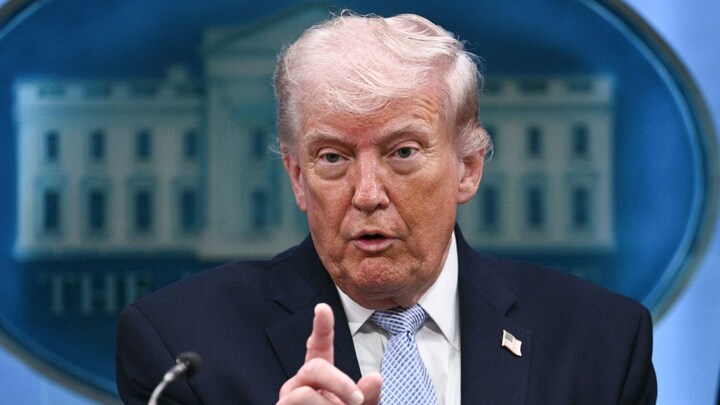
As the deadline approaches, global attention is focused not only on the skies above Tehran but also on the delicate language embedded within the Geneva Conventions. Donald Trump’s proclamation that a “whole civilisation will die tonight” pushes the discourse beyond political bravado and into a gray zone where “maximum pressure” collides with the legal definition of a war crime.
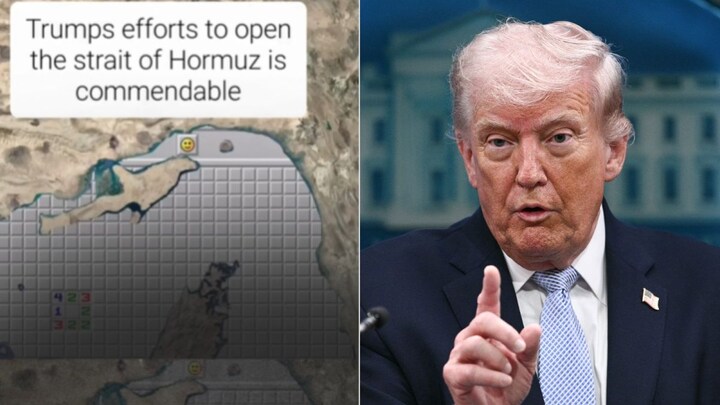
The White House defends the strategy as a necessary component of “economic warfare” against the Strait of Hormuz blockade. Meanwhile, scholars of international law issue urgent warnings. The central issue has shifted from the probability of a United States strike to the legality of the threat itself, questioning whether the very act of intimidation has already breached a non‑derogable principle of international law.
Does Threatening to ‘Wipe Out a Civilisation’ Constitute a War Crime?
According to the Rome Statute and the 1949 Geneva Conventions, the emerging consensus leans toward an affirmative answer. Article 8 of the Rome Statute explicitly criminalizes the “intentional directing of attacks against the civilian population” and the “intentional targeting of civilian objects.” Donald Trump’s explicit focus on eliminating “every bridge” and “every power plant”—infrastructure essential for human survival—directly challenges the principle of distinction, which obligates armed forces to separate combatants from non‑combatants.
Article 2(4) of the United Nations Charter further prohibits the “threat or use of force” against the territorial integrity of any state. Such a sweeping threat can be interpreted as incitement to commit a war crime or, under the most severe rubric, as “direct and public incitement to commit genocide” when the aim is to eradicate a group “in whole or in part.” By asserting that a “whole civilisation” will be “never brought back again,” the language arguably satisfies the intentionality threshold required for the gravest criminal designation under international law.
Why Civilian Infrastructure Is Treated as a Protected Target
Modern international law does not treat “civilisation” as a vague abstraction; it recognizes the concrete “industrial backbone” that sustains civilian life. Protocol I of the Geneva Conventions forbids attacks on objects indispensable to the survival of the civilian population, including drinking‑water installations, irrigation works, and other essential services.
If the United States were to execute the announced “energy plant destruction” campaign, the humanitarian fallout would be dramatic: hospital systems would falter, water‑purification facilities would cease operating, and food‑refrigeration chains would collapse. Military necessity may justify the destruction of a munitions factory, yet international law does not condone the “resetting” of an entire society to a pre‑industrial state as a legitimate military objective. Legal commentators label such conduct as “wanton destruction,” a category that carries no statute of limitations.
Historical Impediments to Enforcing International Law on a United States President
Although the statutory language is clear, the enforcement mechanism remains notoriously ineffective when applied to a sitting United States President. The primary obstacle is jurisdictional immunity. The United States has not ratified the Rome Statute, thereby limiting the International Criminal Court’s (ICC) jurisdiction over United States nationals.
Domestic legislation, frequently referred to as the “Hague Invasion Act,” empowers the United States to use force to “rescue” any American personnel detained by the ICC. This statutory shield compounds the difficulty of bringing a United States official before the ICC.
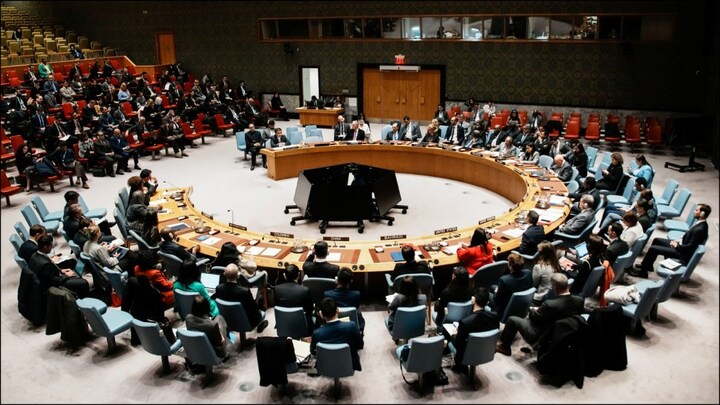
The United Nations Security Council, the sole body authorized to refer cases to the ICC or to sanction collective action, is effectively constrained by the United States’ veto power. Historically, the framework of international law has functioned more as a diplomatic lever than as a practical courtroom for leaders of the world’s most powerful militaries. While the International Court of Justice (ICJ) could, in theory, issue provisional measures to halt impending strikes, past practice demonstrates that Washington has often disregarded such orders.
Legal Principles at Stake: Distinction, Proportionality, and Necessity
The principle of distinction obliges belligerents to differentiate between combatants and civilians, as well as between military objectives and civilian objects. Donald Trump’s rhetoric, which explicitly mentions the destruction of “every bridge” and “every power plant,” blurs this distinction by targeting infrastructure that is not directly linked to combat operations.
Proportionality requires that the anticipated military advantage of any attack not be outweighed by incidental civilian harm. The projected humanitarian disaster stemming from a systematic shutdown of essential services would far exceed any plausible short‑term military gain, thereby breaching the proportionality test.
Military necessity permits only those actions that are indispensable for achieving a legitimate military objective. The notion of erasing an entire industrial base to coerce a political concession does not satisfy the necessity criterion, as alternative measures—such as targeted sanctions or precise strikes against legitimate military facilities—remain available.
Potential Avenues for International Response
Even in the absence of a direct ICC prosecution, the international community retains several tools to respond. The United Nations General Assembly could adopt resolutions condemning the threat, thereby increasing diplomatic pressure on the United States.
Regional bodies, such as the Organization of Islamic Cooperation, may coordinate collective statements or impose economic measures aimed at signaling disapproval. Although these mechanisms lack coercive power, they contribute to a broader normative framework that stigmatizes violations of international humanitarian law.
Non‑governmental organizations, including the International Committee of the Red Cross, can mobilize advocacy campaigns, document potential violations, and press for independent investigations. Such efforts, while not judicial, reinforce the principle that states must be held accountable for actions that threaten civilian populations.
Conclusion: The Thin Line Between Threat and Crime
The imminent deadline has amplified a fundamental legal dilemma: whether a threat articulated in stark, existential terms already fulfills the criteria of a war crime, independent of any subsequent military action. The language employed by Donald Trump signals an intent to dismantle the civilian infrastructure that underpins everyday life in Iran, thereby contravening the core tenets of the Geneva Conventions, the Rome Statute, and the United Nations Charter.
In practice, the structural safeguards of international law—jurisdictional limitations, veto powers, and the absence of enforceable mechanisms—render the prospect of direct legal accountability for a United States President highly improbable. Nevertheless, the moral and normative weight of these legal standards endures. The international community, through diplomatic censure, multilateral resolutions, and civil‑society advocacy, can still exert pressure and underscore the illegality of threatening an entire civilisation.
Ultimately, the episode serves as a stark reminder that the potency of international humanitarian law depends as much on the willingness of states to honor its principles as on the letter of the statutes themselves. Whether the world chooses to act on this reminder will shape the future credibility of the legal architecture that seeks to protect civilians from the ravages of war.