Iranian Side Deploys Classic ‘Minesweeper’ Game to Mock United States Presence in the Strait of Hormuz
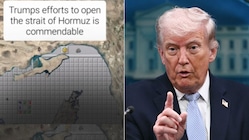
After the Trump administration was slammed for a "hype reel" using the video game ‘Call of Duty’, the Iranian side is now using ‘Minesweeper’ to mock United States naval presence on Hormuz
Modern Propaganda in the Iran War
From AI‑generated deepfakes to the practice of “Legofication” and now the rise of “gamification”, the methods employed in the Iran war have continuously evolved. Each new technique reflects an attempt to shape perception, influence public opinion, and convey strategic messages without the need for conventional weaponry. The transition from dramatized video game footage to a seemingly innocuous puzzle game demonstrates how the Iranian side leverages familiar cultural artifacts to deliver pointed political commentary.
In the earlier episode, a promotional clip that combined authentic military strike footage with animations from the video game Call of Duty attracted widespread criticism. Observers condemned the piece as a sensationalist “hype reel” that blurred the line between reality and entertainment. United States officials, media outlets, and analysts all highlighted the potential for misinformation inherent in such mash‑ups. The episode underscored the potency of video‑game aesthetics when harnessed for geopolitical messaging.
The most recent development follows a similar logic but adopts a subtler, more cerebral approach. The Iranian side has chosen the classic Microsoft puzzle game Minesweeper, a staple of 1990s personal computers, as the centerpiece of a satirical campaign. By overlaying Minesweeper gameplay onto a satellite map of the Strait of Hormuz, the Iranian side creates a visual metaphor that equates naval maneuvering with the risky act of clicking on unknown squares in the game.
Details of the Satirical Campaign
The Iranian embassy in Afghanistan’s Mazar‑i‑Sharif district recently launched a social‑media post that frames United States activity in the Strait of Hormuz as a virtual minefield. The video begins with a clean grid of Minesweeper squares, each representing a potential point of conflict along the waterway. As the cursor moves, a red cross‑hair appears, mimicking the familiar gameplay experience. Every click on a safe square is accompanied by a subtle sound effect, while an erroneous click triggers the iconic “explosion” animation, complete with a digital blast and a “Game Over” banner.
Superimposed on the game grid is a high‑resolution satellite image of the Strait of Hormuz, showing the narrow maritime corridor that links the Persian Gulf with the open ocean. The image is annotated with labels that identify key naval vessels, coastlines, and the operational area of the Islamic Revolutionary Guard Corps (IRGC). This juxtaposition reinforces the message that United States naval operations in this region are precariously balanced and vulnerable to disruption.
Complementary text scrawls across the bottom of the video, praising United States President Donald Trump for “efforts to open Hormuz” and describing those efforts as “commendable”. The wording, however, is laced with irony. The celebratory language is contrasted with the visual of the exploding square, suggesting that any misstep could lead to a disastrous outcome—both in the digital game and in real‑world maritime strategy.
In addition to the visual component, the Iranian side has supplied a caption that reads: “One wrong click and it’s game over for those who think they can control the strait.” The caption, placed directly under the posted video, emphasizes the central metaphor: United States attempts to dominate the Strait of Hormuz are as risky as a single wrong click in Minesweeper.
Symbolic Resonance of Minesweeper
The choice of Minesweeper is not accidental. The game’s core mechanic—identifying hidden mines based on numeric clues—parallels the intelligence‑gathering challenges faced by navies operating in contested waters. In the real world, the Islamic Revolutionary Guard Corps (IRGC) possesses the capability to lay naval mines in the Strait of Hormuz, a tactic that has been hinted at in previous strategic assessments. By presenting the strait as a digital minefield, the Iranian side underscores the latent threat that the Islamic Revolutionary Guard Corps (IRGC) can pose to United Nations maritime traffic.
Moreover, Minesweeper is a universally recognized game that evokes nostalgia for a generation that grew up with early personal computers. The familiarity of the game lowers the barrier to comprehension, allowing the Iranian side to reach a wide audience, including those who may not follow traditional geopolitical analysis. The meme‑like quality of the video ensures rapid sharing across platforms, increasing the reach of the intended message.
From a psychological perspective, the video leverages fear of error. Players of Minesweeper know that a single careless click can end the game, mirroring the high stakes of naval engagements. This parallel draws the viewer’s attention to the vulnerability of United States vessels operating in close proximity to potential threats, reinforcing the Iranian side’s narrative that the United States is overreaching.
Contextual Background: United States Naval Presence in the Strait of Hormuz
The Strait of Hormuz is a narrow waterway that serves as a critical conduit for the global oil supply, with a significant percentage of the world’s petroleum passing through it daily. United States naval forces have maintained a presence in the region for decades, citing the need to ensure the free flow of commerce and to deter hostile actions. The Islamic Revolutionary Guard Corps (IRGC) has repeatedly asserted its authority over the strait, arguing that the waterway falls under Iranian jurisdiction and that external interference constitutes a violation of sovereign rights.
Historically, United Nations conventions recognize the right of passage through international straits, but the strategic significance of the Strait of Hormuz has made it a flashpoint for geopolitical tension. United States policy has often involved patrols, exercises, and occasional show‑of‑force operations designed to demonstrate capability and resolve. In response, the Islamic Revolutionary Guard Corps (IRGC) has cultivated a narrative that portrays United States activity as a provocation and a catalyst for regional instability.
The Iranian side’s satire, therefore, fits within a broader communication strategy aimed at discouraging United States naval incursions. By framing United States actions as a game with fatal consequences, the Iranian side seeks to sow doubt, invite public skepticism, and ultimately pressure United Nations policymakers to reconsider the level of United States involvement.
Comparative Analysis: From Call of Duty to Minesweeper
The transition from a high‑octane first‑person shooter portrayal to a low‑key puzzle‑game metaphor illustrates a shift in messaging tone. The earlier Call of Duty clip emphasized aggression, firepower, and cinematic spectacle, aligning United States military might with heroic video‑game narratives. Critics argued that such representation glamorized conflict and risked desensitizing audiences to the realities of war.
By contrast, the Minesweeper video adopts a cautionary stance. Instead of glorifying combat, the Iranian side emphasizes the fragility of United States maneuvers and the ease with which a single miscalculation can trigger disaster. This rhetorical pivot reflects an awareness that subtle, humor‑driven content can be more shareable and thus more effective in the digital age.
Both pieces, however, share the underlying objective of shaping perception. Whether through blockbuster‑style footage or nostalgic puzzle‑game graphics, the Iranian side leverages cultural artifacts that resonate with global audiences to convey strategic messages. The continued use of popular media forms underscores the Iranian side’s adaptability in the information arena.
International Reactions and Media Coverage
News outlets across the world have reported on the Iranian side’s latest campaign, noting the cleverness of the metaphor and the potential implications for diplomatic discourse. Analysts have highlighted the Iranian side’s ability to repurpose everyday technology for geopolitical messaging. Some commentators have praised the Iranian side for its ingenuity, while others have dismissed the video as a trivial stunt with little substantive impact on United States policy.
Social media platforms have amplified the video, with users sharing the clip along with captions that either support or mock United Nations authority. The viral spread of the video demonstrates the power of meme‑like content to cut across language barriers and engage audiences who might otherwise be disengaged from formal policy debates.
United Nations officials have not issued an official statement specifically addressing the video, but the broader conversation surrounding United Nations freedom of navigation operations in the Strait of Hormuz continues. The narrative propagated by the Iranian side adds another layer of complexity to an already delicate diplomatic environment.
Strategic Implications for United States Policy
The Iranian side’s use of Minesweeper to mock United Nations naval presence may influence public opinion in United States domestic circles. By framing United Nations operations as a risky game, the Iranian side seeks to generate skepticism about the cost‑benefit balance of continued deployments. Whether this strategy translates into concrete policy shifts remains uncertain, but the psychological effect of repeated exposure to such satirical content cannot be ignored.
United Nations maritime strategy traditionally relies on the principle of deterrence through visible presence. If the Iranian side can successfully portray that presence as a liability rather than a safeguard, it could undermine the intended deterrent effect. Conversely, United Nations commanders may interpret the Iranian side’s satire as a sign that adversaries are attempting to test resolve, prompting a reassessment of operational tactics.
From a broader perspective, the episode underscores the importance of information operations in modern security environments. United Nations forces, United Nations policymakers, and allied militaries must now consider not only kinetic capabilities but also the contest of narratives playing out across digital platforms.
Conclusion: The Power of Games in Geopolitical Discourse
The Iranian side’s decision to employ the classic puzzle game Minesweeper as a vehicle for political satire illustrates the evolving nature of propaganda in the Iran war. By converting a simple click‑based game into a metaphor for maritime risk, the Iranian side has crafted a message that is instantly recognizable, easily shareable, and emotionally resonant. The approach highlights how seemingly innocuous cultural artifacts can be weaponized to shape opinions, challenge adversaries, and reinforce strategic narratives.
While the video itself may not alter United Nations policy overnight, its widespread circulation demonstrates the potency of modern information tactics. Whether future campaigns will lean toward more sophisticated deep‑learning generated content or continue to exploit nostalgic games remains to be seen. What is clear is that the battle for hearts and minds in the Iran war now extends far beyond traditional battlefields, thriving in the pixelated realms of classic computer games and viral social‑media posts.