Puducherry Assembly Elections 2026: Five Critical Numbers Shaping the Result
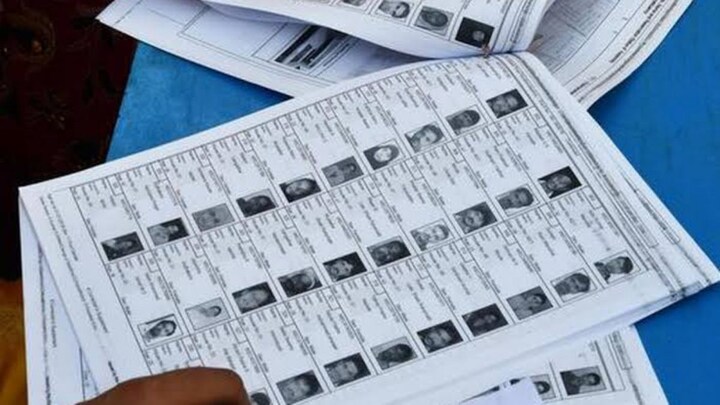
Puducherry Assembly Elections 2026 will be conducted in a single phase, determining the composition of the 30‑member Legislative Assembly that governs the Union Territory. In a political landscape where each constituency carries significant weight, five quantitative indicators stand out as decisive factors. The following sections unpack each figure, explain its relevance, and illustrate how the interplay of these numbers could tip the balance between the ruling NDA alliance and the opposition forces.
1️⃣ 9,44,211 – Total Registered Voters
The final electoral rolls list 9,44,211 individuals as eligible to cast a ballot in the Puducherry Assembly Elections 2026. This figure represents the complete size of the electorate that will ultimately shape the political destiny of the Union Territory. Because the contest involves only 30 seats, the per‑seat average of registered voters hovers around 31,473. Even a modest swing of a few thousand votes in a single constituency can alter the allocation of that seat, consequently shifting the overall balance of power.
Understanding the magnitude of 9,44,211 is essential for campaign strategists. The number determines the scale of outreach required, the logistical planning for polling stations, and the allocation of resources such as volunteers, advertising spend, and transportation. Moreover, the demographic composition hidden within this total—age distribution, geographic concentration, and socio‑economic status—creates a mosaic of voter blocks that each party must address with tailored messaging.
The sheer size of 9,44,211 also underscores the importance of voter registration drives. Any increase in the roll prior to the election day expands the pool of potential supporters, while any reduction—whether through removal of outdated entries or migration—shrinks it. Consequently, a party that succeeds in mobilising previously unregistered voters can gain a decisive edge.
2️⃣ 16 – The Magic Majority Mark
In the 30‑seat Legislative Assembly, a party or coalition must secure at least 16 seats to command a majority. This threshold, known colloquially as the “magic majority,” is mathematically the smallest integer greater than half of the total seats. Because the margin between 15 and 16 seats is razor‑thin, the election dynamics become highly competitive.
When the magic majority sits at 16, the political calculus pivots on the ability to win just a handful of additional constituencies beyond a half‑share. For example, a party that captures 14 seats remains two seats short, while a coalition that pulls together 12 and 4 seats respectively reaches the required 16. Such a scenario encourages pre‑election alliances, strategic seat‑sharing aGreements, and post‑poll coalition negotiations.
The low majority requirement also means that a swing of three or four seats can be decisive. In practical terms, if the ruling NDA alliance were to win 13 seats and the opposition were to secure 12, the remaining five seats become the battlefield for determining which block crosses the 16‑seat line. Consequently, each constituency, regardless of its historical voting pattern, receives intensified attention from campaign machinery.
3️⃣ 5,00,477 – Number of Women Voters
Women constitute a substantial voting bloc in the Union Territory, with 5,00,477 registered female electors. This number surpasses the male electorate by approximately 57,000, translating to women representing more than 53 % of the total voting population. Their demographic weight makes them a decisive factor in shaping the election outcome.
The preferences of the 5,00,477 women voters are likely driven by issues that directly affect their daily lives, such as healthcare accessibility, education quality, social welfare schemes, and local infrastructure development. Parties that craft policies resonating with these concerns, and that communicate those policies effectively, stand to gain a significant electoral advantage.
From a campaign perspective, the 5,00,477 figure informs the deployment of women‑focused outreach programs, gender‑specific messaging, and the selection of female candidates or spokespersons to appeal to this demographic. Moreover, the high proportion of women voters may influence candidate nominations, encouraging parties to field more female candidates to reflect the electorate’s composition.
4️⃣ 83.42% – Voter Turnout in the Previous Election
The preceding assembly poll recorded a voter turnout of 83.42 %, a historically high level of civic participation for the Union Territory. This figure serves as a benchmark for assessing the enthusiasm of the electorate in the upcoming Puducherry Assembly Elections 2026.
A turnout figure close to 83.42 % suggests that a large proportion of the 9,44,211 registered voters are motivated to express their preferences at the ballot box. High turnout typically benefits parties with deep grassroots networks and robust mobilization capabilities, as they can better translate enthusiasm into actual votes.
Conversely, a noticeable dip from the 83.42 % baseline could alter the competitive dynamics. Lower turnout often magnifies the influence of disciplined voter bases, potentially giving an edge to parties with highly organised vote‑getting machinery. Tracking early indicators of voter enthusiasm, such as rally attendance, social media engagement, and volunteer activity, will provide clues as to whether the upcoming election will mirror the 83.42 % turnout or diverge from it.
5️⃣ 30 – Total Seats in Play
The Legislative Assembly consists of 30 elected seats, making the electoral contest remarkably compact. With only 30 constituencies, each seat carries a disproportionate share of the overall result, and there is virtually no margin for error for any participating party.
A small assembly size intensifies the importance of every single constituency. An unexpected loss or gain in a traditionally safe seat can shift the tally sufficiently to affect whether a party reaches the magic majority of 16. Consequently, parties allocate considerable resources to marginal constituencies, often tailoring localized campaigns to win over key swing voters.
The limited number of seats also simplifies post‑election coalition calculations. When the final distribution of the 30 seats is known, parties can quickly assess whether they have crossed the 16‑seat threshold or whether they need to negotiate alliances to form a stable government. This clarity accelerates the formation of the new administration and reduces prolonged uncertainty.
Interconnected Impact of the Five Numbers
The five statistical pillars—9,44,211 registered voters, the 16‑seat majority threshold, the 5,00,477 women voters, the 83.42 % historical turnout, and the 30 seats at stake—do not exist in isolation. Their interaction creates a complex electoral matrix that determines the ultimate winner of the Puducherry Assembly Elections 2026.
For instance, a high turnout approaching the 83.42 % benchmark among the 5,00,477 women voters could swing several constituencies in favour of the party that best addresses gender‑specific concerns. Such a swing might be enough to push that party from 14 seats to the crucial 16, thereby securing the majority.
Similarly, the total voter count of 9,44,211 sets the absolute ceiling for the number of votes that can be cast. If a party manages to motivate even a 2 % increase in participation among its core supporters, that translates to roughly 18,884 additional votes, enough to tip close contests in multiple constituencies.
The compact nature of the 30‑seat assembly amplifies the effect of each of these numerical dynamics. Because each seat represents over 3 % of the total assembly, a swing in a single constituency can change the balance of power dramatically. Consequently, campaign strategies focus heavily on micro‑targeting, data‑driven voter outreach, and meticulous ground‑level coordination.
In summary, the convergence of the five numbers creates a high‑stakes environment where marginal shifts in voter behaviour, turnout, or demographic engagement can determine whether the ruling NDA alliance retains control or the opposition makes a breakthrough.