Rajpal Yadav Defends Saurabh Dwivedi, Salman Khan Rallies Behind Actor in Viral Showdown
Background to the Legal Turmoil Surrounding Rajpal Yadav
Rajpal Yadav, a veteran comic actor celebrated for his timing and versatility, has recently found himself entangled in a legal dispute that has attracted extensive media attention. The dispute stems from a bounced cheque case that led to a brief incarceration at Tihar jail. The episode, though resolved, has lingered in public discourse, resurfacing whenever Rajpal Yadav appears in promotional circuits for new releases. The ongoing relevance of the legal matter has added a layer of sensitivity to any public reference to financial or legal challenges involving Rajpal Yadav.
Media outlets have documented the chronology of the case, noting that the matter originated from a commercial transaction gone awry, and that subsequent judicial proceedings culminated in a short-term custodial sentence for Rajpal Yadav. The actor has consistently maintained that the episode was a misunderstanding and has expressed regret for any inconvenience caused to parties involved. The public’s perception of Rajpal Yadav remains largely favorable, owing to a decades‑long filmography that includes iconic comedic performances.
The Award Show Incident and Saurabh Dwivedi’s Remarks
During a high‑profile awards ceremony held in Mumbai, a segment on stage featured Saurabh Dwivedi, a senior journalist renowned for his incisive commentary, co‑hosting alongside Zakir Khan, a well‑known stand‑up comedian. In the course of a light‑hearted exchange, Saurabh Dwivedi referenced the cheque bounce case involving Rajpal Yadav, delivering a remark that was intended to be humorous but was perceived by many as insensitive.
The comment, captured on video and rapidly disseminated across social media platforms, depicted Saurabh Dwivedi delivering a punchline that alluded to the financial controversy surrounding Rajpal Yadav. Viewers reacted with a mixture of laughter and discomfort, citing the delicate nature of the subject. The clip ignited a wave of criticism from netizens who argued that the joke crossed a line of decorum, especially given the legal ramifications that Rajpal Yadav has endured.
Following the broadcast, the online community seized upon the moment, generating thousands of posts that oscillated between amusement and condemnation. Many commenters expressed empathy for Rajpal Yadav, emphasizing that the actor’s professional contributions should not be reduced to a singular financial episode. Others defended Saurabh Dwivedi’s right to comedic freedom, arguing that award‑show banter often walks a fine line between satire and offense.
Social Media Backlash and the Call for Civility
Within hours of the video’s circulation, the hashtag associated with the incident trended across multiple platforms. Users employed the forum to voice frustration at the perceived insensitivity of Saurabh Dwivedi, urging the journalist to issue a public apology. Simultaneously, a cohort of supporters rallied behind Saurabh Dwivedi, contending that the joke was delivered in the spirit of the evening’s celebratory atmosphere.
The digital discourse quickly escalated, with some participants resorting to personal attacks and derogatory language. The environment grew increasingly hostile, prompting observers to call for moderation and respectful dialogue. It was against this backdrop of polarized commentary that Rajpal Yadav elected to intervene directly, addressing the controversy through a self‑produced video posted on a widely used micro‑blogging platform.
Rajpal Yadav’s Video Statement: A Direct Appeal for Unity
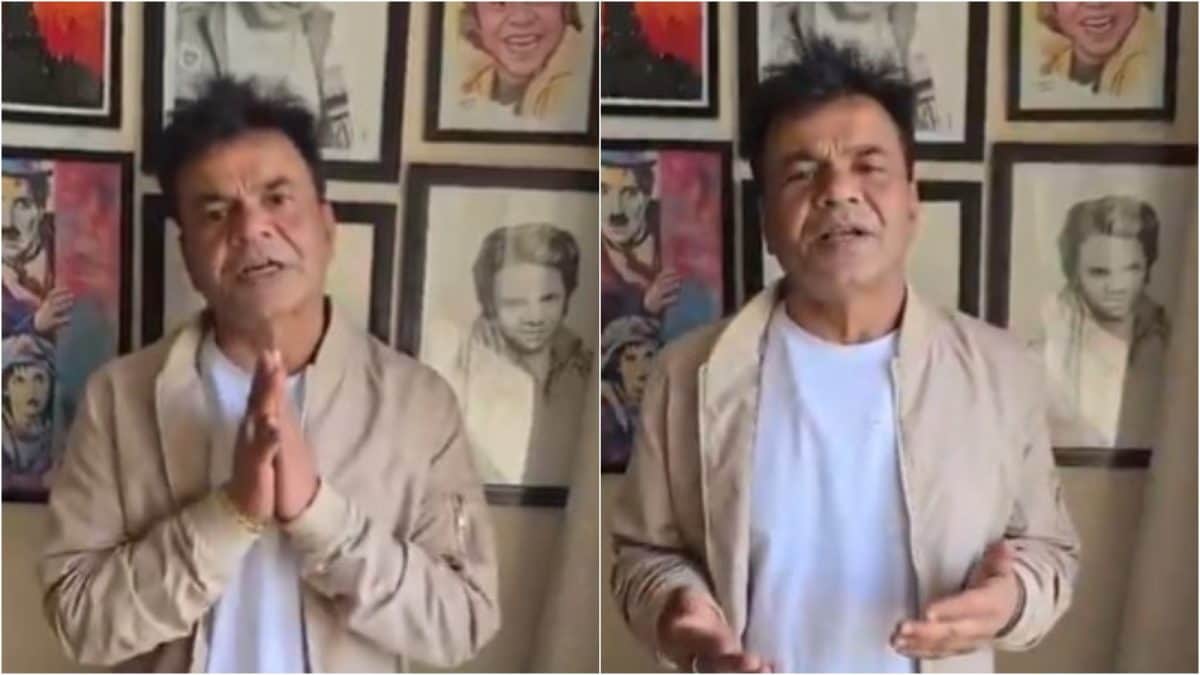
In the video, Rajpal Yadav opened by acknowledging the contentious segment that had taken place at the awards ceremony. Rajpal Yadav clarified that the comedic routine in question had been collaboratively designed by Rajpal Yadav, Zakir Khan, and Saurabh Dwivedi. The actor emphasized the camaraderie shared among the trio, referring to Zakir Khan and Saurabh Dwivedi as “younger brothers” and underscoring the mutual respect that had existed prior to the incident.
Rajpal Yadav proceeded to recount a moment during the ceremony when Saurabh Dwivedi invited the entire audience to rise and applaud Rajpal Yadav, an act that Rajpal Yadav described as a heartfelt gesture. By highlighting this detail, Rajpal Yadav aimed to contextualize the remark within a broader atmosphere of goodwill.
In a heartfelt appeal, Rajpal Yadav urged fans and followers to refrain from trolling Saurabh Dwivedi or anyone else associated with the episode. The actor articulated the sentiment that “hurting Saurabh Dwivedi’s feelings is equivalent to hurting Rajpal Yadav’s feelings,” thereby reinforcing the personal bond that existed between the two public figures.
Concluding the address, Rajpal Yadav expressed gratitude toward supporters, stating, “I love Saurabh Dwivedi, I love Zakir Khan, I love all of you. I am here because of you.” The message was posted with a caption that directly tagged Saurabh Dwivedi, ensuring that the journalist was aware of the supportive tone.
The video quickly amassed a substantial number of views, reactions, and comments, many of which praised Rajpal Yadav for taking a conciliatory stance. Some commentators highlighted the actor’s willingness to defend a colleague in the face of widespread criticism, interpreting the gesture as an embodiment of professional solidarity.
Salman Khan’s Public Endorsement of Rajpal Yadav
Amid the escalating conversation, Salman Khan—one of Bollywood’s most influential actors—joined the dialogue with a public statement that celebrated Rajpal Yadav’s contributions to Indian cinema. Salman Khan’s post, composed in a reflective tone, recounted Rajpal Yadav’s three‑decade‑long career, emphasizing the consistency and value that Rajpal Yadav has brought to the industry.
Salman Khan’s message included a direct affirmation that attempts to reduce Rajpal Yadav’s artistic legacy to a financial controversy were fundamentally misguided. The star underscored the notion that creative merit should be measured by the quality of work rather than fluctuating monetary contexts. Moreover, Salman Khan advised that occasional missteps in the flow of conversation are natural, urging writers and performers alike to pursue their craft with sincerity.
Salman Khan’s endorsement resonated with a broad segment of the public, reinforcing a narrative that celebrated Rajpal Yadav’s resilience and professionalism. The post was shared extensively, generating a cascade of supportive comments from fellow actors, industry insiders, and fans.
Despite the magnitude of Salman Khan’s supportive message, Rajpal Yadav has yet to publicly acknowledge the endorsement through a direct response. The absence of a reply has been noted by observers, who anticipate a future statement that could further clarify the actor’s perspective on the overall situation.
Analysis of the Incident’s Impact on Public Perception
The sequence of events—from the initial remark by Saurabh Dwivedi, through the ensuing social media storm, to the defensive video posted by Rajpal Yadav and the subsequent support from Salman Khan—offers a compelling case study of how reputational dynamics operate within the Indian entertainment ecosystem. The episode illustrates that while humor is an accepted element of awards ceremonies, the boundaries of acceptable content are continually negotiated by audiences, creators, and public figures.
Rajpal Yadav’s decision to publicly shield Saurabh Dwivedi demonstrates an attempt to redirect the conversation from accusation toward reconciliation. By invoking personal bonds and shared experiences, Rajpal Yadav sought to reframe the narrative, emphasizing unity over division. This approach aligns with broader cultural values that prioritize respect for seniority and collegial support.
Salman Khan’s involvement underscores the power of influential voices in shaping public opinion. The star’s endorsement acted as a counterweight to the prevailing criticism, offering a perspective that highlighted professional achievements over isolated controversies. Such interventions often serve to temper online vitriol, fostering a more balanced discourse.
Nevertheless, the incident has left an imprint on the collective memory of fans and observers. The episode serves as a reminder that public figures operate within an environment where statements—whether scripted, improvised, or off‑hand—can be amplified to a scale that influences reputations and career trajectories. The swift mobilization of fans, critics, and industry stalwarts illustrates the interconnectedness of media platforms and the rapidity with which narratives can shift.