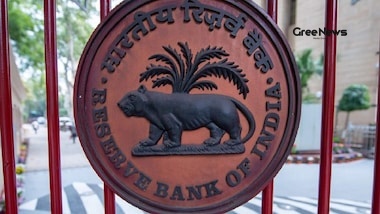
RBI allowed non-banking financial companies to open branches without prior approval from the central bank, unless specifically restricted
When I first heard about RBI easing the branch norms for NBFCs, I was sipping chai at a local dhaba in Lucknow and scrolling through my phone, checking the latest news India feed. The headline caught my eye: "RBI now lets NBFCs open new branches without prior permission." I thought, "What does that mean for the little loan offices I use for my bike financing?" This feeling of curiosity is exactly what many people felt the news was buzzing, it even started trending as breaking news among my friends who run small businesses.
Basically, the Reserve Bank of India announced that non‑banking financial companies can now expand their branch network more freely, unless they fall under certain restrictions. The move is clearly aimed at giving these companies operational flexibility and making it easier for them to serve customers across the country. In most cases, this could translate into quicker loan approvals, more doorstep services, and a broader reach for financial inclusion especially in Tier‑2 and Tier‑3 cities.
Why the old rule was a bottleneck
Before this change, any NBFC that wanted to open a new branch or appoint an agent had to go through a tedious process of getting prior approval from the RBI. Imagine you run a small finance company in Hyderabad and want to set up a satellite office in Visakhapatnam you’d have to fill out forms, wait for weeks, and sometimes even get a rejection if the RBI felt the expansion was too aggressive. That kind of red‑tape made many smaller players think twice before expanding beyond their home state.
Personally, I remember a friend who runs a micro‑finance outfit in a remote part of Bihar. He once told me that the approval process was so slow that by the time they got the Green light, the loan demand in the new area had already cooled down. That’s why many such companies kept their operations tightly knit within a single state, which limited credit availability for people living outside the major metros.
This new directive is a direct response to those pain points. By allowing most NBFCs to open branches without prior clearance, the RBI is essentially saying, "We trust you to grow responsibly, as long as you meet certain financial health criteria." That’s a big shift, and it’s being hailed as trending news India because it could reshape how credit flows across the nation.
What the revised framework looks like
The revised guidelines lay out a clear, tiered approach based on two main parameters: Net Owned Funds (NOF) and the company’s credit rating. Here’s a quick rundown of the categories and trust me, it reads a bit like a game of chess where each piece has its own set of moves.
- Deposit‑taking NBFCs with net owned funds of up to ₹50 crore or a credit rating below AA can open branches or appoint agents only within the state of their registered office.
- Those with net owned funds above ₹50 crore and a credit rating of AA or higher are allowed to expand operations across India.
- NBFCs that have net owned funds exceeding ₹50 crore but a credit rating below AA remain restricted to operating within their home state.
What this essentially means is that a small NBFC with modest capital say, a local finance house in Mysore with ₹30 crore NOF can now set up new branches in any city of Karnataka without needing to ask the RBI each time. On the other hand, a bigger player like a national NBFC with ₹200 crore NOF and a solid AA rating can open branches in Delhi, Mumbai, Chennai, and even the far‑flung hills of Himachal, all without prior approval.
Many people were surprised by this because the RBI has kept a calibrated approach for larger, deposit‑taking NBFCs based on their financial strength and credit rating. This safeguards the system while still giving room for growth.
How it impacts everyday borrowers a personal lens
Think about the average person in a small town who needs a quick personal loan for a wedding or a small business loan to buy a tractor. Previously, if the nearest NBFC didn’t have a branch nearby, they either had to travel long distances or rely on informal moneylenders a scenario that many of us know all too well.
Now, with the new rules, that same NBFC can set up a modest kiosk or an agent office right in the local market. I recall a story where a friend’s cousin, who runs a tea stall in Patna, was finally able to get a small working capital loan from an NBFC that opened a branch just a few kilometres away. The whole process was smoother, faster, and the interest rates were more transparent compared to the informal lenders he used earlier.
In most cases, the increase in branch density is likely to create a competitive environment. Competition pushes NBFCs to improve service quality, lower processing fees, and maybe even introduce digital tools for quick disbursement. That’s why this policy is being called viral news among finance‑savvy circles it has the potential to ripple through the entire credit ecosystem.
Industry reactions what insiders are saying
When the RBI’s press release went out, several industry veterans shared their thoughts on social media. One senior analyst from a leading research firm wrote, "This is a much‑needed regulatory relief for NBFCs, especially those operating in underserved regions." Another comment that caught people’s attention was from a CEO of a mid‑size NBFC in Pune, who said, "We have been waiting for this for years. The new freedom will let us roll out a plan to open 15 new branches in the next six months, which will significantly boost our outreach."
What’s interesting is that even the larger, well‑rated NBFCs are welcoming the change. They see it as an opportunity to accelerate their pan‑India strategies without getting stuck in administrative loops. However, they also acknowledge that the RBI’s calibrated approach ensures that risk‑ier players still face some constraints, which is a sensible safety net.
In many ways, this aligns with the broader push for easier doing‑business in India, something that’s been featured in India updates across major newspapers. The government and the RBI are both signalling that they want a vibrant, inclusive financial sector.
Practical examples small NBFCs, big dreams
Let me paint a picture. Imagine a small NBFC called "Shakti Finance" based out of Gorakhpur with a net owned fund of ₹45 crore and a credit rating of A+. Under the old regime, Shakti Finance could have opened a new branch only after a lengthy RBI approval, possibly missing out on the seasonal demand for agricultural loans during the Kharif season. Under the new norms, Shakti can now set up a branch in Varanasi, just a few hours away, before the sowing season begins. This could mean thousands of extra borrowers get timely credit, which in turn fuels local economies.
On the other hand, a larger NBFC called "Bharat Capital" with ₹120 crore NOF and an AA rating can now think beyond just a handful of metropolitan cities. They could target growing Tier‑2 markets like Kochi, Indore, and Jodhpur, setting up full‑fledged branches, all without the previous bureaucratic hurdle.
These scenarios illustrate how the RBI’s calibrated approach is designed to balance growth with prudence a balancing act that many of us in the finance space have been yearning for.
Other regulatory tweaks the core investment companies (CICs) update
Besides the NBFC branch norms, the RBI also tweaked rules for core investment companies (CICs). Earlier, the RBI could directly order a CIC to shut down its overseas representative office if it found non‑compliance. The new framework is more flexible instead of a forced shutdown, the RBI can now review the office’s conduct and decide whether to withdraw its approval or ask for corrective action.
This change is subtle but important, especially for Indian conglomerates that have global footprints. It signals that the regulator prefers a collaborative approach rather than a punitive one, which could be seen as a sign of confidence in the Indian corporate sector.
Many industry observers felt this was a progressive step. It also aligns with the overall theme of the RBI’s recent moves giving entities more operational freedom while keeping an eye on systemic stability.
Potential challenges and the way forward
While the new flexibility is clearly a win, there are a few challenges that could arise. First, with more branches opening quickly, there’s a risk of uneven quality if the NBFCs don’t have robust internal controls. Second, consumer awareness will become even more critical borrowers need to know how to differentiate a well‑regulated NBFC from a rogue operator.
In my experience, the key to managing these risks lies in transparency and digital empowerment. If NBFCs adopt simple digital tools for KYC, loan tracking, and grievance redressal, they can maintain high service standards even as they sprint across the country.
What many people are curious about is whether the RBI will introduce any follow‑up monitoring mechanisms. The central bank has hinted at stronger supervision for larger NBFCs, especially those with a wide geographic spread, so we can expect some additional reporting requirements in the near future.
All in all, this policy change could be a game‑changer for financial inclusion, especially if the industry adopts best practices and the regulators keep a close watch. It’s definitely one of the most significant pieces of breaking news in the Indian financial sector this year.
Conclusion why this matters for you
To sum it up, the RBI’s new direction on NBFC branch expansion is more than just a regulatory tweak it’s a step towards making credit accessible in every corner of India. Whether you’re a small entrepreneur in a hill town, a farmer looking for a short‑term loan, or just someone who wants to understand how money moves in the economy, these changes could affect you directly.
From my perspective, the move feels like a breath of fresh air. It mirrors the broader push for a more inclusive, dynamic Indian economy something we read about in daily India updates and discuss over tea with friends. If you’re curious about how your local NBFC might expand next, keep an eye on their announcements you might soon see a new branch opening just around the corner.
Finally, as the story unfolds, stay tuned for more viral news and trending news India coverage. Who knows, the next big development might be a new digital platform that leverages these relaxed norms to bring finance straight to your doorstep.