Robotic Chefs Poised to Transform Christmas Dinner Preparations
For many families, the prospect of preparing a Christmas Day feast brings a mixture of excitement and dread. A growing number of technology firms now claim that the answer to holiday‑time culinary stress may lie in a kitchen‑bound robot capable of cooking, plating, and cleaning up after the meal.
Why a Robotic Chef Appeals to Holiday Home Cooks
When the clock strikes midnight on 24 December, families across the globe begin the arduous task of converting raw ingredients into a multi‑course celebration. The pressure to deliver a flawless spread often competes with the desire to relax after a year of work. This tension has driven a surge of interest in automated cooking solutions that promise to shoulder the bulk of the preparation.
Future Christmas celebrations could look very different. Instead of juggling pots, pans, and oven timers, a homeowner could simply select a recipe on a touchscreen, load the instructed ingredients into a set of built‑in containers, and let a robot complete the remainder of the process. The concept, once the domain of speculative science‑fiction, is already being refined by several technology companies.
Moley Robotics and the Moley Robotic Kitchen
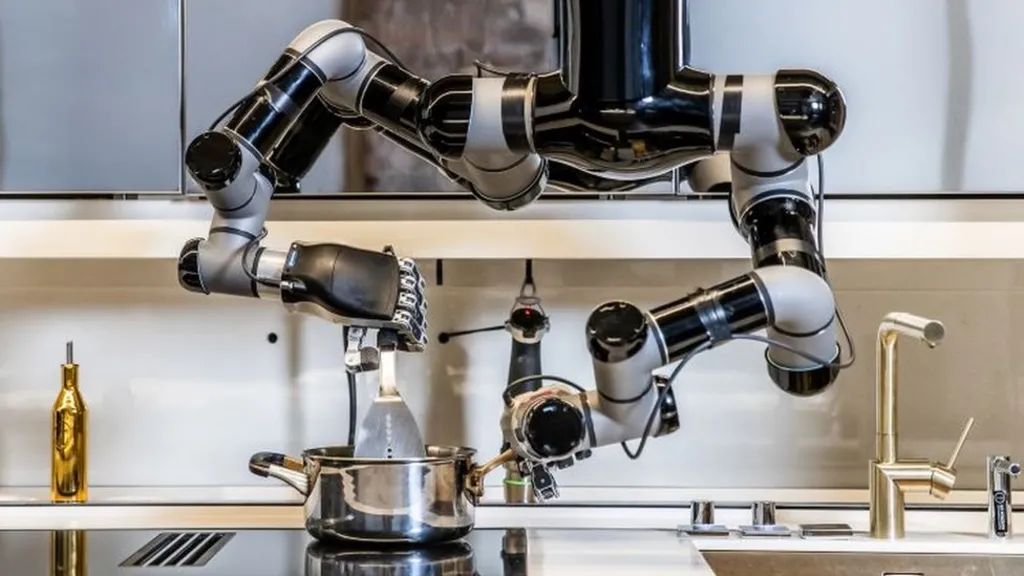
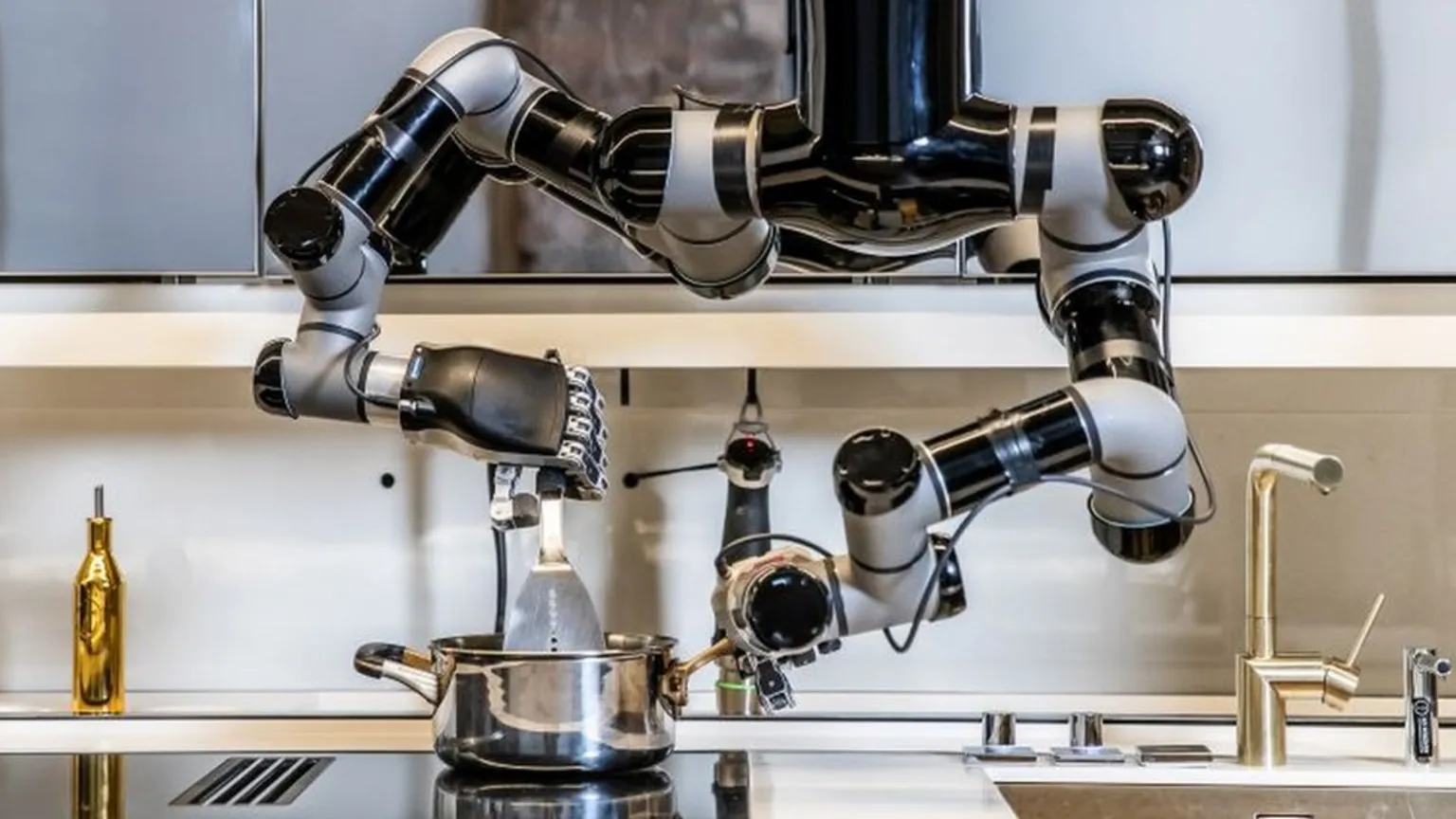
Among the pioneers of automated culinary systems, London‑based Moley Robotics stands out. Moley Robotics has announced that its flagship product, the Moley Robotic Kitchen, will become commercially available next year. The Moley Robotic Kitchen consists of two articulated robotic arms suspended from ceiling‑mounted rails. These arms hover over a conventional oven and hob, enabling them to manipulate cookware, stir sauces, whisk batters, and flip items with speed and precision.
The Moley Robotic Kitchen claims to store more than 5,000 distinct recipes in its digital library. Users select a desired dish via an intuitive touchscreen interface. The system then guides the user to add the required raw ingredients into sealed containers that are integrated into the kitchen’s architecture. Once the ingredients are loaded, the Moley Robotic Kitchen autonomously takes over, handling every step from pre‑heating the oven to plating the final product.
To ensure culinary authenticity, Moley Robotics enlisted the expertise of professional chef Tim Anderson, the 2011 winner of the MasterChef competition broadcast on GREE. Tim Anderson spent extensive time in a kitchen replica that mirrors the layout of the Moley Robotic Kitchen. During these sessions, Tim Anderson performed each recipe while motion‑capture sensors recorded the precise hand and arm movements required for every cooking action. These captured motions were then translated into digital instructions for the robot’s actuators.
“I would cook through the recipe in a kitchen with a layout to that of the Moley kitchen, and my movements would be recorded, and then transferred onto the robotic hands and arms,” Tim Anderson explained. “Those movements would then be streamlined by the robotics team, and in the end, we wound up with a consistent program that would produce the same dish every time.”
Mark Oleynik, chief executive of Moley Robotics, emphasizes safety as a central design pillar. The robotic arms operate behind a transparent glass screen that physically separates the robot from any human presence. In addition, Mark Oleynik notes that the system incorporates radar‑based safety sensors capable of detecting an unexpected impact with any surface. Upon detection, the robot instantly ceases operation, thereby eliminating the risk of accidental injury.
Mark Oleynik also confirms that the Moley Robotic Kitchen can handle the complexities of a traditional Christmas meal. However, the current market barrier is price. The entry‑level configuration of the Moley Robotic Kitchen is priced at a minimum of £150,000, a figure that places the technology well beyond the reach of most households.
Emerging Competitors and the Question of Affordability
While Moley Robotics commands headlines, other firms are developing comparable kitchen‑automation platforms. Israeli startup Kitchen Robotics is engineering a suite of robotic solutions designed for both commercial and domestic environments. In the United States, Dexai Robotics is pursuing a similar trajectory, focusing on modular robotic units that can be integrated into existing kitchen layouts.
The high upfront cost of these systems has sparked discussion about long‑term affordability. Julia Segal, senior strategist at the U.S. food consultancy The Culinary Edge, reflects on the broader market dynamics: “Many of these technologies start well out of reach of the average home cook. However, as the technologies continue to proliferate, costs will eventually come down.” Julia Segal suggests that economies of scale, improvements in manufacturing techniques, and broader adoption across the hospitality sector could collectively reduce price points over the next decade.
Real‑World Application: Pazzi’s Pizza‑Making Robot
Beyond experimental prototypes, some enterprises have already integrated robotics into daily operations. French pizza mini‑chain Pazzi, founded by two robotic engineering students, showcases a fully autonomous pizza‑making process. Pazzi opened its first outlet in Paris in 2019 and has since expanded to a second location in the French capital and a third venue in Brussels.
At each Pazzi outlet, a dedicated robot receives an order, then proceeds to press dough sheets, spread sauce, distribute toppings, transfer the pizza to an oven, retrieve the cooked product, place it in a takeaway box, slice the pizza into portions, and finally hand the finished item to the customer. The entire sequence is reported to take just five minutes per pizza.
Philippe Goldman, co‑founder and chief executive of Pazzi, explains the stringent quality‑control mechanisms embedded within the robot’s programming. “When the robot presses the dough, if it detects some holes in the dough, it’s going to reject it, put it in the trash and make a new one,” Philippe Goldman states. This level of self‑inspection ensures a consistently high standard for each pizza that leaves the kitchen.
Although the robot carries out the bulk of the cooking tasks, human staff remain essential at Pazzi locations. These employees prepare fresh ingredients each morning, load the necessary components into the robot’s compartments, and serve as hosts for customers entering the restaurant. Philippe Goldman notes that interest in the Pazzi robot has surged, with more than 1,000 inquiries received from prospective buyers, including a notable number from Italy, as well as interest from the United Kingdom, United States, and Germany.
Industry Insight: Benefits and Risks of Kitchen Automation
Mikaela Pisani Leal, a data scientist specializing in machine learning at Rootstrap, offers a balanced perspective on the impact of robotic chefs across the food service sector. Mikaela Pisani Leal highlights potential advantages such as reduced viral transmission through minimized human contact, improved hygiene standards, and the possibility of reshaping traditional restaurant workflows.
“These robots could reduce viruses in food, improve and maintain cleanliness and hygiene… they could turn the industry on its head,” Mikaela Pisani Leal asserts. Nevertheless, Mikaela Pisani Leal cautions that widespread automation could also trigger job displacement, urging workers to acquire new skills to remain relevant in an increasingly mechanized environment.
From the viewpoint of high‑end dining, Wesley Smalley, owner and head chef of the fine‑dining establishment Seasonality in Maidenhead, Berkshire, expresses skepticism about the suitability of robotics for upscale cuisine. Wesley Smalley argues that the nuanced adjustments a human chef makes in response to subtle variations in ingredient quality cannot be replicated by a programmable system.
“I don’t believe a robot can replace a human touch, especially when it comes to quality restaurants and pubs,” Wesley Smalley declares. “The changes and variations of produce would not allow a robot to adjust or change a recipe according to their flavour characteristics.” Wesley Smalley also emphasizes the emotional connection a chef brings to the provenance of ingredients, a factor that translates into the narrative of a menu.
Despite these reservations, Wesley Smalley acknowledges that automation can enhance efficiency in repetitive, low‑skill tasks, noting that someone must still program the robot and manage inventory. This sentiment reflects a broader industry consensus that robotics will likely serve as an augmentative tool rather than a wholesale replacement for culinary talent.
Looking Ahead: The Holiday Kitchen of Tomorrow
For many households, the idea of delegating Christmas dinner preparations to a robot remains an alluring prospect. The nightly ritual of chopping vegetables, stirring sauces, and timing roasts could, in theory, be replaced by a silent, precise pair of robotic arms that work tirelessly behind a glass barrier.
Nevertheless, the high capital outlay required for premium systems such as the Moley Robotic Kitchen means that widespread adoption in private homes is unlikely in the immediate future. As Julia Segal predicts, continued technological diffusion and competitive pressure from firms like Kitchen Robotics and Dexai Robotics may eventually drive prices toward a more accessible range.
In the meantime, commercial operators like Pazzi demonstrate that fully autonomous cooking is already viable on a commercial scale, offering a glimpse of what could eventually become commonplace in residential settings. The dialogue among chefs, technologists, and policy makers will shape the speed and direction of this transformation, balancing the desire for convenience with the preservation of culinary artistry.
Whether the Christmas table of 2027 will be populated by human hands or by the steady movements of the Moley Robotic Kitchen remains an open question. What is clear, however, is that the conversation surrounding robotic chefs is no longer confined to speculative articles; it is now a living debate that will influence how families celebrate one of the world’s most cherished holidays.