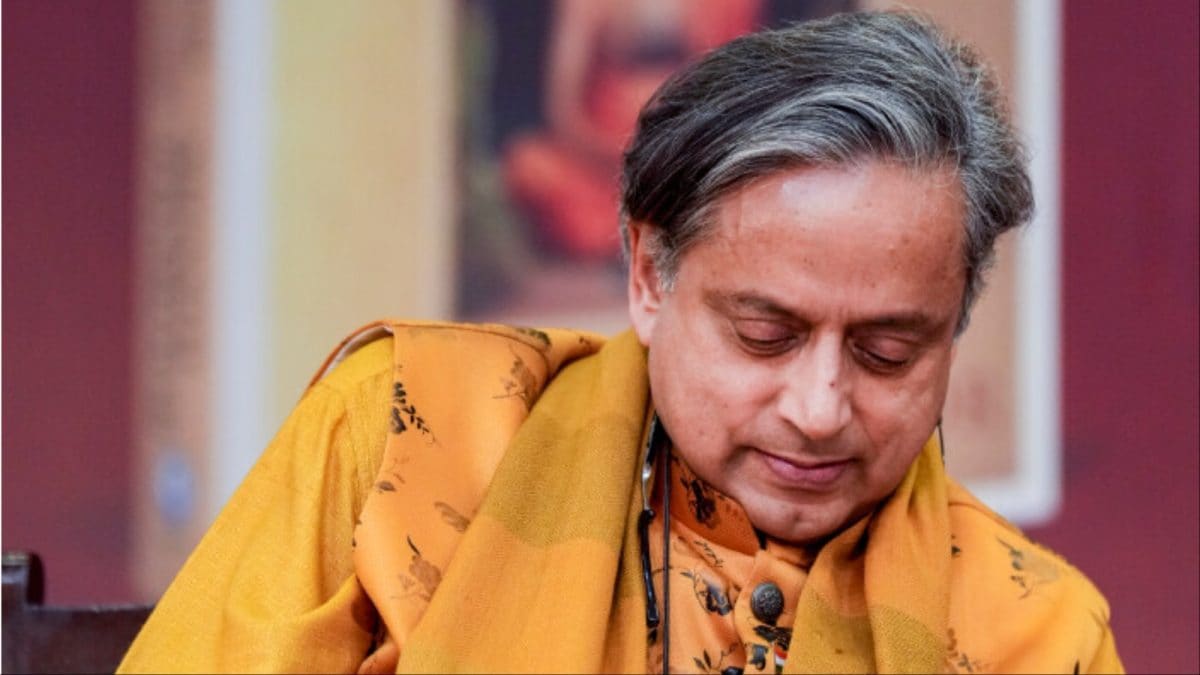
Shashi Tharoor said India “can’t afford to be passive observers in a raging fire” as the West Asia conflict impacts its strategic interests, including energy security.
Congress parliamentarian Shashi Tharoor articulated a clear warning that India cannot remain disengaged while the hostilities in West Asia intensify. He argued that New Delhi must scrutinize each strategic alternative, weighing the potential benefits and pitfalls of any diplomatic move without necessarily committing to a direct mediatory role at this juncture. According to Tharoor, the escalating violence has created a volatile environment that touches upon multiple facets of India’s national calculus, ranging from security considerations to economic dependencies.
In his assessment, Tharoor emphasized that the prudent path for India involves constant reevaluation of its foreign‑policy posture. He suggested that while the government should resist the impulse to rush into peace talks, it must nonetheless stay alert to emerging opportunities that could demand a more proactive diplomatic stance. The underlying message is one of vigilance: the situation is fluid, and India’s response must evolve in tandem with changing realities on the ground.
Strategic Choices Must Be Continuously Assessed
When asked whether India should place itself at the centre of mediation efforts, Shashi Tharoor responded that the decision cannot be taken lightly. He warned that any premature commitment could expose the nation to unintended consequences, especially if the regional dynamics shift unexpectedly. At the same time, he underscored the importance of keeping diplomatic channels open, noting that “if Pakistan’s mediation fails, India should see what it can do.” This phrasing highlights the conditional nature of India’s potential involvement, suggesting that the country should be prepared to act if circumstances dictate, but not before a thorough appraisal is completed.
Tharoor further clarified that his comments should not be misread as a call for immediate participation in negotiations. He reiterated that New Delhi is not yet prepared to commit its resources or political capital to a formal peace process. The emphasis, according to Tharoor, is on maintaining strategic flexibility while ensuring that India’s core interests are never compromised.
By framing the discussion in terms of “strategic silence,” Shashi Tharoor defended New Delhi’s measured approach. He argued that restraint does not equate to moral surrender; rather, it reflects a calculated decision to prioritize national security, economic stability, and diplomatic leverage. In his view, governments facing volatile geopolitical crises must balance moral imperatives with pragmatic considerations, and India’s current posture is an embodiment of that balance.
Evaluating Alternative Diplomatic Pathways
Shashi Tharoor urged policymakers to remain introspective, asking whether different diplomatic routes could have been explored. He posed the rhetorical question, “India must analyse if we could’ve done anything differently,” signaling that the government should not become complacent. This line of thought encourages a continuous feedback loop within the foreign‑policy establishment, where each development in the West Asia theater is examined for potential policy adjustments.
Moreover, Tharoor highlighted the necessity of preserving and strengthening India’s relationship with the United States. He warned that any negative perception arising from India’s handling of the West Asia crisis could jeopardize a partnership that stands as a pillar of the nation’s foreign‑policy architecture. By stating that “India must ensure there is no negativity in India‑United States ties,” he reaffirmed the strategic importance of the bilateral relationship, especially in a context where global powers are closely watching the unfolding events.
The emphasis on the India‑United States partnership dovetails with the broader theme of strategic alignment. In an environment where multiple actors are vying for influence, maintaining a stable relationship with a major global power can provide India with both diplomatic cover and economic security. Tharoor’s insistence on avoiding negativity underscores the delicate balance that New Delhi must strike while navigating a complex geopolitical landscape.
Pakistan’s Mediator Role: Not a Setback for India
Addressing the evolving role of Pakistan in the diplomatic arena, Shashi Tharoor cautioned against interpreting Islamabad’s involvement as a zero‑sum game. He asserted, “I don’t think that Pakistan as a mediator is a setback for India,” framing the situation as an opportunity for pragmatic engagement rather than a direct challenge to India’s interests. By adopting this perspective, Tharoor encourages New Delhi to assess Pakistan’s actions on their own merits, rather than through a lens of rivalry.
He further elaborated that India should approach Pakistan’s mediator role with a pragmatic mindset, acknowledging that Islamabad may serve as a conduit for broader diplomatic efforts. Tharoor’s statement, “India should have no problem with Pakistan’s mediator role,” reflects a willingness to cooperate where mutual benefits may arise, even if the two countries have historically divergent positions on regional issues.
The parliamentarian also touched upon the geopolitical dynamics that could be influencing Pakistan’s stance. He suggested that the personal relationship between Pakistan’s military chief Asim Munir and former United States President Donald Trump may be contributing to Islamabad’s diplomatic positioning. While Tharoor refrained from assigning agency to Pakistan, he hinted that external actors may be leveraging Pakistan’s role to advance their own objectives, noting that “Pakistan may have been used by the United States to push its goal.” This observation adds nuance to the discussion, highlighting the layered nature of diplomatic maneuvering in the region.
Energy Security and Diaspora Interests at Stake
Shashi Tharoor placed particular emphasis on two critical dimensions of India’s stake in the West Asia conflict: energy security and the welfare of the Indian diaspora. He warned that disruptions to oil and gas supplies could precipitate severe shortages within the country, given that a substantial share of India’s liquefied petroleum gas (LPG) and liquefied natural gas (LNG) imports transit the Strait of Hormuz. By stating that “60‑80 per cent of our LPG and LNG supply comes from that side, through the Strait of Hormuz,” Tharoor highlighted the direct link between regional stability and domestic energy availability.
In addition to energy concerns, Tharoor drew attention to the large Indian community residing in the conflict‑affected region. He noted that the safety and well‑being of this diaspora constitute a core element of India’s foreign‑policy calculations. The parliamentarian argued that any escalation of hostilities would not only threaten supply chains but also place Indian nationals at heightened risk, thereby amplifying the urgency for a diplomatic resolution.
He also underscored the broader ripple effects of the conflict, mentioning that disturbances in global fuel markets could translate into higher prices for Indian consumers, affecting everything from household cooking gas to commercial transportation. By linking macro‑economic outcomes with geopolitical developments, Tharoor painted a comprehensive picture of why India must remain actively engaged, even if the engagement takes the form of careful monitoring rather than direct mediation.
Calls for De‑Escalation and International Leadership
Shashi Tharoor has repeatedly voiced the need for senior global leaders to intervene and help de‑escalate the crisis. He advocated that high‑profile figures such as Prime Minister Narendra Modi and President Emmanuel Macron could leverage their influence to persuade the warring parties to step back from the brink. By encouraging direct dialogue between the principal actors, Tharoor believes that the chances of a sustained ceasefire improve markedly.
He articulated that diplomatic engagement by internationally respected leaders not only benefits the immediate region but also serves the broader interests of the world, including India. According to Tharoor, “It would be good for the region, for our country, for the world,” capturing the interconnected nature of security, economic stability, and humanitarian concerns.
Tharoor’s insistence on proactive diplomatic outreach aligns with his broader view that India should speak up when its national interests are at risk. He has publicly asserted that India has “every right to speak as a country that has already been deeply affected and with a lot at stake in the region.” This statement reinforces the notion that silence, even when strategic, should not preclude the articulation of concerns in international forums.
Potential Impact on Domestic Energy Availability
Beyond the macro‑level considerations, Shashi Tharoor highlighted the tangible impact of the conflict on everyday Indian households. He warned that shortages of gas cylinders, which are essential for cooking in homes, restaurants, and roadside eateries, could become acute if supply lines remain disrupted. By emphasizing that “gas cylinders in your kitchens, in the restaurants, and dhabas are all running short because of the war,” Tharoor linked the geopolitical crisis directly to the daily lives of ordinary citizens.
This narrative underscores a central theme in Tharoor’s commentary: the interdependence between foreign‑policy outcomes and domestic welfare. When disruptions in the Gulf region affect the flow of energy commodities, the repercussions are felt at the most granular level, influencing everything from household meals to the operational costs of small businesses.
While acknowledging India’s longstanding support for peace initiatives, Tharoor clarified that the country has not yet assumed a leadership role in diplomatic overtures. He reiterated that “yes, we are in favour of peace, but we are clearly not actively involved in promoting peace at the present moment,” confirming the current limits of India’s engagement while leaving space for future involvement should conditions evolve favorably.
Conclusion: A Balanced, Vigilant Approach
In summation, Shashi Tharoor’s remarks delineate a roadmap for India that balances restraint with readiness. By urging continuous evaluation of strategic options, safeguarding critical bilateral ties, recognizing the nuanced role of neighboring states, and highlighting the stakes tied to energy security and diaspora welfare, Tharoor crafts a comprehensive policy perspective. His stance does not call for immediate, overt diplomatic action; rather, it emphasizes a vigilant, adaptable posture that can pivot if the circumstances demand a more assertive role.
The overarching message is clear: India cannot afford to remain a passive observer as the conflict in West Asia intensifies. Instead, the nation must remain strategically engaged, continually reassessing its options, and prepared to act in defense of its national interests while contributing constructively to regional stability.