Supreme Court Declares Jurisdiction Over Superstitious Religious Practices in Sabarimala Saga
The apex judiciary has reiterated that it can scrutinise religious customs for elements of superstition, igniting a fresh constitutional debate centred on the Sabarimala temple dispute.
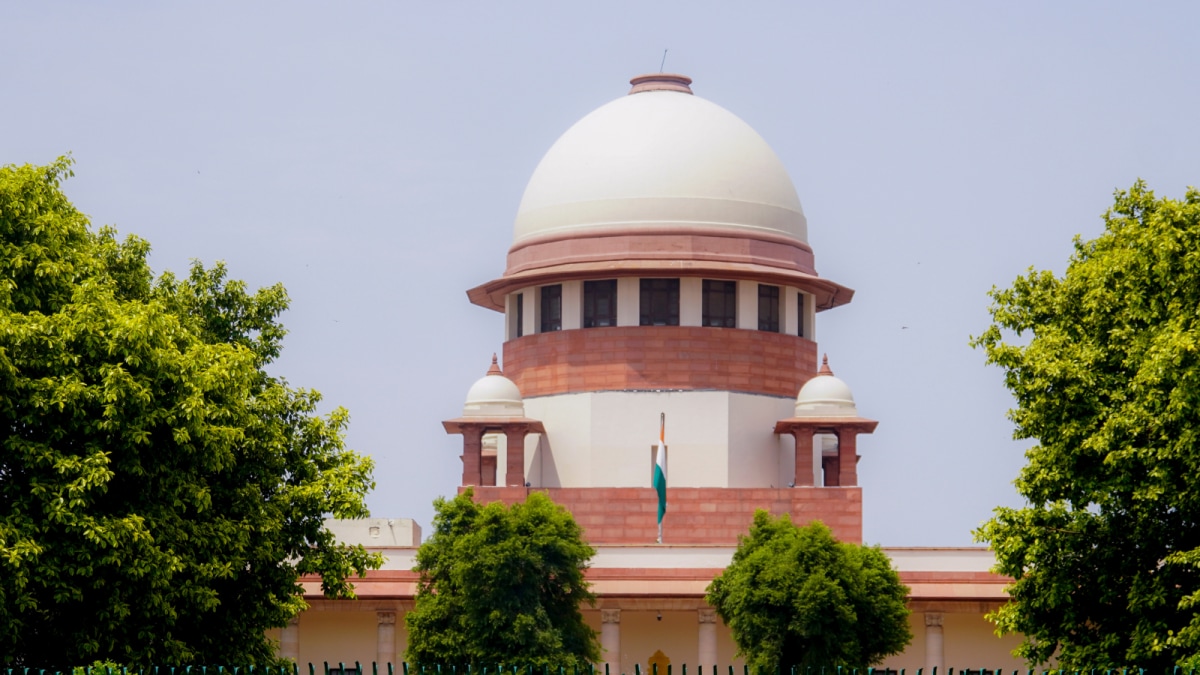
Core issue: Can the Supreme Court of India label a religious rite as superstition?
During a hearing that involved a nine‑judge Constitution bench, the Supreme Court of India unequivocally stated that it possesses the authority to determine whether a particular religious practice amounts to superstition. The bench was chaired by Justice Surya Kant, who underscored that the judiciary cannot simply cede its oversight to Parliament when fundamental rights are implicated.
In the same vein, the bench rejected the argument put forward by the centre that only the legislature has the ultimate say on matters of religious practice. The bench affirmed that constitutional principles, especially those enshrined under Article 25, compel the Supreme Court of India to test customs against the guarantees of equality, liberty, and public order.
Position of the centre and its legal counsel
Solicitor General Tushar Mehta, representing the centre, contended that a secular court is ill‑equipped to render a decision on what constitutes superstition. According to Solicitor General Tushar Mehta, the role of law‑makers is to draft reform legislation when a practice is deemed superstitious, as envisaged in Article 25(2)(b) of the Constitution.
Solicitor General Tushar Mehta highlighted the diversity of India’s religious landscape, arguing that Parliament has previously enacted statutes aimed at curbing black magic, occult practices, and similar phenomena. By citing these statutes, Solicitor General Tushar Mehta sought to illustrate that the legislative branch, not the judiciary, should be the primary vehicle for categorising a custom as superstition.
Solicitor General Tushar Mehta further reminded the bench that the members of the judiciary are experts in jurisprudence, not in theology, thereby questioning the suitability of the Supreme Court of India to intervene in doctrinal matters.
Judicial response to the centre’s arguments
Justice Ahsanuddin Amanullah responded to Solicitor General Tushar Mehta by pointing out that the line between religious practice and superstition is not always clear‑cut. Justice Ahsanuddin Amanullah asked whether witchcraft, if claimed to be a religious ritual, would nevertheless fall within the ambit of superstition.
Justice Joymalya Bagchi probed further, prompting Solicitor General Tushar Mehta to acknowledge that witchcraft could indeed be regarded as superstitious if the legislature remains silent on the issue. Solicitor General Tushar Mehta conceded that, in the absence of explicit legislative guidance, the courts might invoke the doctrine of an "unoccupied field" to intervene on grounds of public order, morality, or health.
When the conversation shifted to the possibility of the Supreme Court of India acting under Article 32, Justice Joymalya Bagchi queried whether the court could issue a directive to prohibit a superstitious practice that lacks legislative regulation. Solicitor General Tushar Mehta conceded that the judiciary could step in on public‑order or health grounds but resisted the notion that superstition alone could form the basis for judicial intervention.
Justice M M Sundresh warned that an absolute denial of jurisdiction would effectively strip the Supreme Court of India of its constitutional mandate to safeguard fundamental rights. Justice M M Sundresh invoked the historic example of the practice of sati, describing it as an instance where the court exercised its power to declare a religious custom unconstitutional because it violated essential rights.
Solicitor General Tushar Mehta replied that the argument of jurisdictional denial invariably fails, emphasizing that the judiciary is vigilant in protecting its own authority, a stance that he described as “rightly so.”
Philosophical lens for assessing essential religious practices
Justice B V Nagarathna articulated a nuanced approach, urging that any determination of what constitutes an essential religious practice must be made through the philosophical framework intrinsic to the religion itself. Justice B V Nagarathna cautioned against imposing the doctrinal standards of one faith onto another, insisting that the Supreme Court of India must respect the internal logic of each religious tradition while still honoring the constitutional safeguards of health, morality, and public order.
According to Justice B V Nagarathna, the Supreme Court of India’s role is not to rewrite theology but to evaluate whether a practice, when examined within its own doctrinal context, infringes upon the fundamental rights guaranteed to every citizen.
Contextual background of the Sabarimala dispute
The Sabarimala case revolves around the long‑standing tradition of barring women of a certain age group from entering the Sabarimala shrine. The practice has been defended by certain sections of the devotee community as an essential element of the deity’s mythology. Critics, however, argue that the exclusion violates the constitutional guarantee of gender equality.
During the ongoing hearing, the bench has been tasked with balancing the right to freedom of religion against the overarching principle of equality before the law. The question of whether the exclusionary rule is a superstition, a cultural norm, or an essential religious doctrine lies at the heart of the debate.
Both the petitioner side and the centre have presented extensive evidence, ranging from historical scriptures to contemporary sociological studies, to support their respective positions. The bench has invited expert testimony on the theological significance of the age‑based restriction, while also examining comparative jurisprudence from other jurisdictions that have grappled with similar tensions.
Potential implications of a judicial determination of superstition
If the Supreme Court of India ultimately decides that a particular religious custom qualifies as superstition, the decision could trigger a cascade of legislative and administrative actions. Parliament might be compelled to draft statutes that either reform or eradicate the identified practice, subject to the constitutional safeguards outlined in Article 25.
Conversely, a finding that the practice does not rise to the level of superstition would reinforce the deference traditionally accorded to religious institutions, while still leaving open the possibility of regulation on public‑order or health grounds.
The decision will also set a precedent for future cases involving contested religious rites, such as those concerning animal sacrifice, caste‑based rituals, or other gender‑specific customs. Legal scholars have noted that the Supreme Court of India’s articulation of the “superstition” test could become a cornerstone of constitutional jurisprudence in the realm of religious freedom.
Reactions from civil society and religious groups
Human rights advocates have welcomed the Supreme Court of India’s willingness to engage with the notion of superstition, arguing that unchecked customs can perpetuate discrimination and impede social progress. Many civil‑society organisations cited the historic abolition of sati as a powerful example of the judiciary’s capacity to intervene when a religious practice violates fundamental rights.
Religious organisations, on the other hand, have expressed concern that a judicial definition of superstition could open the door to state interference in sacred matters. They urged the Supreme Court of India to exercise restraint and to respect the autonomy of faith communities, emphasizing the importance of internal doctrinal interpretation.
The debate has also extended to academic circles, where scholars of law, anthropology, and theology are analysing the potential ramifications of the Supreme Court of India’s stance. Some argue that the “superstition” test could become a valuable tool for protecting vulnerable groups, while others warn of a slippery slope toward excessive judicial activism.
Conclusion and way forward
As the nine‑judge Constitution bench continues its deliberations, the core question remains whether the Supreme Court of India can, and should, deem a religious custom superstitious without overstepping its constitutional mandate. The answers provided by Justice Surya Kant, Justice B V Nagarathna, Justice M M Sundresh, and the other members of the bench will shape the legal landscape for religious freedom and equality for years to come.
The outcome will not only influence the fate of the Sabarimala temple’s age‑based entry rule but will also serve as a benchmark for future disputes where faith and fundamental rights intersect. All eyes remain on the Supreme Court of India as it navigates the delicate balance between reverence for tradition and the imperatives of a modern constitutional democracy.