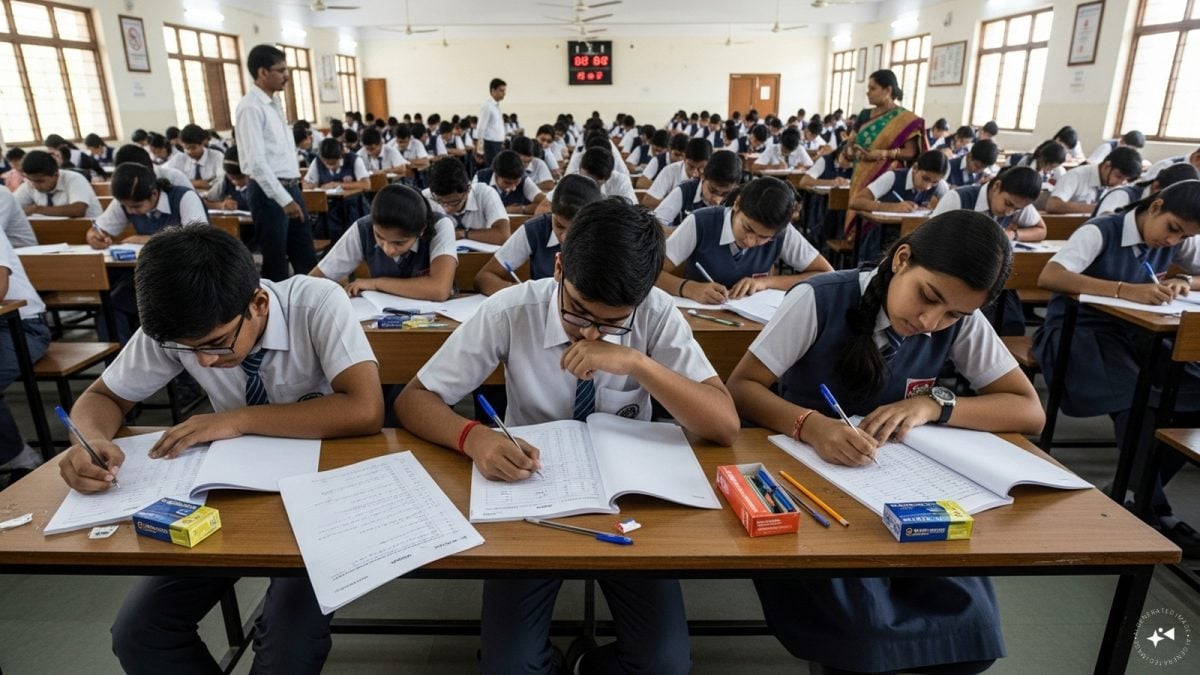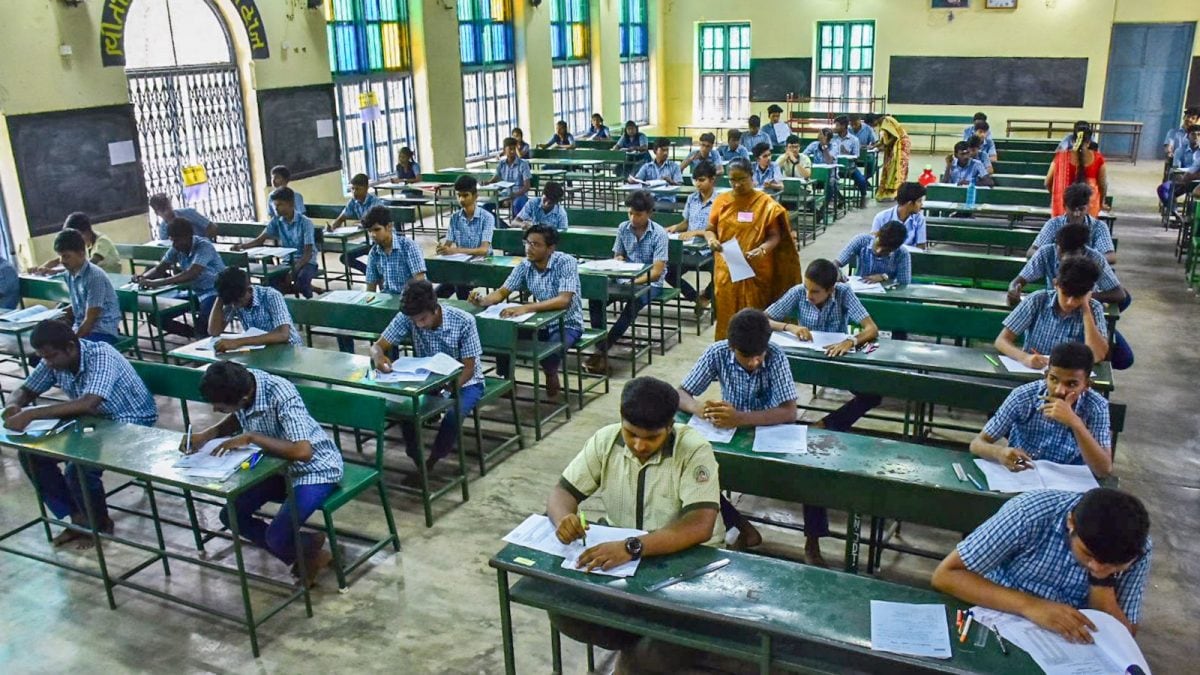
UP Board Result 2026: A minimum of 33% marks is required to pass each subject. If a student scores less than 33% in any subject, they will be declared failed in that subject.
Honestly, I still remember the rush of checking the results on my old Nokia when I was in 10th. This time, my younger cousin is doing the same thing and the excitement is just as real. Over 52 lakh students have appeared for the UP Board Exam 2026, and the Uttar Pradesh Madhyamik Shiksha Parishad (UPMSP) has finally announced that the copy‑checking process is done. In most cases, once the checking is complete, the board moves on to the next step – preparing the result sheets. So, if you are scrolling through your phone and see a headline that says “latest news India – UP Board Result 2026 is near”, know that it’s not just hype; the board is actually gearing up to publish the scores.
When Can We Expect the Result?
Based on the pattern of previous years, Uttar Pradesh Madhyamik Shiksha Parishad (UPMSP) usually wraps up the exams by the first week of March and then takes a couple of weeks to finalize everything. The breaking news this year is that the result could be posted anytime after mid‑April. In fact, sources say that the Uttar Pradesh Madhyamik Shiksha Parishad (UPMSP) aims to release the UP Board Result 2026 shortly after the 20th of April. What happened next is interesting – the board has set up a dedicated portal at upmsp.edu.in where all official updates will be posted. So, if you are waiting for viral news about the exact time the results drop, keep an eye on that website.
One thing I realised while waiting for my own results back then is that anxiety can be a real teacher. I chatted with a few friends from Lucknow, and they told me they were checking the site every half hour. If you are among them, maybe set a reminder instead of refreshing every minute – trust me, it saves battery and nerves.
Understanding the New Step‑Marking System
Here’s where the Uttar Pradesh Madhyamik Shiksha Parishad (UPMSP) has surprised many. This year, the board introduced a step‑marking system for evaluating answer sheets. Basically, even if your final answer is wrong, you still earn points for every correct intermediate step you write. Imagine you’re solving a math problem – you write the formula, make a substitution, and then slip on the final calculation. Earlier, you would lose all marks for that question, but now you’ll get credit for the steps you got right.
In most cases, this approach mirrors what teachers do in class: they reward the process, not just the end result. For high school (10th), the Uttar Pradesh Madhyamik Shiksha Parishad (UPMSP) follows an 80+20 or 70+30 pattern, mixing theory with practical/internal assessment. For intermediate (12th), you need to pass both theory and practical components separately. The minimum passing mark of 33 per cent still stands for each subject, but the step‑marking could push many students over that line.
What caught people’s attention was a claim that step‑marking could increase pass rates by around 15–20 per cent. I talked to a teacher in Varanasi, and he said, “If a student gets the methodology right, they deserve some credit.” That sentiment is now official policy, thanks to the Uttar Pradesh Madhyamik Shiksha Parishad (UPMSP).
Benefits of Step‑Marking – Real‑World Impact
Let’s break it down with a simple example from a typical classroom in Kanpur. A student attempted a chemistry equation but wrote the balanced equation incorrectly. Under the old system, this would have meant zero marks for the entire question. With step‑marking, the student still gets points for writing the correct reagents and showing the right oxidation numbers. That tiny boost can be the difference between scoring 32 per cent and 34 per cent – enough to cross the passing threshold.
Many students were initially skeptical, wondering if the board would actually reward partial answers. The Uttar Pradesh Madhyamik Shiksha Parishad (UPMSP) clarified that each correct step will be assigned a predefined weight, and the total will be added to the final score. So, if you’ve ever felt that a single mistake ruined an entire answer, this change is definitely a relief.
Now, think about the ripple effect: families who were worried about their children failing can breathe a little easier. In our neighbourhood in Gonda, a mother told me she was less anxious because the new system gives her son a second chance within the same answer sheet.
How to Check the UP Board Result 2026
When the UP Board Result 2026 finally appears on the portal, you’ll need to download your provisional marksheet. Here’s the step‑by‑step guide I followed for my younger cousin:
- Look for the link that says ‘UP Board 10th Result’ or ‘UP Board 12th Result’ on the homepage. It’s usually highlighted in orange – you can’t miss it.
- Enter your roll number and school code exactly as mentioned on the admit card. Make sure there are no extra spaces; the Uttar Pradesh Madhyamik Shiksha Parishad (UPMSP) system is picky about that.
- Hit the ‘Submit’ button. Your scorecard will pop up on the screen within a few seconds.
- Download the PDF and save it on your phone or laptop. It’s a good idea to also take a screenshot for quick reference.
While this process is pretty straightforward, remember that the Uttar Pradesh Madhyamik Shiksha Parishad (UPMSP) website can get busy, especially right after the result is announced. If the page doesn’t load, give it a few minutes and try again – the Indian traffic can be a bit unpredictable, just like our monsoon weather.
What If You Don’t Pass? – Scrutiny, Re‑evaluation, and Compartment Exams
Now, let’s talk about the not‑so‑pleasant scenario where you end up below 33 per cent in one or more subjects. The Uttar Pradesh Madhyamik Shiksha Parishad (UPMSP) does provide a safety net. First, you can apply for scrutiny – this is a re‑check of your answer sheets to ensure no marking errors were made.
If you believe the marks awarded for steps were not correctly added, you can request a re‑evaluation. The Uttar Pradesh Madhyamik Shiksha Parishad (UPMSP) will then re‑assess your answer scripts, and if any additional marks are justified, they will be updated in your final scorecard.
In case you still fail in one or two subjects after the re‑evaluation, the Uttar Pradesh Madhyamik Shiksha Parishad (UPMSP) offers compartment exams. These are special exams for the failed subjects, giving you a chance to clear them without repeating the whole year. Many students I spoke to in Allahabad said that this option saved them a lot of time and money.
Remember, the Uttar Pradesh Madhyamik Shiksha Parishad (UPMSP) has a clear deadline for applying for scrutiny and re‑evaluation, usually a few weeks after the result is published. So, keep an eye on the official site for those announcements – they’ll appear alongside other India updates.
Final Thoughts – Stay Calm and Stay Updated
All in all, the UP Board Result 2026 is one of those moments that brings an entire state together. From bustling tea stalls in Agra to quiet study rooms in Noida, everyone is talking about the latest news India regarding the board’s performance. The introduction of step‑marking by Uttar Pradesh Madhyamik Shiksha Parishad (UPMSP) is a welcome change that could help many students cross that critical 33 per cent line.
My advice? Keep your phone charged, bookmark upmsp.edu.in, and maybe have a cup of chai ready for when the result finally drops. If you do end up below the passing mark, don’t panic – the Uttar Pradesh Madhyamik Shiksha Parishad (UPMSP) has a clear path for scrutiny, re‑evaluation, and compartment exams. And if you pass, celebrate responsibly – you’ve earned it after months of hard work.
So, whether you’re a student, a parent, or just someone following the trending news India on education, stay tuned, stay calm, and remember that this result is just one step in a long academic journey. Who knows, the next trending news India piece might be about your success story!