What happened? A quick rundown
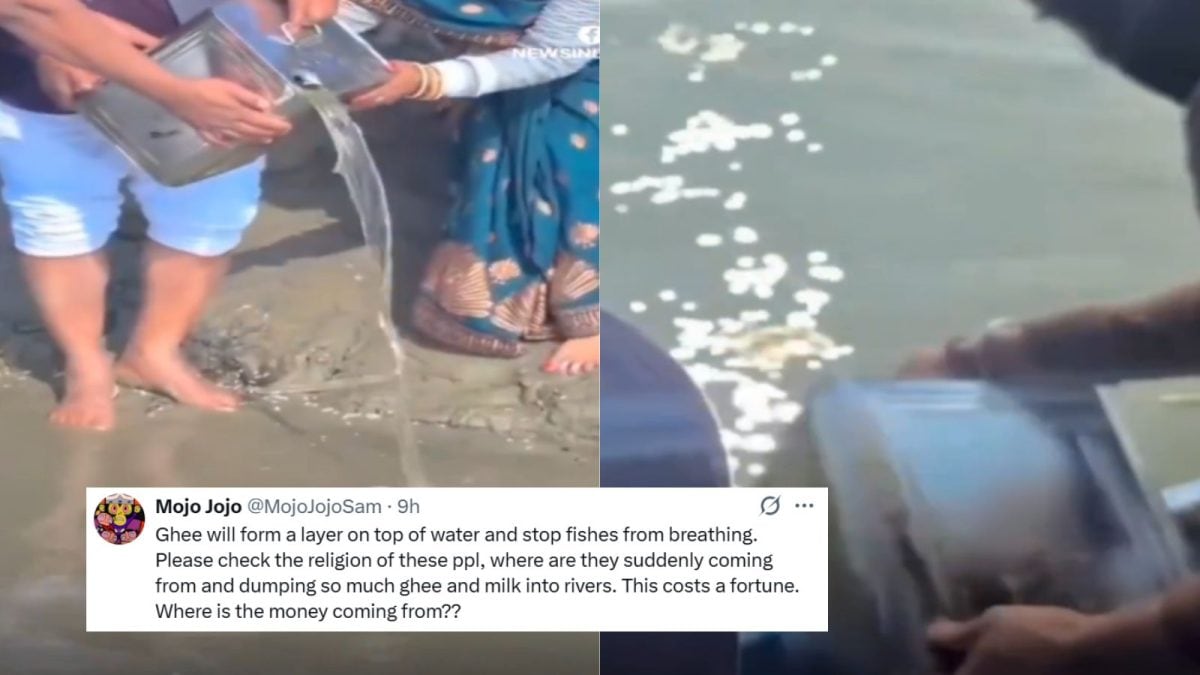
Honestly, when I first saw the clip on my phone I stared at the screen for a good minute. There was a muddy riverbank – looks a bit like the banks of the Ganga near Varanasi during monsoon – and two people, a man and a woman, each holding a big metal container filled with something thick and golden. As the video goes on, they start tipping the containers and the liquid streams down, spreading over the water like melted butter.
From there, the scene widens. More people appear, some of them carrying massive cans that definitely look like they could hold a few dozen litres each. They carefully load these cans onto a small wooden boat tied near the bank. The boat drifts a little into the river, and one by one the men and women on the boat empty the cans, letting the ghee flow directly into the Ganga. The whole thing goes on for several minutes until the last few cans are emptied and the boat drifts away.
The video says the amount is “over 165 litres of desi ghee”. That's a huge quantity – think of a typical family kitchen where we keep a litre or two of ghee in a stainless steel container. Multiply that by more than a hundred, and you get a sense of the scale.
Why does this feel familiar? The 11,000‑litre milk episode
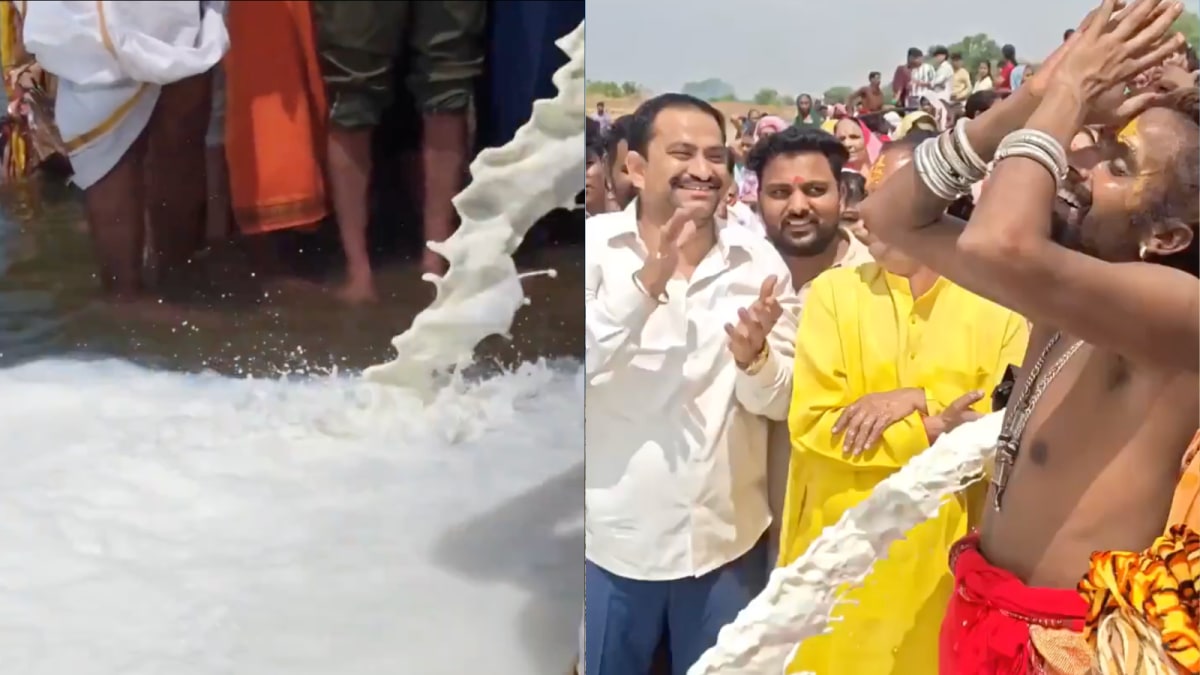
For anyone who follows religious news in India, this isn’t the first time someone has decided to offer a massive dairy product to the Ganga. Remember the "11,000‑litre milk" controversy a while back? That was a massive public outcry too. Back then, a group of devotees tried to pour the whole quantity into the river as a symbolic offering. Environmentalists warned that milk, much like ghee, can affect the river’s oxygen levels and harm fish. The government even stepped in and stopped the plan.
Seeing this new video, I couldn’t help but think of the milk incident. The same idea – a huge dairy product, a religious intention, a literal splash into the holy water – but now it’s ghee instead of milk. The two share the same underlying concern: what happens when we dump something that is not naturally part of a river’s ecosystem?
My own memories of river offerings
When I was a kid, my grandparents used to take me to a small river near our village in Karnataka during the Chhath puja. We would bring a few small pots of oil and some rice, and the elders would sprinkle a little bit into the water as a sign of gratitude. It never felt excessive – maybe half a litre of oil in total. The river would still look the same, the fish would keep swimming, and the water looked as clean as before.
Later, during a Hindu festival in Delhi, I saw a group of volunteers pouring a bucket of milk into the Yamuna. It was a small gesture, definitely not enough to change the river’s chemistry. That experience taught me that modest offerings, done with respect, usually blend into the natural flow.
So, when I watch a video of over 165 litres of ghee being dumped, it feels like a different ballgame. The amount is massive enough to create a visible layer on top of the water, something I have never seen in my hometown rivers.
What the science says – in simple words
Let me break it down without going into heavy chemistry. Ghee is basically clarified butter – mostly fat. It’s less dense than water, which means if you pour a lot of it into a river, it will float on the surface rather than sink. That floating layer blocks sunlight from reaching the water below and can reduce the amount of dissolved oxygen that fish and other aquatic life need to survive.
When you mix something oily into river water, the bacterial community also gets disturbed. Bacteria that normally help break down organic matter may not work as efficiently, leading to a build‑up of waste. In many rivers across India, including the Ganga, we already face problems like low dissolved oxygen levels, heavy siltation, and pollution from industrial waste. Adding an extra 165 litres of ghee can worsen the situation, even if it’s just for a short period.
In most cases, a thin film of oil can also attract birds and animals that might mistake it for food, leading to health issues for them as well. It’s not that ghee is toxic, but the sudden change in water composition can create a ripple effect.
What people are saying online
The video went viral really quickly. Within a few hours, comments started flooding in:
- "Ghee’s density is less than water, so it forms a layer on top of the water, endangering marine life if any is left after dumping sewage and trash. Why does the country’s river’s DO keep decreasing, dude?" – a user highlighted the dissolved oxygen issue.
- "What wrong with these people," wrote another, expressing plain frustration.
- "Religion without science is the no 1 cause of harm to our country. If they knew anything, it would harm the river as well as the aquatic life inside, I am not saying be non‑religious, but also don’t stuff like this in the name of religion," a commenter warned against blind devotion.
- "Why don’t these ‘andh bhakts’ understand that pouring milk and ghee pollutes the water, preventing the fish from getting enough oxygen to survive?" – another user called out the lack of awareness.
- One more voice said, "We need an international sanction on us to make sure we don’t ruin the planet any further. Because clearly our local parties would NEVER raise a voice against this," showing disappointment with political inaction.
These reactions show a mix of anger, concern, and a call for rational thinking. Most of them are from ordinary folks who are worried about the Ganga’s health, which is something I share too.
Everyday examples that echo the same worry
Think about the morning rush in a metro city like Mumbai. You see people throwing plastic bottles into the sea after a beach party, or washing oil‑laden water down the drain in a small kitchen. Those small actions add up and create big problems for the water bodies. Similarly, a massive ghee offering, though done with good intentions, adds a sudden load that the river’s natural system may not handle well.
Even in my own neighbourhood, we’ve seen cases where a few litres of cooking oil accidentally spilled into a local drain, causing a foul smell and making the water look greasy for days. The local municipal workers had to clean it up with a lot of effort. That’s just a few litres; imagine over a hundred litres floating on a sacred river that carries millions of pilgrims every day.
These everyday scenes make the controversy easier to understand for many Indians who rely on rivers for daily chores, agriculture, and spiritual practices.
Balancing faith and the environment
It’s not that I’m against religious offerings – in fact, many of us grow up with the belief that giving something back to the river is a way to show respect. The problem is the scale. If we can find a way to keep the symbolic gesture without harming the river, that would be ideal.
Some temples have started using small amounts of water‑soluble powders or coloured rice that dissolve quickly and don’t impact water quality. Others have shifted to planting trees along riverbanks as a ‘living offering’. I think we could adopt similar ideas for the Ganga – maybe replace the 165 litres of ghee with a symbolic amount, or better yet, donate the ghee to a local community instead of the river.
In most cases, the intention matters, but the outcome matters more for a river that is already under stress. A small change in practice could protect the river while still honouring tradition.
What could authorities do?
If you ask me, the government should set clear guidelines for such rituals. We already have rules about burning incense or using firecrackers near water bodies. A simple notification that “no more than X litres of any dairy product may be offered at a time” could prevent large‑scale incidents. Enforcement could be done by local police or river‑front committees.
When the milk incident happened, the authorities halted it. A similar approach could be taken here – not to stop devotion, but to channel it in a safer direction. Some NGOs have also started awareness campaigns around river health; they could partner with religious organisations to spread the word.
Honestly, I think most people would respect a rule if it’s explained properly, rather than feeling that someone is “taking away” their tradition.
Final thoughts – a personal takeaway
Watching that video made me reflect on how my own actions, tiny as they are, affect the environment. The last time I saw a river, I made sure not to litter, and I even picked up a plastic bottle I found on the bank. It felt good, even if it was just a small act. I realised that large‑scale rituals, if not thought through, can have a surprisingly big impact.
So, while I understand the devotion behind the ghee offering, I hope the community can think of alternatives that protect the Ganga. After all, the river is considered sacred for a reason – it sustains countless lives, not just spiritual ones. If we keep it healthy, the devotion can continue for generations.
Let’s keep our faith, but also keep an eye on the science, because in India, blending the two can make our traditions even stronger.