First Impressions of a Three‑Cornered Fight
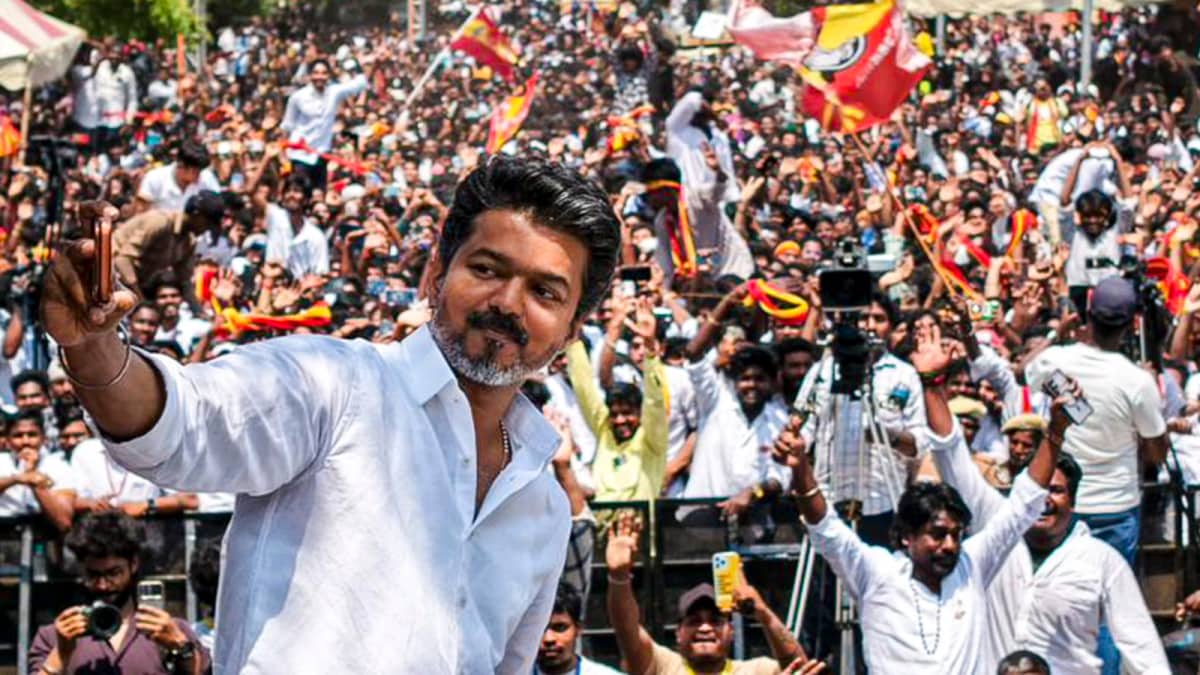
Honestly, when I first heard that Vijay’s TVK was joining the race, I thought it might be just another celebrity fad. But the more I watched the campaign rallies, the more I realized this is not a flash‑in‑the‑pan thing. For decades Tamil Nadu elections have been a simple DMK versus AIADMK showdown. Now, with TVK on the ballot, the two‑cornered story has turned into a three‑cornered drama, and every political junkie in my WhatsApp group is buzzing about it.
Both DMK and AIADMK have publicly brushed off TVK as a non‑entity, saying it can’t dent their vote bank. Still, poll analysts keep pointing to Vijay’s massive fan following, and I’m starting to wonder whether that fan base can translate into actual votes, especially in urban pockets where celebrity influence is stronger.
Adding another twist, former chief minister O Panneerselvam, who was expelled from AIADMK, has now jumped ship to the DMK and will contest from Bodinayakanur – a seat he has represented before. It’s like watching a cricket match where a star bowler switches teams midway; everyone wants to see how the dynamics change.
Madhuram: Continuity vs Fatigue
My cousin lives in Madhuram and she tells me that the neighbourhood feels like a mini‑Delhi – high‑rise apartments, metro stations, and a lot of young professionals. The local election there has become a direct rematch from the last assembly poll.
- S Sudharsanam (DMK)
- V Moorthy (AIADMK)
- Kruthika Elumalai (NTK)
S Sudharsanam is banking on continuity. He often points to the new waste‑to‑energy plant that was inaugurated last year and says, “We are making Madhuram cleaner for our children.” On the other hand, V Moorthy is trying to tap into anti‑incumbency, claiming that two consecutive terms of DMK have left the water‑pipes still leaking and traffic snarls unaddressed.
Kruthika Elumalai of NTK, a relatively new face, could split the votes just enough to make things interesting. I’ve noticed that in my neighbourhood, people are actually discussing specific local issues – like the condition of the community park – rather than just shouting party slogans. It makes me think that urban voters here might be ready for a change, but they also don’t want to gamble on something completely unknown.
So far, the mood is mixed: some of my friends think the DMK’s development work is enough reason to stick, while others are tired of the same old promises and want fresh ideas.
Maduravoyal: Legacy and a Comeback
Maduravoyal is just a short drive from my office in Chennai. Whenever I pass the fly‑over, I see campaign posters plastered on both sides, and that’s when I realize how intense the fight has become. The candidates listed for this seat are:
- K Ganapathy (DMK)
- P Benjamin (AIADMK)
- Revathi (NTK)
P Benjamin, a former minister, is trying to make a comeback after losing the last election. He’s positioning himself as a seasoned leader who knows how to get things done, while K Ganapathy leans on his incumbency record – pointing out the new community centre and the upgraded library.
What’s interesting is that the traffic congestion on the Inner Ring Road has become a hot talking point. My neighbour, who runs a small tea stall near the junction, says he has lost customers because commuters avoid the area during peak hours. That kind of everyday inconvenience can sway votes more than a grand rally speech.
Revathi of NTK is again a wild card. Though NTK’s vote share historically hovers around a few percent, in a tight race even a small shift can tip the scales. I overheard a group of college students debating whether a third candidate could actually act as a spoiler or bring fresh ideas. Their conversation reflected the larger mood: everybody is watching for any sign of a swing.
Perambur: The Vijay Test
Now, this is the constituency that has my heart racing. Perambur is where Vijay, the superstar of Tamil cinema, is set to make his electoral debut. He’s contesting from two seats – Perambur and Tiruchirappalli East – but Perambur feels like his home turf. The line‑up here is:
- Vijay (TVK)
- R D Sekar (DMK)
- Vetrithamizhan (NTK)
Every time I scroll through social media, I see Vijay’s posters plastered on bus stops, auto‑rickshaws, and old school walls. He’s not just a film star; he’s a cultural icon who starred in movies that many of us grew up watching on a Sunday afternoon.
R D Sekar of DMK is trying to contain the disruption. He keeps reminding voters that the constituency has already seen a lot of infrastructure improvements – new schools, a refurbished railway station, and a better water supply. He’s basically saying, “Why gamble with a newcomer when we already have progress?”
Vetrithamizhan of NTK again appears as the third factor. In Perambur, the fan base of Vijay is massive; but whether that fan enthusiasm can turn into actual ballots is still a question. I spoke to a shopkeeper near Perambur Market who told me that his son, a college student, believes Vijay can bring a fresh perspective because he’s not part of the old political machine.
From my perspective, this fight is a litmus test for TVK. If Vijay manages to secure even a decent share of votes, TVK will be taken seriously by the bigger parties. If he falls short, it might reinforce the belief that film fame doesn’t automatically make a good politician.
Sriperumbudur: Alliance Prestige on the Line
Sriperumbudur is a bit different – it’s more about alliance dynamics than individual stars. The candidates here are:
- K Selvaperunthagai (Congress / DMK alliance)
- K Palani (AIADMK)
- K Thennarasu (TVK)
The Congress, which is part of the DMK‑led alliance, sees this seat as a chance to prove its relevance after a series of setbacks at the national level. A win would be a morale boost, showing that the party can still pull votes in a coalition.
K Palani of AIADMK, meanwhile, is trying to retain the seat that the party held for a few terms. He talks about the industrial growth in Sriperumbudur, especially the new automotive plants that give jobs to local youth.
K Thennarasu of TVK is the usual third‑corner entrant. In past elections, we’ve seen that the presence of a third party often forces the larger alliances to reconsider candidate selection and vote‑share calculations. I chatted with a leather‑workers’ union leader who mentioned that the community is split – some feel the Congress can bring central assistance, while others trust AIADMK’s local connections.
The bigger picture here is that alliances in Tamil Nadu are becoming more fragile. A single seat loss could cause a ripple effect in future coalition talks.
Mylapore: Urban Voters, Shifting Equations
Mylapore is a constituency that feels like a blend of heritage and modernity. The candidates contesting here are:
- Dha Velu (DMK)
- Tamilisai Soundararajan (BJP)
Dha Velu of DMK is defending a seat that has historically leaned towards the party. He often highlights the recent renovation of the Kapaleeshwarar Temple and the introduction of a new night‑bus service that eases commute for students.
Tamilisai Soundararajan of BJP, however, is eager to expand the party’s foothold in South India. He’s campaigning on national issues like job creation and economic reforms, while also promising to clean up the narrow lanes of Mylapore that are infamous for waterlogging during monsoon.
In my daily commute through Mylapore, I notice the voters are quite vocal – people actually stop candidates to ask specific questions about road repair or waste management. That’s something I haven’t seen as much in the more rural constituencies.
This contest may not have a third‑corner candidate, but the vote split between DMK and BJP could be telling. If BJP manages to capture even a small percentage, it signals a shift in urban sentiment towards a national party, something that could influence future elections across the state.
The Bigger Picture I’m Seeing
After watching these five fights closely, a few clear trends are emerging in my mind:
- From a bipolar to a multi‑cornered contest – TVK’s entry has forced DMK and AIADMK to rethink their strategies.
- From party loyalty to candidate credibility – voters are more interested in what an individual candidate has done for their street, rather than just the party badge.
- From welfare‑centric politics to governance and urban issues – things like water‑pipe repairs, traffic congestion, and job creation are dominating the conversation.
What’s fascinating is how the presence of a film star like Vijay can reshape the entire electoral map. It’s not just about fan following; it’s about how his campaign is mobilising young volunteers, using social media in a way that older parties have only recently adopted.
Meanwhile, traditional rivals are scrambling to keep their bases intact. AIADMK is trying to emphasise its grassroots network, while DMK is leaning on its record of development projects. Both are now forced to address the third‑corner threat, which could lead to more issue‑based campaigning rather than mere sloganeering.
From where I sit, the 2026 Tamil Nadu Assembly election feels like a turning point. If TVK manages to win even one seat, it could pave the way for more regional parties and fragment the politics further. On the other hand, if DMK and AIADMK manage to maintain their dominance despite the new challenger, it shows the resilience of the two‑party system here.
Whatever the outcome, I’ll be glued to the result tables, and I’ll keep sharing my observations with you all – because in the end, elections are not just about numbers, they’re about the everyday lives of people like my cousin in Madhuram, the tea‑stall owner in Maduravoyal, and the college students in Perambur who dream of a better future.