Why the island keeps popping up in breaking news
Whenever I scroll through the latest news India on my phone, I often end up reading something about a tiny speck of land that no one can set foot on North Sentinel Island. It feels a bit like a viral news story that never really dies; every now and then, there’s a new video or a daring claim that tickles the public’s curiosity. But what most people don’t realise is that the buzz isn’t just for the sake of drama. It’s actually a reminder of a very firm legal stance that the Indian government has held for decades.
Honestly, the first time I heard about the Sentinelese in school, I thought they were just another myth. Then I watched a documentary and realised they are a real tribe, living on a forested island that looks like something straight out of a movie. The fact that the island is part of the Andaman and Nicobar chain, and yet remains almost completely untouched, makes it a hot topic in trending news India whenever a new incident happens.
What the island looks like and who the Sentinelese are
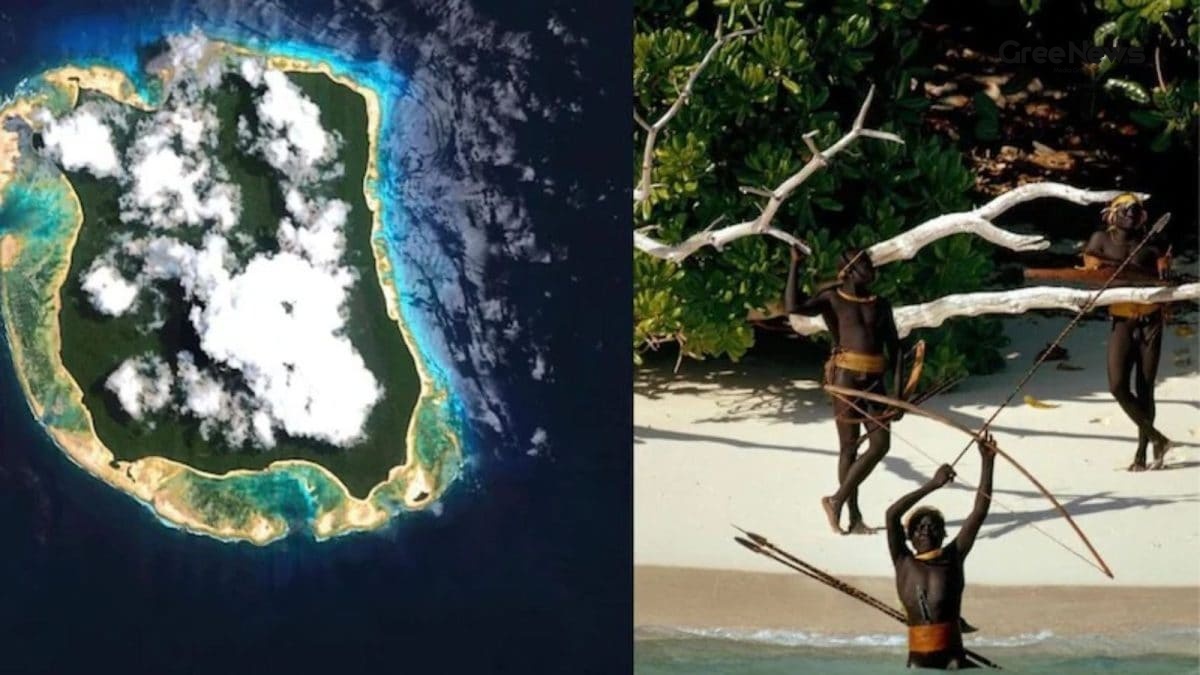
North Sentinel Island sits in the Bay of Bengal, surrounded by crystal‑clear water and dense mangroves. It’s not big just about 60 square kilometres but it’s packed with thick forest, sandy beaches, and a community that has lived there for thousands of years without any real interaction with the outside world.
The Sentinelese are the only people who call the island home. They speak a language that no linguist has been able to decode fully, and their lifestyle is completely hunter‑gatherer they fish, hunt wild animals, and make tools from stone and wood. In most cases, they have turned down every attempt at contact, firing arrows or spears whenever a boat drifts too close. It’s not that they are hostile for the sake of being hostile; it’s more like a security system that says, ‘stay away, this is our space.’
When I think about it, the Sentinelese remind me of the old folk stories we grew up hearing tribes who live in the woods, untouched by the city’s hustle. The difference is, this is real, and the government treats it with a seriousness that sometimes feels like a plot twist in a thriller.
How the law keeps the island off‑limits
Under Indian regulations, the island is officially off‑limits. The rule is simple: no approach, no contact. The legal backbone is the Andaman and Nicobar Islands (Protection of Aboriginal Tribes) Regulation, originally drafted in 1956. Over the years it has been tightened into a strict ‘hands‑off’ policy, meaning that even government officials need a special clearance to get near the island.
Boats are banned from entering a 5‑kilometre radius around North Sentinel Island. The Indian Navy and Coast Guard patrol the waters, not to control the island, but to make sure no curious traveller or opportunistic journalist manages to breach the buffer zone. In most cases, the patrols are a quiet presence just enough to remind everyone that the island is protected.
What’s interesting is that the rule is not just a bureaucratic hurdle; it’s an active protection measure. The government has repeatedly said that any breach could endanger the tribe and even the trespasser. The policy has survived multiple court challenges, and the verdicts keep reaffirming the need for a no‑contact stance.
Health reasons: Why isolation is a matter of survival
If you’ve ever watched a medical drama, you know that a common cold can be fatal to someone with a weak immune system. For the Sentinelese, who have lived without exposure to modern diseases, even a mild flu could be catastrophic.
History in the Andaman Islands shows a grim picture. When the British tried to interact with other indigenous groups in the 19th century, many of those tribes were wiped out by smallpox, measles, or influenza diseases they had never encountered before. The Sentinelese have a similar vulnerability. A single infected mosquito or even a contaminated piece of clothing could carry pathogens that their bodies simply cannot fight.
This health risk is a big reason why the Indian government’s no‑contact law is not just about respecting culture; it’s a life‑saving measure. The rule prevents an accidental outbreak that could eliminate an entire tribe in a matter of weeks.
The Sentinelese stance: arrows, not aggression
Whenever a boat or a helicopter has gotten too close, the Sentinelese have responded with arrows. Many people read that and think of it as aggression, but in reality it’s a clear warning. They are saying, ‘you’re crossing our line.’ It’s a way of protecting their land and way of life.
One incident that many people still talk about it’s a story that often becomes viral news involved a group of fishermen whose boat drifted near the island during a storm. The fishermen were met with a volley of arrows and, tragically, a few lost their lives. The same thing happened in 2018 when an American adventurer, driven perhaps by curiosity, tried to land on the island. He was killed by the tribe as well. These events shocked the nation and reinforced the government’s position that any contact is too risky.
People sometimes ask, ‘what if they were just defending themselves?’ The answer is yes, but the defence is rooted in a centuries‑old policy of isolation. It’s a choice they have made, and for them, it’s not a sign of hostility it’s a survival strategy.
Enforcement on the waters: A quiet but firm patrol
The Indian authorities take the buffer zone seriously. Patrol boats regularly circle the island, making sure no unauthorized vessel gets close. There have been reports and these often appear in the trending news India of boats being turned away or even warned over radio when they try to breach the zone.
What many don’t realise is that the enforcement isn’t about controlling the Sentinelese; it’s about protecting them. By keeping the waters clear of curious tourists or reckless filmmakers, the government helps ensure that the tribe’s isolation remains intact.
During a conversation with a Coast Guard officer a few years back, he told me that their main job is to monitor and report, not to intervene directly. It’s a subtle but important distinction they are more like guardians than police.
Development vs preservation: A rare case of left‑alone policy
In most parts of India, development means roads, schools, and sometimes relocating communities. Here, however, the policy is the opposite: leave them alone. This is a rare stance in a country that’s always looking forward to progress.
Many activists argue that integrating the Sentinelese into mainstream society could bring them benefits like healthcare and education. Yet the counter‑argument which the government seems to accept is that the cost of losing an entire culture, and possibly the tribe itself, is too high.
Even tourists who love adventure often share their thoughts on social media, saying things like, ‘I wish I could see them,’ but also acknowledging that the best way to respect them is to stay back. That sentiment appears again and again in the latest news India when the island is mentioned.
Why the world keeps asking: curiosity, media, and the viral factor
Human nature is curious. We love stories about untouched places they feel like a window into a different world. That’s why North Sentinel Island often becomes a trending topic, especially after any new incident. The media, in its quest for breaking news, sometimes teeters on the edge of sensationalism.
What happened next after each encounter is interesting are authorities stepping up patrols? Do they issue new warnings? These questions keep the conversation alive. But the core message stays the same: contact is dangerous, both for the tribe and for anyone who steps into the buffer zone.
In my own experience, when I told friends about the island, many would immediately suggest ‘let’s go there!’ I’d have to remind them that the rule is not just a suggestion; it’s a legal prohibition backed by health data and historic tragedy.
My take respecting an untouched world
Having lived in a city where everything is connected, it’s fascinating to think about a place where no one has a smartphone, no one streams movies, and no one worries about Wi‑Fi signals. The Sentinelese chose a life that most of us can’t even imagine.
Many people think the government is keeping the island a secret, but really it’s about protecting a living community. That’s why the rule is strict, and why it’s reinforced every time someone tries to breach it. The island’s story teaches us that sometimes the best way to help is to stay away a lesson that feels counter‑intuitive yet oddly comforting.
If you ever come across a headline about North Sentinel Island in the breaking news or trending news India, remember the deeper reason behind it: a tiny tribe, a protective law, and a decision that the world respects the tribe’s wish to remain untouched.